
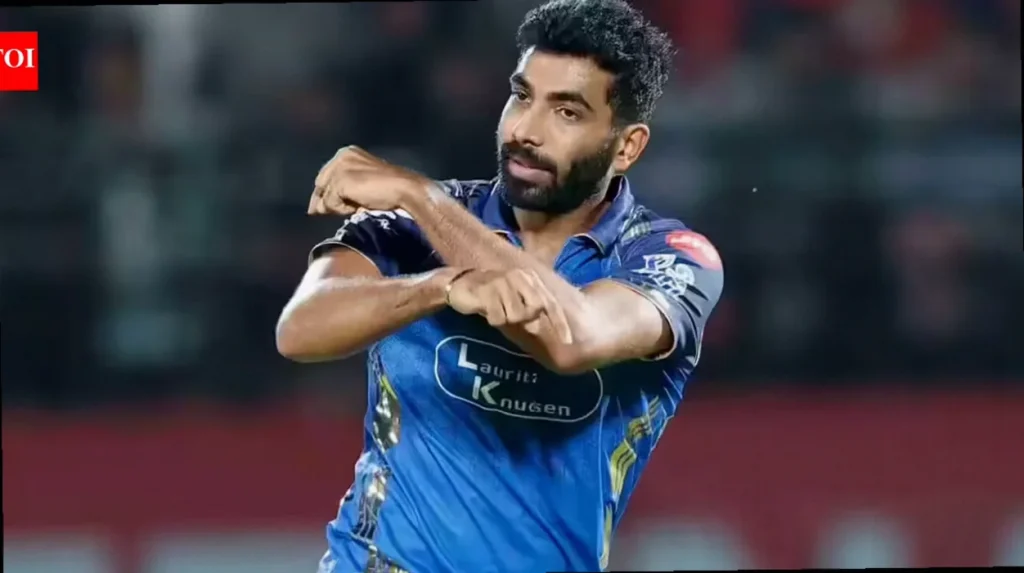
Dharamsala witnessed a first outing for Jasprit Bumrah as Mumbai Indians captain that looked less like a stopgap and more like a preview of what MI could lean on next season. The win, coupled with Bumrah’s calm demeanour, suggested the franchise may have uncovered a steadier leadership option if questions around Hardik Pandya persist and if Suryakumar Yadav’s batting rhythm continues to swing.
Of course, one match cannot settle debates about Bumrah’s long-term captaincy effectiveness. Still, as far as storylines go, this was an intriguing beginning—especially because Bumrah’s appointment carries an unusual timeline for someone who has already become central to MI’s identity.
Quick facts
At a glance
- Jasprit Bumrah made his first appearance as Mumbai Indians captain in IPL number 157.
- MI won the match in Dharamsala under Bumrah’s leadership.
- At the toss, Bumrah joked: “I didn’t expect to be a Test captain before I became the captain of Mumbai Indians.”
- India’s captaincy record for Bumrah includes one Test win, two Test losses, two T20I wins, and one washout.
- Bumrah captained India in the rescheduled Edgbaston Test in 2022 (Rohit Sharma ruled out with Covid).
- He led India to a 2-0 T20I series win in Ireland in 2023.
- Bumrah also stood in during the Perth Test in the 2024-25 Border-Gavaskar Trophy, which India won.
- Shardul Thakur returned figures of 4/39 against Punjab Kings on Thursday.
- Thakur described Bumrah as a “bowler’s captain” and said the captains this season—Hardik Pandya, Suryakumar Yadav and Bumrah—bring different ideas.
Bumrah’s wait for the leadership role has been long. He was named MI captain only in his 157th IPL appearance, an almost startlingly delayed handover for a player who has been with the franchise since 2013 and has grown into one of its defining figures.
At the toss, Bumrah added humour to the moment, saying he never expected to become a Test captain before captaining Mumbai Indians. The line landed with a mix of wit and genuine disbelief, fitting the broader feel of an arc that has unfolded in an unexpected order.
From India trust to MI captaincy
The oddity of Bumrah’s leadership journey is that India backed him first, while Mumbai did it later. He has already captained India in both Tests and T20Is, with results that show both impact and adaptability: one Test victory, two defeats in Tests, two T20I wins, and one match washed out.
His Test captaincy began when he led in the rescheduled Edgbaston Test in 2022 after Rohit Sharma was ruled out due to Covid. In 2023, he guided the T20I team to a 2-0 series win in Ireland, and more recently he stepped in during the Perth Test of the 2024-25 Border-Gavaskar Trophy, a match India won.
In Dharamsala, what stood out was not simply the outcome, but the tempo of his captaincy. Bumrah came across as composed and precise, the type of leader who doesn’t try to dominate a room—he stabilises it. He spoke positively about taking on responsibility, framed it as a fresh challenge, and highlighted enjoying the final phase of the season rather than just surviving it.
That mindset matters for a MI side that has spent much of the campaign searching for balance. With Hardik unavailable and Suryakumar not always providing the kind of batting continuity the team needs, Bumrah offered a clearer centre of gravity to the group.
He doesn’t have to prove his value to the franchise; his performances already do that. The captaincy also carries the feel of problem-solving rather than showmanship—something MI’s group can build on if the leadership situation remains unsettled.
Thakur backs Bumrah’s style
Shardul Thakur, who returned 4/39 against Punjab Kings on Thursday, captured the larger picture in his comments after the match. He said he has a comfort level with Bumrah, adding that the team held plenty of discussions and that Bumrah is always willing to share his ideas.
Thakur’s verdict was direct: Bumrah is “definitely a bowler’s captain.” That kind of label points to how Bumrah seems to approach the game—communicating clearly with the attack and making bowlers feel involved in the plan.
Thakur also noted that MI’s three captains this season—Hardik Pandya, Suryakumar Yadav and Bumrah—have offered “different sets of ideas.” He stressed there is no single guaranteed blueprint for success, and argued that the best players often make captains look stronger through their execution.
Summing up what captaincy demands, Thakur said a leader must read game situations better than others, give maximum effort, and keep the team positioned above their own concerns. In a season defined by shifting roles, Bumrah’s first appearance as captain—and the way teammates framed it—has set up a compelling early signal for MI’s direction.
