
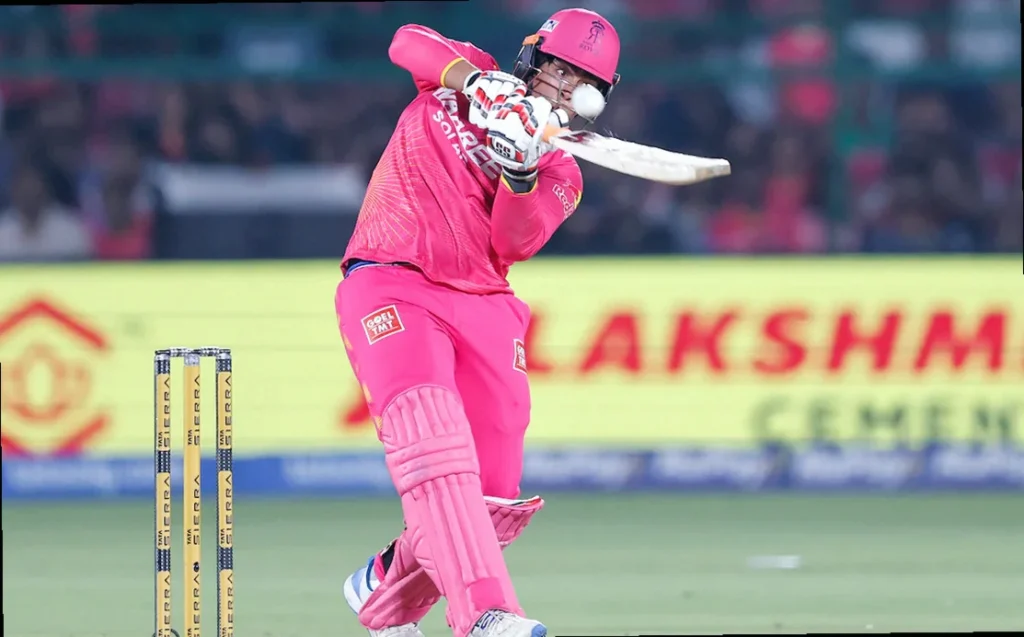
Rajasthan Royals and Delhi Capitals face each other in a “Sunday Suspense” IPL encounter that could decide the fate of both sides’ playoff ambitions. Delhi’s situation is already precarious, with qualification still mathematically possible but only on paper, and another loss would end their hopes. For Rajasthan, the week-long gap should have refreshed the group, but they will be wary of letting Delhi’s desperation turn into momentum—particularly with Punjab Kings sitting just above them in the points table.
Key takeaways
- Delhi Capitals are on 10 points from 12 matches, and a defeat would officially knock them out of the playoff race.
- Rajasthan Royals head into the contest with 12 points from 11 games, and the break is expected to have helped the squad reset.
- Mitchell Starc’s form and matchups could define the game, especially against Vaibhav Sooryavanshi’s explosive output.
- Sooryavanshi has struck 40 sixes in 11 games, scoring 440 runs at a strike rate of 236.55.
- Delhi’s main challenge lies in the effectiveness of their international spin duo—Axar Patel and Kuldeep Yadav—on slower or less responsive surfaces.
- Rajasthan’s bowling strength is expected to be led by Jofra Archer, while their captain Riyan Parag’s current numbers add another storyline.
Playoff pressure and what’s at stake
Delhi Capitals go into the match with qualification chances that are already close to closing. The numbers are unforgiving: they have 10 points after 12 games. Even if they began the tournament with belief, the margin for error has vanished—another loss would mean their playoff bid is over for good.
Rajasthan Royals, in contrast, are still in the hunt with 12 points from 11 fixtures. Their week-long break is likely to have restored energy and sharpened plans for a crucial stretch. The Royals also have a clear motivation to avoid a slip-up: if Delhi are allowed to take points, Punjab Kings—currently on 13 points from 12 games—could gain breathing room in the race for the top positions.
The Sooryavanshi vs Starc spotlight
Vaibhav Sooryavanshi has rapidly become one of IPL’s most talked-about young names, with a growing fan following that has drawn comparisons to how Sachin Tendulkar captured imaginations as a schoolboy. The hype around him is not just about talent on the field—it’s also about the scale of attention he has pulled from the wider cricket audience.
His “Capital Debut” at Ferozeshah Kotla is being treated like a major social event, with NCR crowds eager to see the youngster play in person. The talk around Delhi’s fan base has often been contradictory across the league’s history: when Royal Challengers Bengaluru come to the venue, support tends to swing heavily toward Virat Kohli, while visits from Chennai Super Kings bring a different kind of spectacle—fans packing the stadium with yellow-themed enthusiasm and jerseys featuring MS Dhoni, including the iconic No. 7.
With that context, it’s not surprising that spectators at the Kotla turnstiles show up to catch Sooryavanshi for the first time, eager to see the “chubby-cheeked hero” that has become a sensation in IPL circles.
Yet beneath the noise sits the sub-plot that will matter most to the match result: whether Mitchell Starc can contain Sooryavanshi’s momentum. The teenager has been almost impossible to slow down, hitting 40 sixes in 11 games and piling up 440 runs while maintaining a strike rate of 236.55. If Starc finds swing and seam early, the contest could become a real test of Sooryavanshi’s technique, because his game is often powered more by hand-eye coordination than by elaborate footwork patterns.
Starc’s unpredictable IPL record and Delhi’s spin concerns
Starc’s IPL seasons have rarely followed a straight line. There have been matches where he has been attacked by lesser-known Indian batters, and there have been moments where he has looked capable of carrying a team through pressure. The contrast was especially visible in the 2024 IPL final, when he produced an opening spell that helped set up KKR’s title win—one of the most memorable first bursts in nearly two decades.
So nobody can be sure which version of Starc will show up on Sunday. If the Australian fast bowler arrives with early movement—seam and swing working—then Sooryavanshi will have to solve a difficult equation quickly at the crease.
Delhi’s approach with the ball also faces a structural issue. In recent matches, they have played on tracks that do not always deliver high scoring, but the bigger problem has been the limited bite from their international spin unit. Their key spinners are skipper Axar Patel and Kuldeep Yadav, and while both contribute wicket-taking potential, the numbers hint at inconsistency: Axar has 10 wickets from 12 games, and Kuldeep has 7 wickets from 11 games.
Neither bowler has managed to be consistently penetrative or restrictive enough in the middle overs, and that has been a recurring concern for Delhi. On top of that, their pace resources—apart from Lungi Ngidi—have looked somewhat ordinary at times, particularly from the Indian bowlers’ perspective. T Natarajan’s economy rate is 11.18 and Mukesh Kumar’s is 10.67, and those figures suggest that if the Royals’ top order gets set, the batting could become a chase rather than a battle.
That’s why Sooryavanshi, Yashasvi Jaiswal and Dhruv Jurel could again become central threats. If the ball comes on with less movement or less control, their ability to hit with pace and intent can punish any loose spells.
Rajasthan’s skipper storyline and the bowling advantage
The one aspect that may worry Rajasthan is the current form of their captain Riyan Parag. He has 207 runs from 10 games, with a strike rate of 143. Adding to the storyline, Parag has recently been named captain of the India A team for a List A tri-nation series. However, despite the recognition, he has not yet fully shut the door on critics who believe his selection was driven more by opportunity than by evidence of sustained merit.
On the other hand, Rajasthan’s bowling setup offers greater clarity. Their attack includes Jofra Archer, who can force pressure on any batting lineup thanks to his raw pace and ability to make batters decide early. In a contest with playoff stakes, that sort of direct threat can become even more valuable.
With the ball, Rajasthan will also take confidence from matchup expectations. Apart from KL Rahul, the rest of Delhi’s batting group—such as Nitish Rana and Sameer Rizvi—may find dealing with genuine pace and bounce difficult. The concern is that they can struggle against quality international bowling when technique and temperament are tested consistently.
