
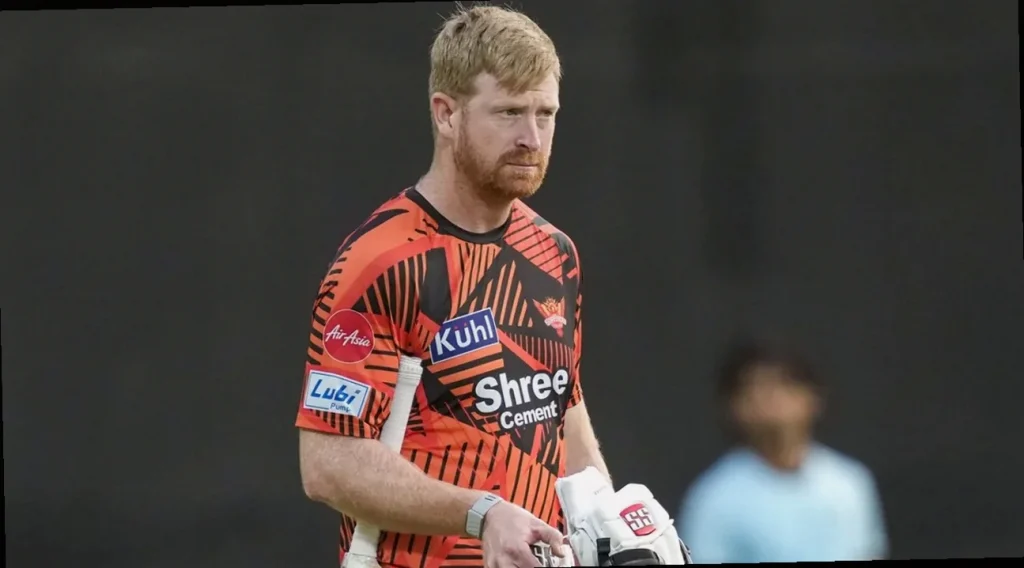
Heinrich Klaasen stepped away from international cricket at 33, leaving behind a reputation as one of the sport’s sharpest ODI performers. Even at the very top of the one-day game, he managed to keep pace with the likes of Rohit Sharma, David Warner and Virat Kohli—and often did it with a strike rate that looked quicker than everyone else’s.
Now, 11 months on, it still feels like a premature exit, with the IPL 2026 numbers insisting he didn’t just “retire”—he simply changed the stage. Klaasen is averaging above 50 and striking at more than 150 in the ongoing season. Among the 198 batters to have appeared, only Virat Kohli, Sanju Samson, Quinton de Kock and Venkatesh Iyer have managed that rare double.
Quick facts
- Heinrich Klaasen retired from international cricket at the age of 33.
- He is averaging over 50 in IPL 2026 while striking at over 150.
- Out of 198 IPL batters, only Virat Kohli, Sanju Samson, Quinton de Kock and Venkatesh Iyer match Klaasen’s double (runs and strike-rate threshold).
- His current first-10-balls strike rate in IPL 2026 is 138.98, down from 152.17 across the previous three seasons.
- His false-shot percentage is 15.15, the second-best among 52 batters to face 100 balls this season.
- SRH retained Klaasen as their top retention at about USD 2.74 million a year for three years, after signing him at 31 for roughly USD 640,000.
For many players, the transition away from international schedules can be messy in T20 cricket, where rhythm matters and match cadence is unforgiving. Suresh Raina’s post-mainline years at Chennai Super Kings showed how hard it is to replace a role when you’re no longer the central figure for your country. AB de Villiers, after losing regular action, started to slow down; even when he tried to stretch his game through freelance opportunities, the full-time intensity never quite returned for long.
Trent Boult’s current reality is another example of the same trap: the loop of staying busy but struggling to recreate the exact sharpness that international cricket demands. Klaasen looked like he might be heading toward that pattern too, especially after his captaincy stint with Seattle Orcas in Major League Cricket, which did not quite work out.
The IPL shift
Middling returns in the Hundred and SA20 arrived after that, but the moment Klaasen joined Sunrisers Hyderabad, the story began to change. His approach seems calmer and more deliberate now—most noticeably in how he starts his innings. In IPL 2026, his strike rate in the first ten balls is 138.98, whereas it sat at 152.17 across his previous three seasons.
That change in tempo also reflects the kind of risk he’s willing to take. Klaasen is placing a higher price on his wicket, and his false-shot percentage of 15.15 ranks second best among 52 batters who have faced at least 100 balls this season. In short bursts, he is choosing the right moments to swing, and he is doing it with improved control.
SRH’s batting structure has helped him lean into what he does best: arriving, getting set, and then accelerating. With a fast-starting top three and a finisher who can finish quickly, Klaasen can default to his usual rhythm—then push the gears higher when the match dictates. That combination has helped lift his overall output to levels he had not produced before.
Varun Aaron, the SRH fast bowling coach, made the point bluntly ahead of their match against CSK: “He shouldn’t have retired.” Yet the wider conversation around elite players and their careers has been shifting for some time, driven by the pull of financial security. Klaasen, Aaron suggested, felt that pressure when his children—who travel with him everywhere—began mistaking hotel stays for home. He disliked the constant distance too, and when the time came to choose, he opted for a life on his own terms.
The decision did not trigger resistance from CSA, which in turn made his call feel even more justified. For both sides, things appear to be working out “happily-ish.” South Africa have gone on to win their first ICC title and have also made a deep run in the recent T20 World Cup.
Growing friction in modern cricket
Even with that success, the friction between players and teams is becoming harder to ignore. Virat Kohli raised the issue recently, even though he did not name the person or people pushing him to “prove himself” again and again. Pat Cummins also warned Cricket Australia about a tension point, pointing to a situation where “some of our guys” are declining half a million pounds for 20 days’ work in order to avoid playing two Test matches against Bangladesh.
In Australia’s system, five senior players had not signed new central contracts, which was widely read as a sign that they believe their market value is rising. Meanwhile, BBL stars are weighing overseas stints as well, with private investment still waiting for tournament approval—another reminder that the business side of cricket is moving in parallel with selection and performance.
All of this, in many ways, is the outcome of franchise T20’s rise: the money behind it, the opportunities it creates, and the fame that comes with being in the spotlight. The IPL finals in 2019 and 2023 are often remembered as some of the best games ever staged in the format. Even outside the IPL, the effect has been visible—when the BBL posted a video of Brett Lee’s last over in professional cricket last year, it attracted half a million views on Instagram, despite the six-ball moment belonging to a decade-old memory.
That cultural pull is not limited to one country or one league. In 2016, St Lucians gathered in Derek Walcott square to celebrate West Indies’ T20 crown, with the same music and the same kind of joy that was seen again in 2024 when the crowd came together to recognize a CPL title on the same patch of land. World championships carry a special prestige, but these league victories are earning credibility of their own.
Earlier, when franchise T20 was still trying to secure its place on the calendar, it often depended on player-versus-board disputes or on targeting teams with weaker relationships to their stars. The dynamic has changed. Sunrisers Hyderabad moved for Klaasen when he was 31 for roughly USD 640,000. Three months after he turned 33, he did enough to become the franchise’s top retention—about USD 2.74 million a year for three years. One month before his 34th birthday, he stepped away from South Africa duties.
Players at that level—the elite—are increasingly the ones breaking away now, choosing franchise stability over international obligations that can feel harder to manage. Aaron underlined why Klaasen’s decline never seemed likely: “Klaasen is one of the best T20 batters over the last seven to eight years,” he said. “And there was no reason that his performance would dip.”
He added that playing for SRH helps maintain the same tempo even after the team’s explosive top three has already set the tone. “Coming into bat after our top three who are really explosive, to maintain the same tempo or even to shift a gear down and then go up towards the end is not easy at all,” Aaron said. “He makes it look unbelievably easy and I think he is the fulcrum of our batting order.”
At the international level, squads operate with hierarchy and clear non-negotiables, including the idea that team comes above self. But in the franchise game, the incentive is different: keeping superstars comfortable is part of the job description—and now, superstars are taking note. The result is a new kind of cricket politics, where contracts, comfort and control increasingly shape what happens on the pitch.
