
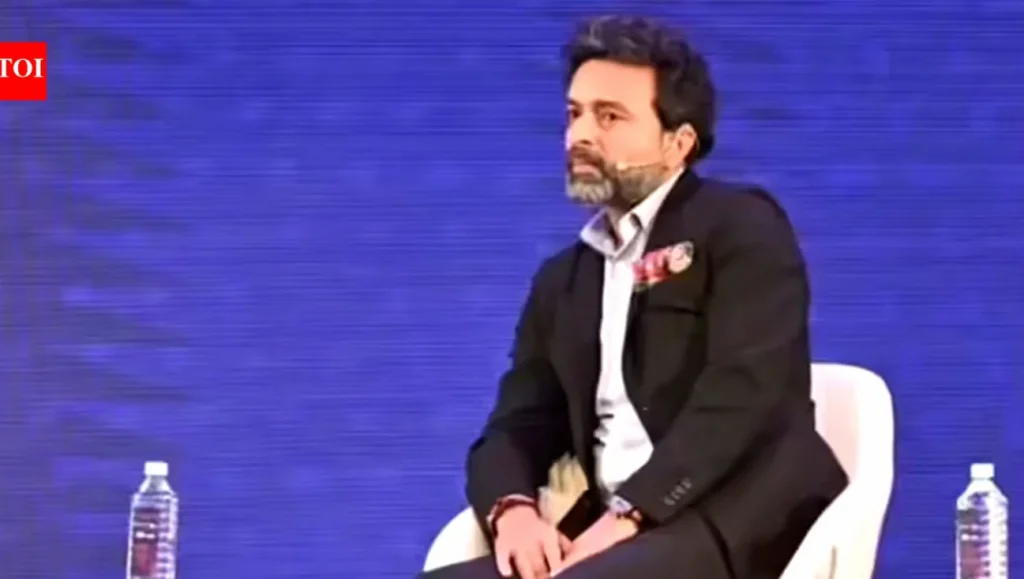
DHARAMSALA: IPL chairman Arun Dhumal on the eve of the Punjab Kings versus Royal Challengers Bengaluru clash at the HPCA Stadium in Dharamsala described how preparations are progressing and addressed a wide range of questions spanning off-field controversies, the league’s valuation, possible expansion, and the future shape of the Women’s Premier League.
Dhumal said the IPL has faced “a few off-field controversies” this season, but insisted the league’s leadership and relevant bodies have already acted where required. He added that the game’s integrity remains a top priority, noting that while there has been added media hype around some incidents, the league itself is “very clean” and that players and teams understand expected conduct. He further stated that if anything ever happened unintentionally, it has been dealt with firmly.
He then spoke about the fallout from the decision to remove Mustafizur Rahman from the IPL, describing how it escalated into a broader situation ahead of the T20 World Cup. Asked where matters stand with Bangladesh players in the IPL now, Dhumal called it a “dynamic situation,” emphasising that the BCCI’s focus is to keep the best possible relationships with all cricket boards. He declined to comment on what has already occurred, saying it belongs to the past, and expressed confidence that relations with all boards will remain strong going forward.
Dhumal also addressed claims about player fatigue and falling viewership, saying that “data speaks for itself.” He pointed to the JioStar report released recently, arguing that audience interest remains exceptional. He said digital reach has risen by 15%, TV reach is up by 25%, and watch time in regional languages has increased by about 42% compared with last season. He added that the league has already gone beyond 1.1 billion views and suggested that the season’s momentum will continue despite an “odd off day” in between.
On whether the number of matches could increase, Dhumal said the idea has been discussed for years. He explained that a move up to 94 matches could be possible in a 10-team format if each side plays nine home and nine away games. However, he said that due to bilateral commitments already in place until 2027, there is no available window to raise the schedule. He noted that the original plan was to grow gradually from 74 to 84 and then to 94, but said it was not feasible within the current bilateral cycle because of the crowded international calendar. He added that once the next bilateral cycle is planned—if a bigger window opens—an increase could again be considered.
He was also asked whether IPL franchises and Indian owners are effectively spreading into other leagues, and whether the IPL could end up resembling football’s model of diversified tournament ownership and scheduling. Dhumal said the direction would depend on the value that bilaterals generate in the next cycle, not only for the BCCI but for other boards as well. He argued that fans ultimately drive the sport’s growth and that decisions follow where supporters show the most traction. He said franchises are also finding value in other leagues, which is why they are committing investment beyond the IPL.
Dhumal addressed whether the shift away from bilaterals is a positive sign for the IPL. He stressed that the key is funding and monetisation, adding that many boards prefer bilateral series featuring India. He said India has maintained those commitments for years even through Covid-related challenges, but that India can typically manage only one or two bilateral series across a four-year cycle. He suggested that if India and other boards do not see sufficient value in bilaterals, then cricket will still be played and revenue will be generated at venues—while the sport grows through whichever formats and leagues deliver stronger returns. He also argued that BCCI and franchises can help create value in bilaterals where possible, but where that does not happen, franchises can contribute through participation in other leagues. He concluded that global growth requires every country to see good value, and if that comes through leagues supported by franchise involvement, he is comfortable with it.
On media-rights valuation concerns ahead of the next cycle—especially after the Jio and Hotstar merger—Dhumal pointed to the valuations achieved for Rajasthan Royals and Royal Challengers Bengaluru. He referenced the stake-sale process and the arrival of new buyers, arguing that if there were serious worries about the next media-rights valuation, those predicted or offered team values would not have been reached. He said he is hopeful that the next five-year media-rights cycle will be far better than the current one, and believes it will rise significantly.
Asked about reports that the IPL’s market capitalisation has declined, Dhumal responded by questioning how to define valuation for the league. He said “infinite” could be the answer, and urged comparison between current valuations and the original value back in 2008. He claimed that over the last 18 years the IPL has grown roughly 20 times and argued that few businesses or enterprises have delivered returns at that scale. Dhumal described the IPL as India’s number one made-in-India brand, adding that large conglomerates such as the Mittals and Birlas have also entered the space. He called the IPL a commercial venture, saying that any party which sees value will want a share.
He was then asked if more franchises could join the Women’s Premier League soon. Dhumal said this depends on the pool of players available domestically and from overseas, and that the number of teams can be considered accordingly. He added that following India’s World Cup success and Harmanpreet Kaur’s leadership, the WPL has gained major traction. He said the momentum is visible at WPL games, where he believes it can be hard to tell whether one is watching a men’s or women’s match, calling it a transformative moment for women’s cricket across India and the world.
Dhumal noted that the WPL is currently staged across two or three venues and was asked whether it could adopt a home-and-away format. He said with only five teams, a full home-and-away structure could become complicated. He pointed to the many bilateral commitments that sit alongside ICC events and explained that the window available for women’s cricket is quite short, creating logistical challenges for home-and-away scheduling. Still, he said if such a format adds value to the WPL, it could be considered in future.
Asked about whether franchises are splitting home matches between two venues, Dhumal said it follows BCCI policy, designed to help the tournament spread across different parts of the country. He said the BCCI has asked franchises to use one additional ground beyond their primary home venue. He pointed out that Punjab Kings have been playing IPL matches in Dharamsala since 2010. He also mentioned that RCB staged a couple of games in Raipur this year and that the experience has been “phenomenal.” Dhumal added that Rajasthan Royals have used Guwahati as an extra home ground and that the franchise is happy with the approach. He said this strategy can help franchises generate more gate revenue.
Finally, he was asked whether there is any plan to make the approach consistent across franchises so that no team ends up playing all seven home games at one venue while others travel between cities. Dhumal said it does not matter in the sense that every team must perform to its best in the conditions it is given. He stressed that the BCCI is not forcing anyone, and said franchises want to venture out as part of building a wider fan base.
