
India’s next selection meeting is set to take place as the national team prepares for what looks, on paper, like a modest home assignment—yet carries significant weight for the months ahead. The senior men’s selection committee, headed by Ajit Agarkar, is expected to finalise India’s squads on the day for the tour of Afghanistan, starting with a standalone Test match in New Chandigarh on June 6, before moving to three One-Day Internationals in Dharamsala, Lucknow and Chennai. Although the calendar suggests a simple four-game bilateral sequence after the IPL, the selection room is also expected to weigh workload management, format priorities and how these choices feed into India’s broader path toward the next ODI World Cup. The most intense spotlight will be on Jasprit Bumrah, with the Test not linked to the World Test Championship cycle and the IPL having compressed the usual recovery window—leaving the selectors to decide whether he needs protection, a return to rhythm, or a role that is deliberately capped across formats.
Key takeaways
- The selection committee, led by Ajit Agarkar, is expected to announce India’s squads for Afghanistan today.
- The schedule begins with a one-off Test in New Chandigarh starting June 6, followed by three ODIs in Dharamsala, Lucknow and Chennai.
- Jasprit Bumrah is the central selection talking point due to the non-WTC status of the Test and the tighter post-IPL recovery period.
- Shubman Gill is expected to captain the side, with attention focused on the supporting wicketkeeper-batter and bowling options.
- Selection debates could involve KL Rahul, Ishan Kishan, Sanju Samson, and the scrutiny around Rishabh Pant’s recent form.
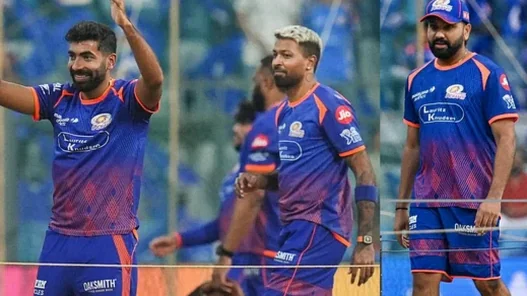
- Rohit Sharma’s absence for much of IPL 2026 and Hardik Pandya’s limited involvement for Mumbai Indians in recent matches add extra variables.
What the Afghanistan series represents for India’s planning
While the Afghanistan assignment is framed as a four-match bilateral series after the IPL, it is also being viewed internally as the first meaningful checkpoint in India’s post-tournament planning. With multiple formats in quick succession, the selectors are expected to balance immediate performance needs against longer-term strategy—particularly around how much workload is appropriate and where India wants to build momentum for the ODI cycle leading into the next ODI World Cup.
That balancing act becomes especially significant for fast bowling, where India’s front-line pace unit carries both match-winning impact and heavy physical demands. The Test match in New Chandigarh does not fall under the World Test Championship framework, and the IPL has shortened the normal runway for recovery. In that context, the decision-making around Jasprit Bumrah is likely to revolve around whether he is best utilised to regain overs and rhythm, kept fresh through a limited workload, or managed in a way that preserves him for future high-priority assignments.
Selection storylines: captaincy, keeping options and the spin debate
Shubman Gill is expected to lead India, but the greater intrigue lies in identifying the right mix around the captain. KL Rahul is still expected to remain central to the wicketkeeper-batter plan, with Ishan Kishan and Sanju Samson pushing their cases as potential contenders for the role. Rishabh Pant’s place in the group, meanwhile, could face increased attention after an uneven IPL, as selectors weigh both form and the style of batting India wants to deploy in the ODI matches that follow the Test.
Another key discussion point is the spin-bowling all-rounder slot, where Ravindra Jadeja and Axar Patel are presented as the main names in contention. This is not being treated as a debate driven purely by reputation. Instead, the choices are expected to reflect ODI tempo—how India wants to control phases of the innings, rotate overs effectively, and plan how those players may be used going forward.
Beyond the bowling and keeping positions, India’s selection room is also expected to factor in availability and recent participation. Rohit Sharma, for instance, remained unavailable for a major portion of IPL 2026 due to an injury picked up at the start of the tournament. Hardik Pandya has similarly faced constraints in match involvement, with no appearance for the Mumbai Indians in the last few games. How the selectors view their readiness—both physically and tactically—could influence the final squad makeup for the Afghanistan series.
