
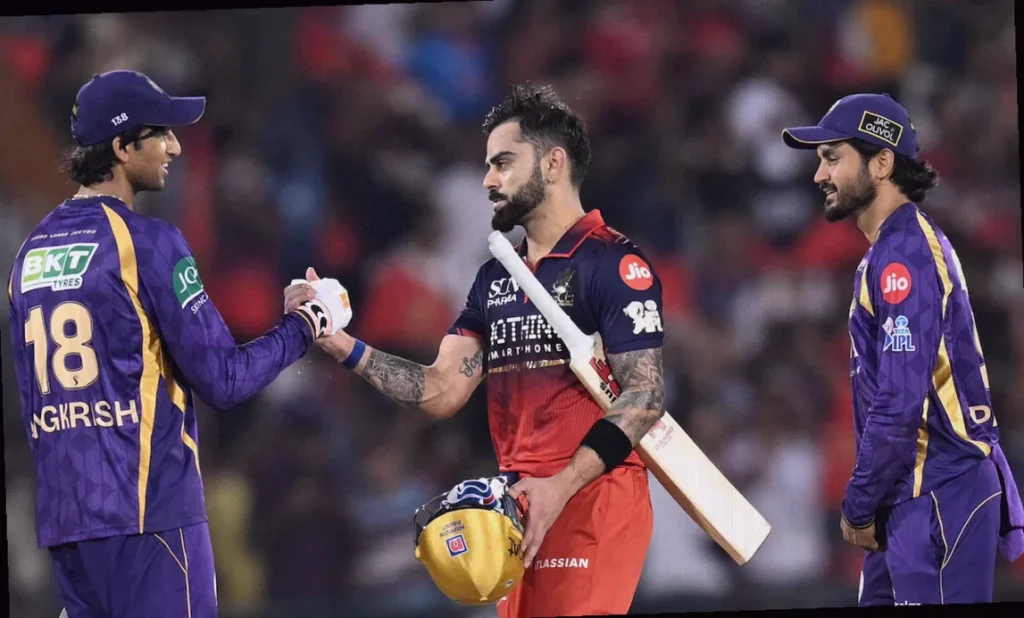
Kolkata Knight Riders are leading the valuation conversation in the Indian Premier League, with estimates placing the franchise in a range of INR 19,200 crore to INR 22,500 crore. The figures reinforce the IPL’s shift from a domestic T20 spectacle into a high-value global sports asset class, while also spotlighting superstar athletes and the wider rise of professional sport across India.
Key takeaways
- KKR’s franchise value is estimated at INR 19,200 crore–INR 22,500 crore, topping the IPL valuation ladder.
- The combined valuation of all 10 IPL franchises is projected at INR 1,63,200 crore (USD 18 billion), implying an average worth of USD 1.8 billion.
- Hurun India’s IPL athlete rankings place Virat Kohli first with 617 points, ahead of Rohit Sharma and M. S. Dhoni.
- Cumulative IPL player earnings across 18 seasons have surpassed INR 6,341 crore.
- Women’s cricket is gaining financial momentum too, with Smriti Mandhana leading WPL earnings at INR 13.7 crore.
- India’s sports ecosystem is expanding beyond metros, alongside growing multi-team ownership and sponsorship networks.
KKR leads franchise valuations; IPL’s valuation trajectory
The valuation estimates put KKR at the front of the pack, positioned above Mumbai Indians and Chennai Super Kings, both of whom have won the IPL title five times. The study projects the overall market value of the league’s 10 franchises at INR 1,63,200 crore, which is stated as USD 18 billion. It also notes that the average IPL franchise is already valued at about USD 1.8 billion.
Looking ahead, the report suggests that average franchise valuations could climb to USD 15 billion by 2032. That would place Indian franchises in the same financial tier as elite NFL organisations, underlining how IPL teams are increasingly treated as premium entertainment and sports businesses rather than standalone cricket brands.
Virat Kohli tops athlete rankings; record IPL earnings
While KKR leads the franchise charts, the biggest athlete asset in the competition is identified as Virat Kohli. He tops the Hurun India IPL Athlete Performance Rankings with 617 points. The same ranking framework also highlights his position as the leading all-time earner in the league, with INR 230.2 crore amassed over 18 seasons through his stint with Royal Challengers Bengaluru.
Rohit Sharma follows Kohli with INR 227.2 crore, while M. S. Dhoni is listed at INR 200.3 crore. The report also records that total player earnings across 18 IPL seasons have crossed INR 6,341 crore, reflecting how the league’s commercial growth is flowing into player contracts and brand value.
How valuations are calculated; investment returns
The valuation approach described in the report blends two methods: discounted cash flow projections and a market-based price-to-sales lens. It also factors in variables such as on-field performance, fan engagement, the breadth of global cricket assets, and the economic profile of the cities where teams are rooted.
Released on Monday, the study points to the strong payoffs produced by IPL investments. Lachlan Murdoch is reported to have secured a 92.1x return following his exit from Rajasthan Royals. It also cites United Spirits achieving a 37.2x return from its stake in RCB, illustrating how franchise stakes can compound significantly over time.
Women’s sport gains traction; India’s broader sports boom
The report flags women’s sport as an increasingly influential part of India’s commercial sports landscape. Smriti Mandhana is named as the top earner in the WPL with cumulative earnings of INR 13.7 crore. It further states that the top 10 WPL players together have earned more than INR 90 crore across the first four seasons, signalling accelerating commercial value in women’s cricket.
Beyond cricket, the study highlights the pace of growth in India’s wider sports economy. It says the country now runs six major professional sports leagues covering cricket, football, kabaddi, hockey and volleyball. Across these, there are 59 franchises and 763 active brand partnerships. Within that total, the IPL alone is credited with 307 sponsorship deals, while other leagues are also building their own commercial ecosystems.
Another theme in the report is that the sports boom is no longer limited to metropolitan centres. Tier 2 and Tier 3 markets are described as emerging as key growth zones for fandom, sponsorship activity, and overall engagement with league cricket and other professional competitions.
Multi-team ownership expands; IPL remains the main engine
The report also notes that multi-team ownership groups are expanding quickly. GMR Group is said to now own 10 teams across cricket, kabaddi and kho-kho on a global scale. JSW Group, meanwhile, is reported to have seven teams spanning cricket, football, kabaddi and hockey.
Concluding its analysis, the 86-page report emphasises that Indian sport is shifting from a primarily cricket-driven entertainment product into a broader multi-sport business economy. The IPL is still presented as the biggest financial powerhouse, with its momentum supported by franchise brands such as Kolkata Knight Riders and by star athletes including Virat Kohli.
