
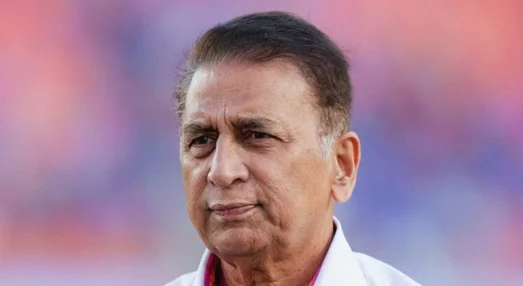
Former India captain Sunil Gavaskar has taken a hard line against overseas players’ availability in the Indian Premier League, arguing that questions around commitment and fitness are being waved away too easily. In a candid critique, he pressed the Board of Control for Cricket in India (BCCI) to introduce tougher conditions for players who do not show up from the start of the tournament in line with their IPL commitments.
Gavaskar’s criticism and what he wants changed
- Gavaskar dismissed the common defence that franchises are “informed before”, asking how early that information is provided relative to the start of the competition.
- He argued that playing for the country should come ahead of franchise cricket, while also stressing that teams invest heavily—financially and personally—by building relationships with players and often their families.
- On the workload argument, Gavaskar mocked the idea that bowling in the IPL is too taxing, saying that a bowler’s match contribution is limited to four overs.
- He reasoned that if a player can bowl a comparable workload during training without issues, then there should be no barrier to doing the same in matches.
- Gavaskar further outlined the league workload: bowling four overs across 14 matches over roughly two months, with the possibility of additional overs if the franchise qualifies for the business end of the tournament.
- He concluded that if the body is truly unable to handle that amount, then the better approach would be to provide more time for recovery rather than treating match involvement as an unrealistic demand.
- He also highlighted the financial upside overseas boards receive from IPL deals, contending that players should show increased accountability to franchises that pay significant sums for their services.
- Gavaskar suggested that cricket boards benefit from the structure of overseas contracts, and questioned whether the commission linked to No Objection Certificates is handled by the BCCI or the franchises.
- To support his point, he cited figures: Australia leads with 16 players worth ₹121.65 crore, followed by South Africa with 17 players at ₹77 crore, England with 12 at ₹68 crore, West Indies with 12 at ₹69 crore, and New Zealand with 12 at ₹33 crore.
- He contrasted this with other T20 competitions, arguing that no other global T20 league pays boards of overseas players directly in the same way, and referenced The Hundred as an example of a different model.
- Finally, Gavaskar called for strict consequences, urging the BCCI to impose a “two-year ban” on overseas players who are not available from the first match of the tournament unless they are on national duty.
Why his remarks have landed now
Gavaskar’s comments arrive amid availability concerns affecting multiple franchises. He pointed to Kolkata Knight Riders being one bowler short, with Australia’s Cameron Green still recovering from an injury. Cricket Australia had reportedly informed the franchise, and Green has been working on bowling fitness during KKR nets, but the situation has drawn criticism.
He also noted that Sunrisers Hyderabad have been impacted by the absence of captain Pat Cummins, who has been ruled out for at least the first half of the season, with no clear timeline for his return. Gavaskar added that both teams’ bowling units have struggled, with the sides sitting in the lower half of the points table.
