
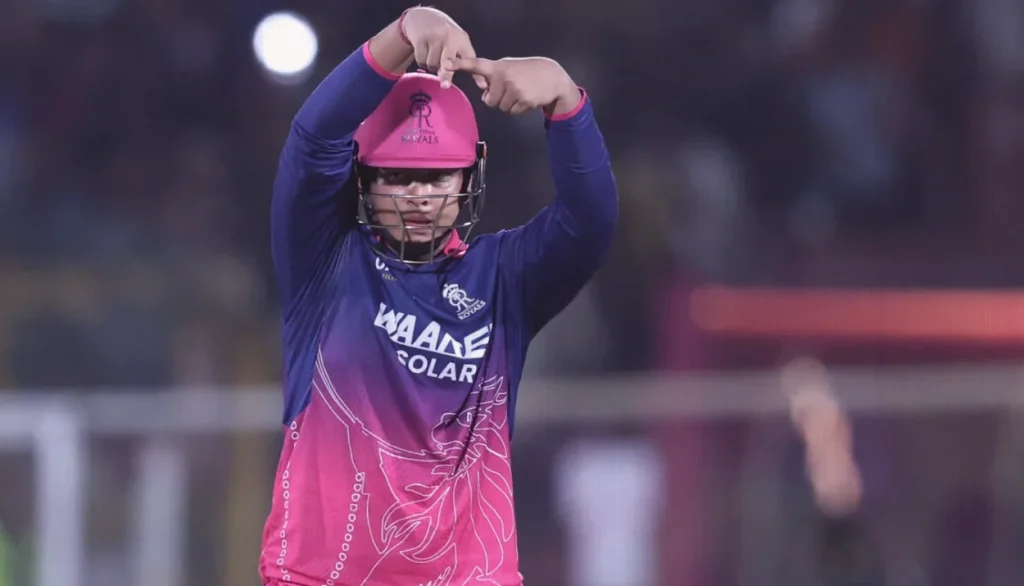
Lucknow Super Giants will be delighted by the manner in which Vaibhav Sooryavanshi has been adding layers to his T20 game. On television, he produced a ramp shot for the first time in the available ball-by-ball records, using the bowler’s pace to lift the ball over the wicketkeeper—an approach that has previously been rare in his innings.
Key takeaways
- Vaibhav Sooryavanshi’s ramp on TV was the first instance of him playing that kind of shot in the ball-by-ball data available.
- The ramp was helped by the same idea—letting pace do the work—so the ball could carry beyond the keeper.
- Including related variations, he has used only nine ramp/uppercut/scoop shots in total, and this was the first time he attempted more than two in a single innings.
- His most important early effort was a ramp/uppercut style shot off Mayank Yadav over short third, his first boundary after starting 1 off 5.
- Sooryavanshi’s form is backed by big numbers: 579 runs this season at a strike rate of 236.32, with him leading both the runs and strike-rate charts.
How the ramp, uppercut and scoop fit into his evolution
There is nuance in categorising these shots: an uppercut for one batter can be viewed as a ramp by another, so the analysis treats the uppercut as part of the same family. For completeness, the scoop has also been counted, even if it is played more as a variation than a primary scoring method.
Across his work so far, Sooryavanshi has managed just nine ramps, uppercuts and scoops combined. This latest innings stands out because it was the first time he went beyond two such shots in the same innings.
Turning points against Mayank, and then Prince
The earliest highlight came as a critical uppercut off Mayank Yadav, sent over short third. It arrived after a slow start in which Sooryavanshi had been on 1 off 5 balls, and it marked his first boundary in that spell. The decision-making also looked deliberate: it appeared he was weighing up Mohsin Khan, who had produced a wicket-maiden against him in the reverse fixture. In that earlier matchup, Sooryavanshi had gone for a duck the first time he faced Mohsin—almost suggesting he had planned his approach.
Mayank, meanwhile, appeared to squeeze him early. In the first two overs, he bowled multiple deliveries above 150 kph, combining express pace with slower balls that initially kept Sooryavanshi uncomfortable.
Later, Sooryavanshi used the same general idea against another member of the LSG attack—Prince. He was 11 off 12 when he played the ramp shot, and it looked almost instinctive. He was moving away from the line, the ball was nearly gone past him, and he chose to guide it with the ramp so it would clear the wicketkeeper.
Why this matters in T20—and what his numbers say
Sooryavanshi’s batting is already full of startling moments, but the real talking point here is how he has been able to dominate quality bowling without leaning on a shot that often defines T20 success. A well-timed ramp can complicate plans around the bouncer because it changes how bowlers feel they can attack. Even then, this only represented his second T20 innings in which he scored more than 15 runs behind square on the off side—ten of those came within his first 17 runs.
There was also credit to the bowlers for forcing the batter to reassess. Mohsin, Mayank and Prince pushed Sooryavanshi into evaluating his options, but what mattered most is how he responded. Yashasvi Jaiswal played a major role as he helped dismantle Mohsin’s second over, yet Sooryavanshi still served notice that his creativity comes with a sharper ability to pick the right battles rather than simply swing at everything.
Impact Player cameo and the bigger picture
Sooryavanshi was named the Impact Player for the LSG innings and only took the field in the 19th over. That timing gave him a chance to watch, think and plan. In his post-match interview, he suggested that he felt he could give himself that window because he knows he can clear the ropes with two or three sixes in an over at will—something that clearly forces bowlers to think twice about the risk they take in the closing overs.
His subsequent hitting reflected that confidence, especially a drive through extra cover off Mayank’s high pace, struck with his weight on the back foot. With that kind of control, he is not only staying at the top of the runs charts this year but also the strike-rate table. Sooryavanshi has scored 579 runs at 236.32.
With that momentum, the next wish is for Rajasthan Royals to secure a playoff spot—so more chances come for fans to watch Sooryavanshi in action. There is also a hope that opposing bowlers continue to challenge him by taking him out of his comfort zone, allowing his problem-solving skills to be seen even more clearly.
