
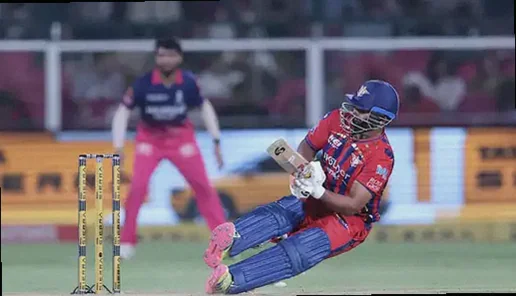
Lucknow Super Giants have been finding ways to begin brightly, only to watch their batting plans unravel once the match moves beyond the early overs. This season’s trend hasn’t been about poor Powerplay starts; it has been what comes after the field opens out and the middle phase demands sharper decision-making. The Jaipur clash against Rajasthan Royals offered the latest snapshot of that recurring pattern, where a platform built quickly was then allowed to slip away—leaving a chase that looked far easier than the final total suggested.
Jaipur lesson: fast start, late collapse
LSG struck early in Jaipur, racing to 83/0 in the Powerplay. They also looked comfortably placed at 149/1 after 12 overs, a situation that typically points toward a score in the 240-plus range on a batting-friendly surface. However, the final eight overs delivered a dramatically different story. Lucknow managed just 71 runs in that span, turning what appeared to be a strong position into a total that ended up being below par.
Rajasthan Royals chased the target without much trouble, reinforcing how often LSG’s innings have been losing control during the middle-to-death transition.
A pattern across opponents: starts intact, middle overs fail
The same theme has shown up repeatedly against different teams and on different grounds. LSG’s ability to accelerate early has not translated into sustained scoring after the Powerplay. Several examples highlight the gap between their opening momentum and their middle-overs output.
- Versus Mumbai Indians, LSG reached 123/1 after eight overs but added only 105 across the remaining 12, with Mumbai finishing the chase with an over to spare.
- At Chepauk against Chennai Super Kings, Lucknow raced to 112/2 in nine overs, but the innings barely cleared the 200 mark and they suffered another defeat.
- In Jaipur, they did improve slightly in the middle phase, posting 82/2 after six overs, yet that still came with a one-run deficit compared to what they had scored in the six-over Powerplay.
When the innings is broken down by overs, the issue becomes especially clear. Overs 7 to 15 are the specific window where LSG lose the most ground.
- Against Mumbai Indians, Lucknow lost 85/4 in overs 7 to 15.
- Against CSK at Chepauk, it was 63/5 in the same overs range.
- In Jaipur, LSG managed 82/2 in that stretch, which was better than the other examples—but still not enough to keep the overall trajectory steady.
Numbers explain it: strong Powerplay, poor middle-overs returns
The statistical contrast between LSG’s early overs and their later overs is stark. In the Powerplay, they have been a high-scoring side, but once the innings enters the middle phase, their returns drop sharply.
- LSG average 53.26 in the Powerplay, the second-best in the tournament, behind Gujarat Titans at 58.23.
- They score at 10.24 runs per over in the Powerplay, which is the fourth-highest rate among all teams.
Much of that early success is tied to the way Mitchell Marsh and Josh Inglis have set the tempo at the top. Yet the collapse after the field spreads is where LSG have struggled most. They are the lowest-performing batting unit in overs 7 to 15 across the key batting parameters. In that window, they have lost 40 wickets, and they are the only side averaging under 30 runs while also scoring at fewer than eight runs per over.
The death overs have not offered a rescue either. LSG sit among the bottom three teams across most metrics in the final phase, which means the damage done in overs 7 to 15 often carries through to the end of the innings.
How the innings turned in Jaipur—and what may be driving the imbalance
After Pooran’s dismissal, boundaries dried up
Against Rajasthan Royals, the change in momentum arrived immediately after Nicholas Pooran was dismissed in the 13th over. From there, LSG went through a three-over stretch where boundaries failed to materialise, and the two batters in the middle hardly attacked. A 16th-over surge—scoring 17 runs—briefly revived momentum, but it did not shift the overall direction.
In the final four overs, Lucknow scored only 38 runs. In fact, nearly half of those deliveries—11 balls—produced no runs at all.
Squad construction and overseas balance are major factors
One major reason for the middle-overs struggles appears to be how the XI is built. LSG have not consistently included a specialist batter or a genuine all-round option at No. 8 in the starting lineup, even with the Impact Sub rule available. Mohammed Shami has been used in that batting spot twice.
Across the season, three separate collapses have forced LSG to turn to Shahnaz Ahmed or George Linde as the Impact Player all-rounder. The trade-off, as the results suggest, has weakened their bowling enough to contribute to all three losses ending comfortably.
There is also a recurring overseas selection imbalance. In six of their 13 matches, Lucknow did not use all four overseas slots. Instead, they have often stacked the top order with four overseas batters, leaving less experienced Indian batters to handle the hardest phase of the innings—an approach that has not paid off often. That imbalance may also help explain why, after Pooran fell in Jaipur, the batting shifted into more conservative “percentage” cricket with Marsh alongside Rishabh Pant.
