
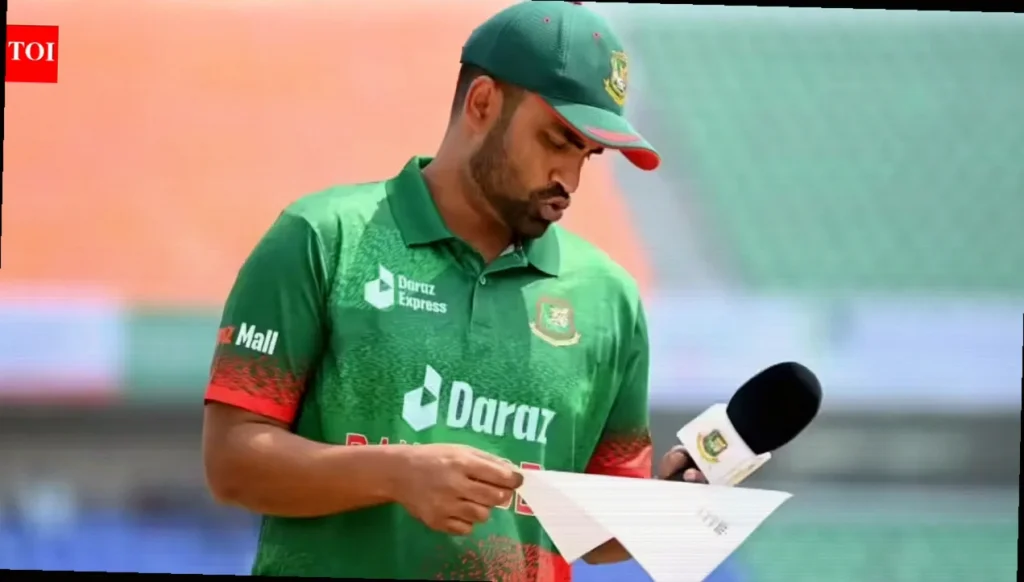
New Delhi: Former Bangladesh captain Tamim Iqbal has stepped into a new administrative role, taking over as the Bangladesh Cricket Board’s interim president after being appointed by an ad-hoc committee earlier this year. In a wide-ranging conversation, he weighed in on why he moved into cricket management, what he wants to fix behind the scenes, and how he views the shifting balance between formats as T20 leagues continue to multiply.
At a glance
- Tamim Iqbal was installed as Bangladesh Cricket Board’s interim president by an ad-hoc committee earlier this year.
- He says a heart attack last year became the turning point that pushed him toward administration.
- Tamim wants to restore Bangladesh cricket’s reputation and pride by improving facilities for players.
- He believes Bangladesh could have handled its decision to withdraw from the T20 World Cup more maturely, and insists cricket must come first.
- He expects an India–Bangladesh bilateral series later this year and hopes India will play the full schedule.
- On Pakistan Tests, he praised Bangladesh for preparing green, grassy wickets in both matches and calling it a mental shift.
- He credited Mominul Haque for changing Bangladesh’s fast-bowling mindset and highlighted coaches Allan Donald and Ottis Gibson.
- Tamim urged the cricket world to protect Test cricket while acknowledging the growth of T20 and ODI leagues.
- He argued money cannot replace the passion of playing for one’s country.
Tamim described the adjustment to leadership as “very different” from facing the new ball, but said it is exactly what he wanted. His goal, he explained, is to correct the recurring issues players used to complain about during his long playing career, so that current cricketers no longer feel the same gaps. While he acknowledged he cannot solve everything alone, he believes he can still make enough difference to strengthen Bangladesh cricket through better infrastructure.
He also pointed to the reputational hit Bangladesh cricket has faced recently, arguing it has not been good for the game’s standing in the country. In his view, cricket matters deeply to Bangladesh supporters and the sport remains a source of pride for many people, so rebuilding that pride is central to his mandate.
Facilities over on-field roles
With his playing days behind him, Tamim stressed that batting, bowling, and fielding are no longer his responsibility. Instead, he wants to help players by ensuring they have the best possible facilities, aiming to improve performance by even small margins—like two, three, or five percent—that can change outcomes over time. He returned to the same theme: restoring confidence and pride so Bangladesh cricket can move forward with the right public image.
On Bangladesh’s decision to withdraw from the T20 World Cup earlier this year, Tamim said the situation could have been handled better. He argued that mature discussions might have produced a workable path, and he added a clear principle: cricket should never be the one that suffers from off-field turmoil.
Heart attack as the turning point
When asked when he decided to move to the other side of the table, Tamim traced it directly to his health scare. He said he suffered a heart attack last year while attempting a comeback to the national team, and after that episode he concluded it was not the right time to continue. He suggested that even if he had returned, he would have likely played only for another year or two, and he also cited the responsibility of having a young family as part of his decision.
He then addressed what fans want most: a return of India–Bangladesh cricketing action after strained relations ahead of the T20 World Cup. Tamim said there is a scheduled series against India later in the year and he is hopeful India will travel and complete the full itinerary. He described bilateral contests between the two sides as high-intensity cricket that fans enjoy, especially when India tours Bangladesh.
He also noted that Bangladesh had done well in the most recent Test series against India, and highlighted that matches between the nations tend to carry extra momentum. According to Tamim, problems will always exist, but it is up to cricket boards to resolve them through communication and dialogue. He pointed to the new board structure and the ad-hoc committee framework, expressing confidence that discussions will happen, with the overriding objective being that cricket wins—no matter what else is going on.
He was emphatic that he does not see India and Bangladesh cricketing relations as fundamentally broken. If issues exist, he believes they can be discussed and solved, and he repeated his hope that India will play in Bangladesh later this year.
Bangladesh’s Test success and mindset
Tamim was also asked to assess Bangladesh’s Test series win against Pakistan—first away, then at home. He said both pitches offered sporting conditions in the matches, with Bangladesh producing green, grassy wickets in each Test. For him, that reflected a deliberate mental shift, because he felt Bangladesh could have easily reverted to spin-friendly tracks simply to protect the series.
Instead, he praised the decision to prepare “green tops,” which he said is the change in mentality he wants to see across Bangladesh cricket. He underlined that Bangladesh must start performing strongly at home in Test cricket and build home grounds into fortresses. While he acknowledged Bangladesh have done well in T20s and ODIs at home, he said the Test format is still the box Bangladesh needs to tick consistently.
At the same time, he argued that winning overseas matters too, but confidence built at home will be “massive” for the team. Strong domestic Test results, in his view, should translate into clearer belief and better execution when Bangladesh plays abroad.
Fast-bowling rise and domestic work
On the shift in Bangladesh’s mindset—particularly within the fast-bowling group—Tamim said he observed it closely because he was playing during the change. He gave significant credit to then-captain Mominul Haque, recalling how in first-class cricket Mominul pushed fast bowlers to bowl the maximum number of overs. Tamim described an instance when he suggested it would be easier to let spinners take over, but Mominul responded with a firm view: fast bowlers must keep bowling now so they can learn, regardless of whether they are immediately successful.
Tamim said Mominul was the key figure who altered the fast-bowling unit’s approach, ensuring fast bowlers were given maximum importance in both domestic and international cricket. He added that once fast bowlers started finding success, domestic players and young kids began to believe that it was possible in Bangladesh to become a fast bowler, succeed, and reach superstar status.
He also pointed to the role of coaches Allan Donald and Ottis Gibson, saying they contributed along the way to that fast-bowling transformation. He returned to the same core idea: belief grows when results follow, and the Bangladesh pipeline became more confident as fast bowlers improved and delivered.
T20 leagues, ODI space, and protecting Test cricket
When discussing the future of cricket amid the explosion of global leagues, Tamim questioned whether ODI cricket will find room in an already crowded calendar. He also raised the possibility that the 2027 ODI World Cup could be the last, while stressing that the overall dynamics of cricket have changed. He said the ODI World Cup still stands as the biggest event in 50-over cricket, even as T20 interest continues to surge.
He argued that cricket needs a way to balance the formats, because leagues are now appearing across the world, including among associate nations. In his view, saving Test cricket is essential because it remains the most respected format and still draws strong interest, even if some countries do not always fill stadiums. He said there are still places where crowds pack venues for Tests, and those experiences need to be made more engaging.
To illustrate the challenge, Tamim used the example of Nahid Rana. He asked what happens when a franchise—operating teams across several leagues—offers a lucrative contract and tells a youngster to avoid red-ball cricket and travel the globe for T20 opportunities. He questioned how easy it is for today’s players to focus on international cricket when they can earn dramatically more money in the league circuit.
Tamim’s answer centered on motivation and identity. He said money cannot buy the passion to play for your country, adding that if that were true, most cricketers would have chosen the franchise route. He acknowledged he has deep respect for franchise cricket, but insisted that representing a nation carries something unique that cannot be purchased.
He continued by comparing it to football, where players can earn vast sums yet still turn up to play for their countries when the opportunity arises. Tamim suggested that while exceptions exist and some players may make different choices, the broader picture is unlikely to change, because the pull of national duty comes from the heart.
He closed the discussion with a reminder to keep cricket’s core priorities intact, especially as the T20 ecosystem expands. The message, repeated throughout his interview, was that cricket should always come first—even when off-field complications threaten to derail the game.
