
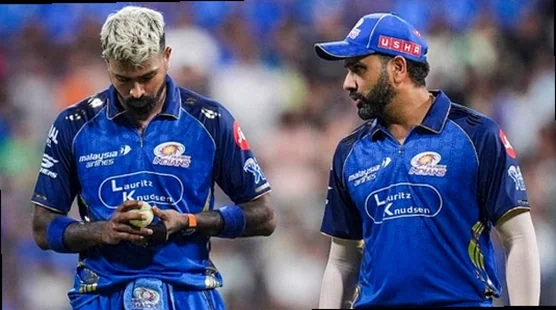
On December 15, 2023, Mumbai Indians named Hardik Pandya as the next captain, positioning him as Rohit Sharma’s successor for the 2024 season of the Indian Premier League and beyond. The decision initially appeared logical: Rohit’s output had not looked as dominant as in earlier years, and Mumbai were entering a stretch without silverware, having gone three seasons without lifting the trophy. Hardik, meanwhile, had delivered immediate impact with Gujarat Titans—winning the IPL title in 2022 and finishing as runners-up in 2023. Yet, three years on, former India players Murali Kartik and Manoj Tiwary believe the gamble has not worked out for MI.
Why the change was questioned
Kartik argued that removing Rohit from captaincy was always going to unsettle the group, given the stature he held within the franchise. MI were also facing a difficult phase in the competition, battling Lucknow Super Giants in a bid to avoid finishing last for the second time in three seasons. For Kartik, the core issue was not Hardik’s ability, but what his appointment did to MI’s dressing-room dynamics.
- Kartik said Rohit had won five titles for MI and also delivered major international success, including the T20 World Cup, making his removal from leadership a decision that would naturally create problems.
- He pointed to MI’s retained core—Rohit Sharma, Jasprit Bumrah, and Suryakumar Yadav—arguing that keeping those three players in place while bringing in a captain from outside could disrupt the team atmosphere.
- Kartik added that Suryakumar Yadav is India’s T20 captain, Bumrah is viewed as a leader within the Indian setup, and Rohit remains a towering figure in franchise culture—so introducing someone new in the captaincy role was bound to affect how everyone perceived the hierarchy.
Speaking after MI’s four-wicket defeat to Kolkata Knight Riders, Kartik said players would inevitably feel the shift. He noted that if Rohit had personally chosen not to continue, that would be different—but argued that, at minimum, the franchise should have approached Rohit first given his achievements and status at that point, including being India’s captain after a World Cup win and returning with significant credibility.
Hardik’s captaincy numbers under scrutiny
The debate also moved to results. Kartik highlighted that Hardik’s leadership record has declined over time. In 38 matches as captain, Hardik has won 15, producing a win rate of 39.47. Kartik described this as the lowest among MI captains who have managed more than 10 games, reinforcing the view that the captaincy switch has not yielded the intended stability.
- Hardik’s record as MI captain: 38 matches, 15 wins.
- Win percentage: 39.47.
- Kartik said it is the poorest win rate among MI captains with over 10 matches in charge.
- He suggested that with Suryakumar Yadav and Jasprit Bumrah already positioned as leadership candidates, Hardik’s return may not have landed smoothly inside the dressing room.
Kartik was emphatic that this is not about Hardik as a performer. He maintained that Hardik did well at Gujarat Titans, where his impact helped deliver the franchise title in 2022. The concern, Kartik said, is how the rest of the squad reacts when leadership comes from outside the existing team structure.
Dressing-room impact and Rohit’s position
According to Kartik, questions of status and place naturally arise when a captaincy role is filled by someone who was not originally retained. He suggested that Suryakumar may have wondered why he could lead India in T20 cricket but not MI, and that Bumrah could also have questioned where he stood if another player was placed above the internal leadership group.
Most significantly, Kartik argued that the franchise lost the dressing-room cohesion before the season even began. He pointed out that Hardik was not retained initially, which he said meant MI had already disrupted the internal puzzle of how roles and respect were expected to function.
- Kartik said the challenge is about “bringing someone from outside” and the reaction it triggers among the existing leadership group.
- He argued that Suryakumar Yadav’s India captaincy status could have made the MI captaincy hierarchy feel inconsistent.
- He added that Jasprit Bumrah, as an established leader, may have questioned his place in the leadership order.
- Kartik claimed that because Hardik was not among the retained players, the dressing room was effectively already fractured—leaving the “jigsaw” of relationships not fitting together properly.
Manoj Tiwary: Rohit deserved respect, and MI will change captain again
Manoj Tiwary, meanwhile, focused on Rohit Sharma’s situation and the long-term decision-making behind it. He suggested Rohit—still the face of MI—has often looked unsettled in the current season, and that his disappointment is understandable. Tiwary emphasized that Rohit was entrusted with captaincy in 2013, and from there MI went on to win five IPL titles in nine seasons, a record that reflected exceptional leadership and team building.
Tiwary said removing Rohit from the role was not the right choice, a position he has reiterated. However, as MI prepare to rebuild over the next “300-odd days,” he believes Hardik will not remain captain next season. Tiwary argued that Rohit has watched the franchise’s fortunes decline over the last three years, and that this is visible even in the expressions he has shown from the dugout. He also pointed out that Rohit’s experience—five IPL trophies, captaining India, winning the T20 World Cup and the Champions Trophy, and being part of multiple successful Indian sides—gives weight to what he believes and how he sees decisions unfold.
Tiwary also noted that MI’s on-field results underline the severity of the downturn. He said Mumbai Indians are a franchise that expects to compete for the title when they step onto the field, yet this season they have been hovering near the bottom of the points table. He added that even the previous campaign was disappointing, and that the disappointment was visible on the owners’ faces when they came onto the ground.
In Tiwary’s view, MI now face a rebuild that will likely include a leadership change. He said he is “200 per cent sure” MI will have a new captain next season—either Suryakumar Yadav or Jasprit Bumrah. While he acknowledged that Bumrah is a fast bowler and injuries can happen at any time, Tiwary felt the franchise may eventually lean toward Suryakumar, citing the strength of his captaincy record and winning percentage.
- Tiwary said Rohit’s disappointment this season is understandable given his role in shaping MI since 2013.
- He argued that Rohit’s record includes five IPL titles, India captaincy, the T20 World Cup, and the Champions Trophy.
- Tiwary pointed out that MI have qualified for the playoffs only once in the last three years.
- He said MI are near the bottom of the points table this season, and the previous season was also disappointing.
- Tiwary predicted Hardik will not be captain next season and expects MI to appoint a new leader, likely Suryakumar Yadav or Jasprit Bumrah.
- He suggested Suryakumar may be the more likely choice due to strong captaincy output and win rate, while also noting Bumrah’s injury risk as a fast bowler.
For both Kartik and Tiwary, the central theme is clear: the captaincy shift has not restored the franchise’s momentum, and the dressing-room balance appears to have been harmed. And all of it, they suggest, rests on one final condition—whether Rohit Sharma wants to return to the role again.
