
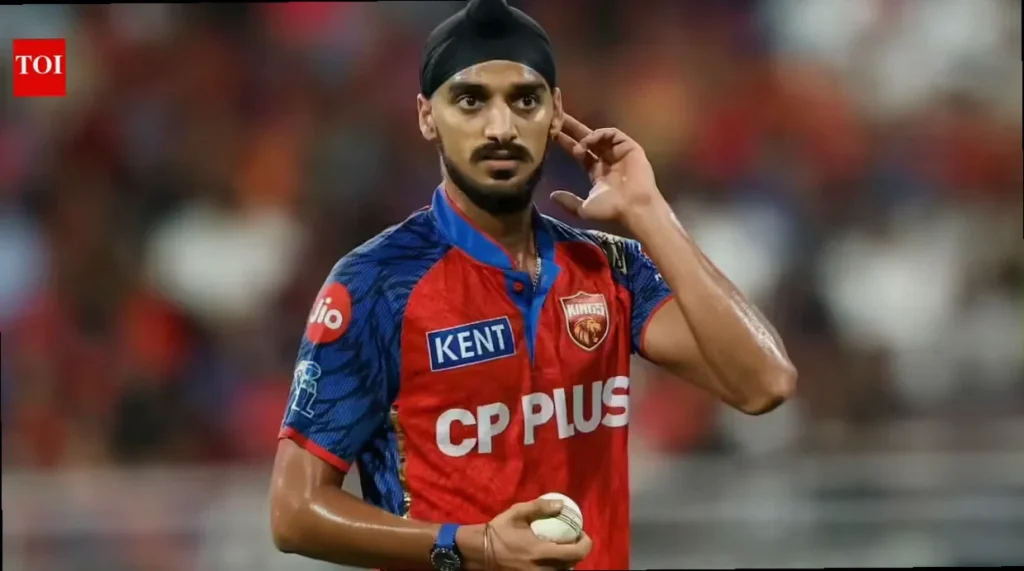
Lucknow witnessed a difficult day for Punjab Kings as Arshdeep Singh struggled to contain Lucknow Super Giants in a high-stakes IPL 2026 match at the Ekana Cricket Stadium on Saturday. The left-arm quick was expected to set the tone with early pressure and keep the run flow under control, but LSG’s batters targeted him from the start and kept finding ways to punish every mistake.
Arshdeep finished with figures of 3 overs for 52 runs, an economy rate of 17.30, and his outing was further marred by four wides. The damage didn’t stop at the numbers either—his spell also brought up an unwanted milestone, marking the highest number of instances of conceding 50-plus runs by a Punjab Kings bowler in IPL history.
In the context of that record, the most frequent 50-plus blowups by PBKS bowlers read: 7 by Arshdeep Singh, followed by 4 from Sam Curran, while Kagiso Rabada, Mohammed Shami and Xavier Bartlett each recorded 3.
Despite the setbacks in the bowling, Lucknow made sure the contest stayed competitive, posting 196 for six. A key driver of the innings was Josh Inglis, who played with the kind of aggression that quickly changes the complexion of a chase. Inglis struck 72, continuing his early momentum in a style that set the tempo for the rest of the batting unit.
Lucknow’s middle overs gained shape through a fourth-wicket stand of 65 between Inglis and Rishabh Pant. Pant contributed 26 off 21 balls, and the duo rebuilt after LSG had slipped to 69 for three in the seventh over. From there, they kept rotating the strike and ensured that any pressure created by the Punjab bowlers was met with boundaries.
Inglis began with intent, especially against Arshdeep, taking 16 runs in the opening over alone by striking four boundaries early. After that initial burst, the innings shifted gear with Ayush Badoni playing a major role following two dismissals — Arshin Kulkarni, who had been opening in place of Mitchell Marsh, and Nicholas Pooran. Badoni’s cameo was particularly eye-catching: he struck 43 off just 18 deliveries and helped add 49 runs for the third wicket with Inglis.
Badoni then took the attack directly to Azmatullah Omarzai, blasting 24 runs in the fifth over. The sequence—4, 6, 6, 4—showed how quickly LSG were able to accelerate whenever the ball came onto the bat. That burst helped Lucknow recover from early setbacks, and they closed the powerplay at a strong 66 for two.
Badoni’s entertaining innings ended when Prabhsimran Singh completed a sharp stumping off Yuzvendra Chahal, with the decision confirmed by DRS. Inglis, meanwhile, continued his assault and entered another destructive stretch by striking a six followed by a four and another four off Arshdeep, turning Arshdeep’s already tough spell into an even bigger challenge for Punjab.
By the end, Inglis had punished Arshdeep for six fours and two sixes, compounding what had already been a season to forget for the pacer. Pant, who survived a dropped catch on 18 by Shreyas Iyer at covers off Chahal, struggled to time everything perfectly, but he still provided steady support to keep the innings moving in the right direction.
Inglis moved to his fifty in 28 balls before Pant eventually fell to Chahal. Chahal finished with figures of 2/25. The Australian batter’s innings came to an end when part-time bowler Shashank Singh dismissed him; Iyer held a comfortable catch at long-on after setting himself in a straighter position.
Abdul Samad offered late momentum with an unbeaten 37 off 20 balls, striking a couple of towering hits. However, once Mukul Choudhary was dismissed cheaply to Marco Jansen (2/33), Lucknow’s hopes of reaching the 200-run mark faded, leaving them with 196 for six.
There was also a notable moment for the franchise as Arjun Tendulkar, son of legendary batter Sachin Tendulkar, made a rare appearance in the tournament. It was his sixth match in the IPL, bringing him back into the spotlight after limited opportunities.
