
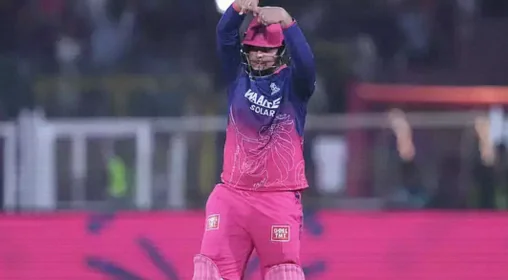
A day before a defining league fixture that could put Rajasthan Royals on the playoff map, the IPL conversation in Mumbai was unexpectedly dominated by Vaibhav Sooryavanshi. The 15-year-old left-hander—currently sitting fourth on the batting run tally—has been a constant impact player for the Royals throughout the campaign, even wearing the orange cap at different points this season.
Key takeaways
- Vaibhav Sooryavanshi, 15, is fourth on the season’s run charts and has repeatedly been among the tournament’s leading scorers.
- In his most recent meeting with Mumbai Indians, he struck 39 off 14 balls, smashing two sixes off Jasprit Bumrah in a rain-affected chase.
- Rajasthan Royals need to beat Mumbai Indians on Sunday to secure a playoff berth, with multiple teams still fighting for the final spot on the last league day.
- Royals assistant coach Trevor Penney believes Sooryavanshi’s rise is about skill development rather than age, while also stressing the decision around national progression is a “trick question.”
- Rajasthan’s chances hinge on its top order, but availability concerns remain: Ravindra Jadeja and Riyan Parag are carrying niggles, and Ravi Singh is out with a hamstring injury.
Sooryavanshi’s rise and the Royals’ view on “when”
Sooryavanshi has been widely viewed as one of the most destructive batters in the competition, and the talk around a faster route to higher honours has grown louder. During this breakthrough season, he has already earned a place in the India A group for the Sri Lanka triseries in June.
Trevor Penney, Royals’ assistant coach, offered a nuanced take on how quickly the next step should come. He admitted he has never seen a batter of Sooryavanshi’s age play with such maturity, saying he would be talked about in the same way even if the youngster were older. Penney pointed out that the evolution this year—compared to the previous season—is visible in how Sooryavanshi’s shot selection has improved, especially against plans that target perceived weaknesses.
Penney also described how Sooryavanshi adapts once he understands how opponents want to bowl at him. The pattern, in Penney’s view, is that bowlers adjust their approach, but once Sooryavanshi works the method out, he forces them to return to his strengths and the dominance follows.
On the question of international readiness, Penney argued that everyone assumes the talent level is already there. He referenced Sooryavanshi’s numbers in the Under-19 50-over World Cup—175 runs—as evidence that he can handle multiple formats. Penney added that the style of attacking from ball one is not completely new in Test cricket, pointing to Virender Sehwag as an example. His conclusion was that the timing could be better framed around how a player matures—particularly away from the field—before being thrown into the highest level role.
Playoff pressure vs an unburdened Mumbai
For Rajasthan, the immediate focus is the upcoming match against Mumbai Indians on Sunday. A win would guarantee a playoff spot in a tightly packed season, where four franchises remain in contention for the single qualifying position going into the final day of the league stage.
Penney acknowledged the stakes, while also highlighting that the Mumbai Indians have comparatively little pressure. He stressed that MI still possess a strong squad and are never easy to discount, especially with the talent to turn up with intensity when there is no burden of consequence.
He described the scenario as particularly exciting for Rajasthan: being one point clear, knowing that a victory gives them full control of their destiny. Penney also noted the path ahead—qualifiers and the chance to reach Chandigarh—if they can take care of this must-win game.
Royals’ season trajectory, injuries, and why the top order matters
Rajasthan’s IPL 2026 campaign began with momentum, winning their first four fixtures under Riyan Parag’s leadership. After that, the side struggled to put together consecutive wins, but Penney rejected the idea that the team’s brand of cricket is failing.
He suggested the middle phase was disrupted by small, costly errors in the field—tight defeats and dropped chances that swung outcomes. Still, Penney insisted Rajasthan played well even in games they lost, and he pointed to the most recent victory as a confidence boost.
In Penney’s assessment, the tournament’s current pattern rewards teams that get significant contributions from their top three or top four. He argued that if a side wins the power play, it can build momentum and carry that advantage into the rest of the chase or innings. Rajasthan, he said, has a strong top order and feels confident that it can go deep—especially if it returns to full strength.
Penney framed the upcoming contest as the “one game tomorrow,” while also reminding that playoffs are a different challenge altogether. The shift from league rhythm to knockout pressure is, in his view, what will define the next stage.
In terms of team fitness, Rajasthan’s injury list has been long even after Sandeep Sharma returned. Ravindra Jadeja and Riyan Parag are still dealing with niggles, and their participation in the last league match remains uncertain. Ravi Singh has been ruled out due to a hamstring injury.
Penney repeatedly returned to the idea that the top three should deliver to give Rajasthan a critical edge, with Sooryavanshi drawing much of the spotlight. Alongside him, Yashasvi Jaiswal has been inconsistent in this season’s numbers. Jaiswal has scored 1619 runs over the last three seasons, striking at 160.13, but this year he has managed 370 runs at 159.48.
Despite that, Penney believes Jaiswal can turn the tide in the closing phase. He said Jaiswal is not far from where he could have been, adding that if Rajasthan wins and reaches the finals, Jaiswal is still capable of adding another 600 to 700 runs. Penney also referenced the last match, where he felt Jaiswal played one of his best innings—describing it as pure cricket with excellent shot-making. He expects that kind of form to translate into runs consistently and suggested that Jaiswal enjoys batting in Mumbai.
Penney’s message was that the timing of runs matters. He argued that T20 cricket can be unforgiving—batters can play well yet go through stretches—though they can respond quickly, particularly with three or four matches remaining.
Archer, England selection, and the politics of workload
Penney also defended Jofra Archer’s choice to miss England’s first Test in the upcoming home series against New Zealand. Archer, who is centrally contracted with England, has faced criticism for prioritising IPL duty over national commitments.
Penney said he has read the articles and found the reaction strange, stressing that IPL is the major tournament everyone knows is coming. He suggested that if Archer misses one England match, then that decision is simply part of how Archer is thinking. Penney also remarked that Archer is likely not too bothered, even if he might feel slightly annoyed, but he cannot speak to Archer’s exact emotions.
He added that Archer has been going about his routine normally and that the issue has barely been discussed around the team environment. Penney concluded with a blunt view of the trade-off: either you return and accept the friction with one side, or you leave early and risk never coming back to IPL if you choose national commitments over franchise time.
