
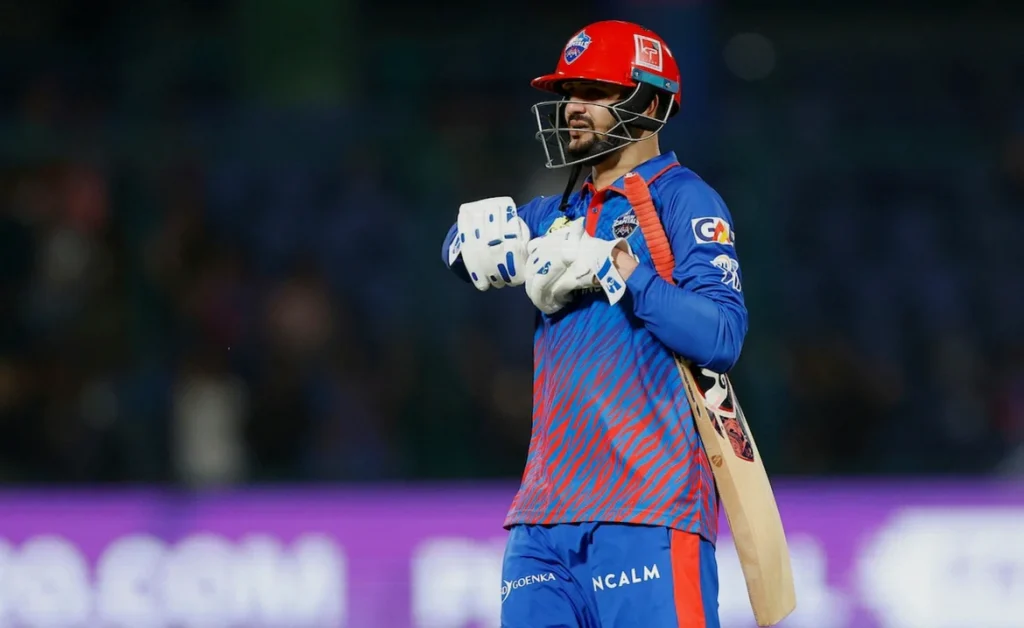
Sameer Rizvi has burst onto the IPL 2026 scene with Delhi Capitals, delivering match-winning blows straight after being named an Impact Substitute in their opening stretch. In his first two appearances for DC, the batter has already collected back-to-back Player of the Match awards, underlining how quickly he has adapted to the franchise’s plans.
Impact Substitute turns into match-winner
Rizvi’s tournament began with a statement in the season opener against Lucknow Super Giants. He made 70 not out off 47 balls as DC set the tone early in their campaign.
He then raised the ceiling against Mumbai Indians, smashing 90 off 51 deliveries to secure another Player of the Match nod. The innings did not just change the scoreboard—it also sparked a wave of debate online about his former home.
Quick facts
- Sameer Rizvi entered IPL 2026 as an Impact Substitute in Delhi Capitals’ first two matches.
- He won Player of the Match in both games.
- Scored 70* off 47 balls vs Lucknow Super Giants.
- Scored 90 off 51 balls vs Mumbai Indians.
- Fans criticised Chennai Super Kings for releasing him.
- CSK bought him for Rs 8.4 crore at the IPL 2024 auction.
- Delhi Capitals bought him for Rs 95 lakh in the next bidding window.
- DC completed the chase of 163 with 11 balls to spare vs MI, with Rizvi striking at 176.47.
After Rizvi’s destructive knock against MI, supporters on social media took aim at Chennai Super Kings for letting him go. The backlash centred on the decision to release him, with many pointing to how quickly he has found rhythm at DC.
How Rizvi’s franchise journey changed
Rizvi was first snapped up by CSK for Rs 8.4 crore during the IPL 2024 auction. Despite the big price tag, he did not receive the kind of consistent opportunities his early promise suggested, and he was released after a season with the team.
Delhi Capitals moved decisively in the following bidding phase, securing him for Rs 95 lakh. The franchise also retained him for the ongoing season, and those faith-building steps appear to be paying off immediately.
Fans also highlighted the contrast in roles. One line of commentary focused on how CSK reportedly used him more around No. 6 and then moved him on, while DC appear to have provided him a clearer pathway in the batting order.
From No. 6 to a game-changer role
Following the MI innings, Rizvi described the progress as the result of deliberate work on his game. He said that since the previous year, he has gone through changes, focused on multiple weaknesses, and specifically addressed issues he used to face against fast bowling.
“Yes, I have worked very hard on myself because since last year there have been many changes. I worked on all my weaknesses, and I used to have some problems against fast bowlers, so I worked a lot on that throughout the year. The hard work is paying off now, I am batting well,” Rizvi said after the game.
In the chase of 163 against MI, DC were 73/3 at the halfway point. Rizvi then flipped the contest by taking control at the crease, carving his 51-ball 90 with seven fours and seven sixes to maintain a strike rate of 176.47.
He also combined effectively with Pathum Nissanka, with a 66-run partnership, before adding a further 78 with David Miller (21 not out). DC ultimately reached the target with 11 balls remaining.
Numbers that underline the impact
Rizvi’s seven sixes were the joint-most hit by a Delhi Capitals batter against Mumbai Indians in IPL history. The innings was also the third-highest individual score by a DC batter against the five-time champions.
As an Impact Player, only Jos Buttler and Sai Sudharsan have managed more runs in a single IPL innings than Rizvi. The performance therefore stands out not just for the chase, but for how efficiently he delivered it in the role he was assigned.
Rizvi further explained his approach during the two innings of the contest. He noted that he tries to play according to the match situation, and when conditions shift, he adjusts accordingly—taking his time early before accelerating once he felt settled.
“I always try to play according to the situation. If the situation is changing, then I play accordingly in both innings. At the start, our situation required some time, so I took my time. Then, according to the situation, once I got settled at the wicket, I played my shots and tried to watch the ball till the very end,” he added.
