
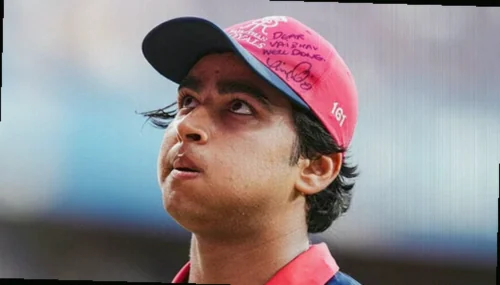
Sanjay Manjrekar believes Vaibhav Sooryavanshi has the makings of a genuine batter for the future, but feels his development is being slowed by how the Impact Player rule structures opportunities—especially when it comes to fielding, where his ability has not yet been fully exposed. With talk growing around a potential India debut, Manjrekar has questioned whether the current match framework is giving young players the kind of complete scrutiny that elite international cricket demands.
Manjrekar’s concerns over the Impact Player rule
- Manjrekar argues that the Impact Player system can allow players to focus narrowly on either batting or bowling, rather than being asked to contribute in multiple facets of the game.
- He points to Rohit Sharma as an example, highlighting that due to injury-related caution, Rohit was used strictly as a batter—an approach Manjrekar says should not become a blueprint for how a youngster like Sooryavanshi is managed.
- He stresses that in the highest levels of cricket—whether in limited-overs cricket or the longer format—players are ultimately assessed by their all-round impact, including catches they take, runs they save, and how they handle pressure in different match situations.
- Speaking on the Insight Edge podcast, Manjrekar reflected on a recent Rohit innings, saying Rohit scored 22 runs off 15 balls in a spell that lasted only those deliveries, yet would still receive the full match fee or the complete remuneration package tied to participation.
- Manjrekar said he does not obsess over money, but questioned the logic of a model where substantial reward can come with comparatively limited effort, arguing it cannot be a sustainable long-term formula for success.
- He also framed the issue as a cricketing problem rather than a financial one, saying the rule means supporters may end up seeing only one side of a player’s game—precisely the concern he has regarding what Sooryavanshi’s India prospects should look like.
- Manjrekar noted that earlier eras valued players for more than just batting, recalling how fans admired figures such as Inzamam-ul-Haq because their fielding and overall match presence offered a fuller picture of their abilities.
In Manjrekar’s view, the Impact Player approach can leave gaps in assessment: a player may arrive, play a brief cameo, and then fade from the contest, preventing coaches and selectors from fully evaluating how they perform under match pressure across roles. He believes modern cricket should once again expect players to show all three key facets of being a complete cricketer, rather than letting them specialize by design.
He added that teams should be allowed to test vulnerabilities rather than shielding them. If a batter is exceptional but has weaknesses in the field, Manjrekar says that should become something opponents can target—because learning to handle the mental challenge after setbacks is a real part of top-level sport. Dropping a catch and then recovering emotionally while batting, he argued, is exactly the kind of tension that makes the highest standard of cricket demanding, and he does not want the game to become too easy.
“Hampering Sooryavanshi’s growth”
Manjrekar also placed his doubts squarely on Sooryavanshi’s fielding. He said he is not convinced about whether the young batter’s presence in the field has been tested enough, pointing out that the Impact Player rule can reduce the need for players to cover their weaker areas during matches.
He acknowledged that Zubin Bharucha—who scouted Sooryavanshi when he was 13—has dismissed those concerns, backing the youngster’s strong arm and quick, agile movements in the field. Still, Manjrekar feels that as long as the rule exists, players may not face the same consistent pressure to correct flaws or develop a complete skill set.
Manjrekar responded strongly when asked about whether the rule is “hampering Vaibhav Sooryavanshi’s development,” saying that India has indeed won the last two T20 World Cups despite the Impact Player framework. He even cited examples like Shivam Dube, suggesting a player can succeed without bowling and still help a team deliver results.
However, he maintained that cricket should test individuals more thoroughly. In his view, the game should not allow anyone to simply enter, hit a quick burst, and then settle into comfort. He argued that if a player is capable of bowling, it should be expected not only that he bowls his quota, but also that his fielding is evaluated as part of the same responsibility. Ultimately, Manjrekar believes the sport should examine every aspect of a player rather than isolating one skill and letting the rest remain unchallenged.
