
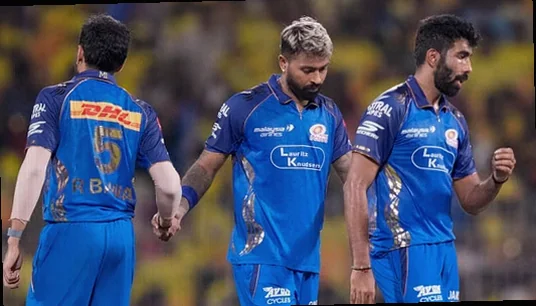
“It has been a season of what-ifs and overall disappointing for all of us.” Kieron Pollard’s reflection on Sunday felt like a fair snapshot of Mumbai Indians’ IPL 2026 journey—a campaign that began with genuine belief, then steadily dissolved into confusion, inconsistency and collective underperformance. Even if captain Hardik Pandya became the most visible target, Mumbai’s problems ran much deeper than leadership missteps. In a rare stretch for the franchise, almost nothing clicked: Rohit Sharma’s rhythm never arrived, Suryakumar Yadav’s usual explosiveness disappeared, Tilak Varma’s steadiness wasn’t enough for long periods, and Jasprit Bumrah’s brilliance couldn’t paper over the wider collapse of a side that never truly found momentum.
Key takeaways
- Pollard described the campaign as a season of “what-ifs” and disappointment for Mumbai Indians.
- Mumbai finished ninth with four wins and 10 losses, matching bottom-placed Lucknow on points but edging them with a slightly better net run rate.
- The team’s powerplay returns were underwhelming, with a scoring rate of 8.8 against the new ball and bowling conceding 10.83 per over in that phase.
- Hardik Pandya’s captaincy and in-game decisions drew scrutiny after Mumbai suffered a second early exit in his tenure.
- Bumrah’s impact fell away across phases, and Mumbai’s Wankhede home record swung from 5-2 in 2025 to 2-5 in 2026.
From a strong squad on paper to a season that spiralled
On paper, Mumbai looked among the strongest combinations in the tournament, with many predicting another deep run. The franchise entered IPL 2026 with the five-time champions’ core largely intact, having finished third last season and reached Qualifier 2. That campaign had also been framed as part of Hardik Pandya’s “redemption arc,” and Mumbai’s retention strategy suggested stability rather than change.
At the auction table, the wider market saw Chennai Super Kings and Kolkata Knight Riders refresh their squads more aggressively, while Mumbai made only targeted adjustments. Ahead of the auction, the franchise executed cash trades to bring in Sherfane Rutherford, Shardul Thakur and Mayank Markande, and in the mini-auction spent under INR 3 crore—where Quinton de Kock was the standout acquisition.
Despite those moves, Mumbai found themselves in the same conference half as Kolkata and Chennai, and the season ended up even worse than their initial failures suggested. They began with hope, beating Kolkata at home in the tournament opener, but then slid into a pattern of early collapse—losing four matches in a row.
Early momentum vanished, and the cracks deepened
Those defeats highlighted structural issues that had already surfaced within the bowling attack and the tactical framework. Mumbai repeatedly lost control through middle-over management problems, reactive bowling alterations, and an inability to seize momentum even when they held promising positions.
For a short window, it looked like the team might pull itself back into contention. Tilak Varma produced a sensational hundred to help Mumbai thrash Gujarat Titans by 99 runs. Hardik even described it as “the game” that could change their season. But the turnaround never materialised. Losses in the next three matches all but sealed their fate, and even a win against Lucknow Super Giants could not reverse the slide.
The confirmation of their exit came after a defeat by defending champions Royal Challengers Bengaluru in Raipur on May 10. From there, Mumbai managed only one win in their remaining three fixtures, ending in ninth place with four victories and 10 defeats—an identical record to bottom-placed Lucknow, but with a marginally superior net run rate.
Batting struggles—from the powerplay to the middle overs
Mumbai’s inability to make an impact in the powerplay became one of the clearest themes of the season. Against the new ball, where scoring rates across the league consistently moved past 10 runs per over, Mumbai could manage just 8.8. Rohit Sharma’s repeated failures at the top compounded matters; he fell cheaply in five matches, which forced frequent changes to the batting combinations. Ryan Rickelton was the only batter to show a measurable positive impact in that turbulent phase.
But Mumbai’s batting problems extended far beyond the opening overs. Suryakumar Yadav, who had been the MVP last season, produced only 270 runs in 13 innings at an average of 20.76. Tilak Varma’s output was comparatively stronger—359 runs at a strike rate of 145.93, including three scores of fifty-plus—but two of those half-centuries arrived after Mumbai were already effectively out of the race. Beyond that one century, he struggled to consistently deliver when the match situations demanded it most.
Hardik too appeared out of rhythm, not only when closing games but even during the middle overs. His overall bowling influence dipped significantly, and multiple captaincy decisions were also questioned as the season progressed.
Bowling and captaincy: reactive phases and fading breakthroughs
The tactical confusion was visible repeatedly. Hardik frequently delayed bringing Bumrah into pressure situations, shuffled bowlers without a clearly defined match-up plan, and often struggled to control matches once momentum slipped away. Mumbai, at times, looked like a team constantly responding rather than dictating the tempo.
Last season, Trent Boult and Deepak Chahar had provided the foundation of Mumbai’s powerplay dominance, but in 2026 the numbers shifted. Mumbai conceded 10.83 runs per over during the powerplay, which was better only than Sunrisers Hyderabad. Boult remained wicketless in that phase while giving away more than 13 runs per over, and Hardik similarly managed just one powerplay wicket. Chahar took six wickets at an economy rate of 9.12, yet even that came without the kind of overall control Mumbai needed. AM Ghazanfar stood out as the most genuine wicket-taking threat early on, but his seven wickets came at nearly 11 runs per over—too expensive to consistently arrest the innings.
One of the biggest drivers behind Mumbai’s decline was Bumrah’s reduced effectiveness. For years he had functioned like an all-phase difference-maker—someone who could control powerplay, middle overs and the death. This time, he never fully arrived. Even though runs against him remained difficult, he failed to deliver decisive breakthroughs with enough consistency across phases, undermining the bowling identity Mumbai had built around him for years.
Wankhede’s fall and the unravelling of the core
Another major factor behind Mumbai’s collapse was the reversal of fortunes at Wankhede Stadium. The home ground had been a reliable fortress in 2025, where Mumbai posted a 5-2 record. In 2026, that flipped dramatically to 2-5, with their only wins coming against Kolkata and Lucknow.
While Hardik bore much of the criticism after yet another early exit—his second under his leadership, following the 10th-place finish in 2024—the season’s story ultimately centred on the franchise’s “golden core” losing cohesion together. For the first time in years, Mumbai’s superstars stopped covering for one another’s shortcomings, and the empire collapsed along with that shared sense of balance.
