
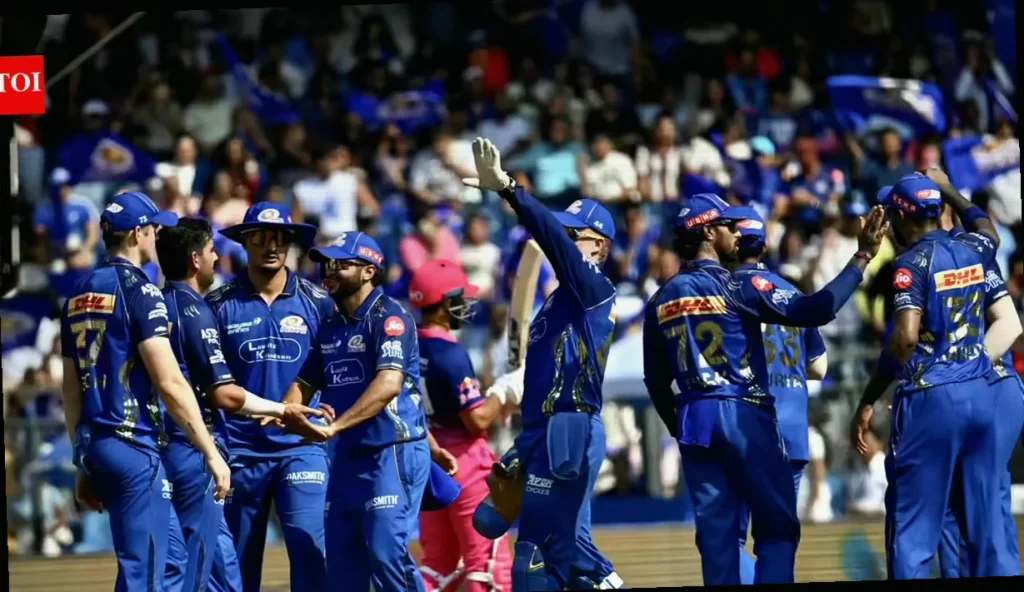
Mumbai Indians became the first franchise to lift five IPL titles, yet the momentum has now slipped badly. They have endured six straight seasons without winning the trophy, their lengthiest title drought to date. Despite a squad stacked with marquee names, MI stumbled to ninth place with only four victories and 10 losses from 14 matches.
The roster looked imposing on paper: Hardik Pandya, Rohit Sharma, Suryakumar Yadav, Jasprit Bumrah, Tilak Varma, plus several additional stars. But throughout the 2026 campaign, Mumbai rarely looked like a stable, settled team—game after game, the balance tilted too often in the wrong direction.
Quick facts: Mumbai’s 2026 slide
- MI finished ninth in the IPL 2026 standings with 4 wins and 10 defeats in 14 matches.
- It was their sixth consecutive season without a title, the longest trophy drought in franchise history.
- Injuries forced MI to use 24 different players during the season.
- Rohit Sharma missed five consecutive matches due to recurring hamstring issues.
- Jasprit Bumrah took 4 wickets in 13 matches at an average of 102.50 after starting with wicketless spells in his first five consecutive games.
- MI conceded heavy powerplay totals, including 78/1 vs Kolkata Knight Riders, 71/0 vs Royal Challengers Bengaluru, and 73/2 vs Chennai Super Kings.
- Wankhede became difficult: MI lost 5 of 7 home games, their worst-ever home run in a single season.
- Ryan Rickelton led the runs with 448; Tilak Varma made 359; Suryakumar Yadav managed 270.
- MI’s top run scorers failed to cross 500 runs as a group.
Injury crisis that broke the rhythm
Mumbai’s season was disrupted early and never truly recovered. A relentless injury wave forced the franchise to roll out 24 different players across the tournament, wiping out any chance of consistent combinations.
Rohit Sharma battled recurring hamstring problems and missed five matches in a row. Since 2025, he has often been deployed as an Impact Player—coming in to do his job at the top—but MI still struggled to manufacture the powerplay edge they typically rely on during the early overs.
Another blow came when Mitchell Santner picked up a shoulder injury after diving near the boundary against Chennai Super Kings. He was ruled out mid-season, and Keshav Maharaj stepped in—but Santner’s absence meant MI never found the same shape and control in that phase of the campaign.
Bumrah’s sudden drop in wicket-taking
Jasprit Bumrah has long been the spine of Mumbai’s bowling. For years, his ability to strike early and swing matches has underpinned MI’s trophy-winning years, and 2026 looked like it would be no different—until his form deserted him.
In the new season, Bumrah suffered an uncharacteristic dip, remaining wicketless in his first five straight matches. By the time the campaign ended, his numbers read 4 wickets in 13 matches, and an alarming average of 102.50. Without those early breakthroughs, opponents attacked the remainder of MI’s bowling unit with far greater comfort.
Powerplay and death overs: control vanished
MI lost control of the first six overs repeatedly. In a period where teams are routinely scoring at above 10 runs per over in the powerplay, Mumbai’s bowlers leaked even faster, surrendering totals like 78/1 against Kolkata Knight Riders, 71/0 versus Royal Challengers Bengaluru, and 73/2 against Chennai Super Kings.
Trent Boult, a bowler known for providing early disruption, failed to get the ball to move consistently. Just as damaging was the decline in death-over execution: MI frequently couldn’t protect totals in the 220–240 range, and late overs became a regular leak rather than a controlled finish.
Suryakumar Yadav’s dip reshaped MI’s batting
Suryakumar Yadav entered 2026 after a standout 2025 season, where he was the IPL MVP with 717 runs. But the following year, his production fell sharply and he struggled to impose pressure on bowlers during MI’s most important middle overs.
He finished with 270 runs in 13 innings, averaging 20.76, which was the worst season of his eight-year stint with Mumbai Indians. Suryakumar has usually been the stabiliser in the middle order—stepping in after top-order trouble—but in 2026 he couldn’t deliver that rescue act, leaving the side under mounting strain.
Hardik Pandya’s captaincy under scrutiny
Hardik Pandya came into this chapter with big expectations. He had led Gujarat Titans to a title in their debut season, then followed with another final in 2023. After being traded to Mumbai Indians before IPL 2024, the franchise expected a quick return to winning ways.
Instead, results worsened. MI finished at the bottom of the table in 2024 under Hardik’s captaincy, reached Qualifier 2 in 2025 but lost to Punjab Kings, and then ended 2026 second from bottom.
As the tournament progressed, his leadership drew consistent scrutiny. Field placements often looked reactive, while bowling changes lacked a clear plan. On a personal level too, Hardik never appeared fully set, struggling to make a meaningful impact with bat or ball.
A flawed auction direction and the USPH exit
Historically, one of MI’s biggest strengths has been identifying and nurturing raw domestic talent, a route that previously produced champions through the Pandya brothers and Jasprit Bumrah. In 2026, the strategy shifted away from that model.
Mumbai leaned too heavily on legacy names and the auction choices didn’t align cleanly with their needs. Trading for Shardul Thakur while retaining Deepak Chahar left MI with two overlapping, costly medium-pace bowling all-rounders who were also injury-prone—hurting both the salary cap and tactical flexibility.
In the IPL 2026 mini-auction, MI entered with only ₹2.75 crore available and spent little that looked decisive in the bigger picture.
Overseas players failed to deliver the finishing edge
For MI, the overseas contribution was inconsistent and often below expectation. Aside from Quinton de Kock and Ryan Rickelton—both of whom provided some solid starts—most international stars struggled to make an impact at the Wankhede.
Sherfane Rutherford, acquired from Gujarat Titans, did not deliver the finishing power Mumbai had hoped for, scoring 123 runs in eight matches. Trent Boult had a difficult season across both powerplay and death overs, and his inability to consistently threaten batters became a recurring theme.
Will Jacks, who arrived in the IPL after an impressive T20 World Cup 2026, also failed to find rhythm in the middle order, managing 139 runs in seven matches.
Wankhede no longer a fortress
At Mumbai’s home ground, the franchise has traditionally dominated. But 2026 was different. MI suffered five defeats at home across seven fixtures, which marked their worst single-season home record.
Wankhede pitches often reward genuine pace and early-evening swing. In earlier years, Bumrah and his overseas partners could strangle opponents during the powerplay, but in this campaign Trent Boult found no swing at all, and Bumrah went wicketless in his first five matches.
MI IPL 2026 report card
Top performers
Ryan Rickelton was MI’s clearest bright spot. The South African wicketkeeper-batter finished as the team’s leading run-getter with 448 runs, frequently holding together a fragile top order on his own.
Tilak Varma ended second in MI’s run chart with 359 runs and a strike rate of 145.93. His season included a rapid century—101* off 45 balls—against Gujarat Titans, but his late-season surge came only after MI’s playoff chances were already effectively gone.
Big failures
Jasprit Bumrah became the season’s biggest disappointment for Mumbai Indians. He collected just four wickets in 13 innings at an average of 102.50, and the lack of wicket-taking in key spells left the bowling unit exposed.
Suryakumar Yadav was the second major shock. With only 270 runs from 13 innings and an average of 20.76, MI lost the middle-order enforcer they normally count on to steady momentum and convert starts.
Hardik Pandya also faced heavy criticism for limited all-round returns. He scored 226 runs and took just four wickets, while his fielding choices and delayed use of Bumrah disrupted the team’s overall rhythm. Meanwhile, Trent Boult failed to generate his usual swing, leaking runs at an economy rate of 11.63 and taking only two wickets in five matches before being dropped.
Batting and bowling contributions: where the numbers landed
Batting
Ryan Rickelton – 448
Tilak Varma – 359
Naman Dhir – 307
Suryakumar Yadav – 270
Hardik Pandya – 226
The most glaring drought for MI was that none of their batters managed to reach the 500-run mark across the season.
Bowling
AM Ghazanfar – 14 wickets
Corbin Bosch – 11 wickets
Shardul Thakur – 10 wickets
Deepak Chahar – 6 wickets
Ashwani Kumar – 6 wickets
What Mumbai Indians need to fix for IPL 2027
To become genuine title challengers in IPL 2027, Mumbai Indians may need the most decisive reset in their modern era. After finishing close to the lower end of the table in 2026, the franchise can’t lean on reputation, past glory, or continuity alone.
What went wrong stretched beyond injuries or short-term form. MI lost the identity that once powered them through tense moments with clarity, composure, and top-level bowling execution.
Mumbai should look to completely rework their squad. Instead of leaning on ageing stars, they’ll need to back younger talent and pursue fresh scouting targets—the same philosophy that built their success. If MI are prepared to take difficult decisions and trust emerging players again, they still have a strong base around Bumrah, Suryakumar Yadav, and Tilak Varma. But if they continue protecting legacy names and short-term narratives, the decline could deepen further.
Stay tuned for updates on the upcoming RCB vs GT contest and the latest IPL developments, with the Orange Cap and Purple Cap race still unfolding.
