
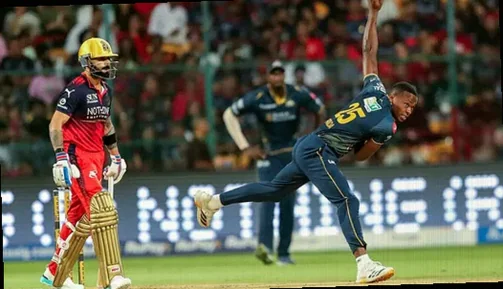
The IPL 2026 league phase has concluded with a late-season surge that left only four franchises in the hunt for the title. Royal Challengers Bengaluru, the defending champions, and Gujarat Titans will open the playoffs in Qualifier 1 at the HPCA Stadium in Dharamsala, setting the tone for what promises to be a high-pressure weekend in the mountains.
Both teams reached the knockout stage by different routes, yet they finished level on 18 points from 14 matches. RCB ultimately claimed first place, thanks to a superior net run rate. The two sides also split their league meetings during the season, with each winning on home soil. Even the head-to-head ledger provides no clear edge, with both franchises tied at four wins apiece from their eight encounters.
With the standings so finely balanced, the deciding factor in Tuesday’s match may well be the quality of the fresh-ball pace bowling at both ends of the equation—particularly how quickly each team can turn pressure into breakthroughs.
How the new-ball duel—Bhuvneshwar and Hazlewood vs Siraj and Rabada—could shape Qualifier 1
In the league stage, only RCB and GT managed to combine a powerplay run rate below 9.5 with a strike rate under 20, highlighting how both attacks have consistently found wickets early. Kagiso Rabada led the wicket-taking charts with the new ball this season, claiming 17 scalps. At the other end of the spectrum, Bhuvneshwar Kumar delivered unusual control, conceding just 7.10 runs per over while also taking 15 wickets.
Mohammed Siraj and Josh Hazlewood, meanwhile, have operated as crucial supporting forces—tightening the contest after the initial burst and keeping batters from settling into rhythm.
Among the four, Bhuvneshwar has arguably looked the most complete. He has not only been sharp with the new ball, but also produced key overs at the death, bowling 16 deliveries in the final phase and collecting seven wickets at an economy rate of 8.75. Hazlewood has been equally effective during that same stretch, taking four wickets in 9.3 overs while maintaining the same economy rate. Together, they have formed one of the tournament’s most reliable death-bowling combinations.
For Tuesday, though, Bhuvneshwar’s role could be amplified by the way Gujarat’s top order approaches the opening phase—especially against batters he has consistently troubled in T20 cricket. His T20 record versus Shubman Gill, Sai Sudharsan and Jos Buttler is particularly strong.
Bhuvneshwar has dismissed Gill five times in T20s, keeping the GT captain to an average of 16 and a strike rate of 106.7 against him. If Bhuvneshwar can break the opening partnership early, it may force RCB to keep him away from the deeper batting plans and instead hold him back for the threat of Buttler as well. Bhuvneshwar has removed Buttler nine times in T20 cricket. In fact, in their most recent meeting earlier this season, he wiped out all three of Gujarat’s “big three” in the same chase.
Hazlewood’s challenge will be slightly different. He has taken Sudharsan’s wicket twice while conceding only 28 runs in total, but he will need to be more adaptable when facing Gill. Gujarat tweaked their approach against the Australian quick in the Ahmedabad match last month, and Gill then attacked an over that featured three boundaries and two sixes—an indication that Gujarat are willing to reshape the plan once they see a weakness.
On the other side of the contest, Rabada’s battle with Virat Kohli could carry similar weight. The South African pacer has dismissed Kohli five times across 16 innings, including a breakthrough earlier this season in Ahmedabad.
Phil Salt, who is expected to return after injury concerns, brings another layer of intrigue. He has shown strong strike rates against both Rabada and Siraj, though each bowler has still managed to dismiss him twice. Salt missed both league-stage games against Gujarat this season, meaning he arrives at Qualifier 1 without the benefit of recent matchup rhythm against GT’s exact bowling combinations.
If Rabada and Siraj can dent RCB’s top order early, the defending champions would then have to respond to Rashid Khan—who tends to find favourable matchups against Devdutt Padikkal, Tim David and Krunal Pandya. That threat can quickly turn a recoverable chase into a complicated one, especially when wickets fall in clusters.
One tactical detail that could stand out is how Gill handles Rabada across the innings. Ideally, Gujarat would like to reserve one over from Rabada specifically for Rajat Patidar, the RCB captain in this setup. Patidar has managed only 17 runs from 24 balls versus the pacer without being dismissed, so Gujarat will look for ways to convert that pattern into a decisive wicket.
Patidar can also expect a barrage of short-pitched bowling. Gujarat used a similar approach against him in Ahmedabad earlier this season, where Arshad Khan struck him with the same tactic.
With Dharamsala offering a surface where pace can play a more prominent role than spin, Gujarat are also likely to lean on their seamers through the middle overs. Prasidh Krishna could emerge as an additional factor, particularly because he has a strong record against Patidar as well.
