
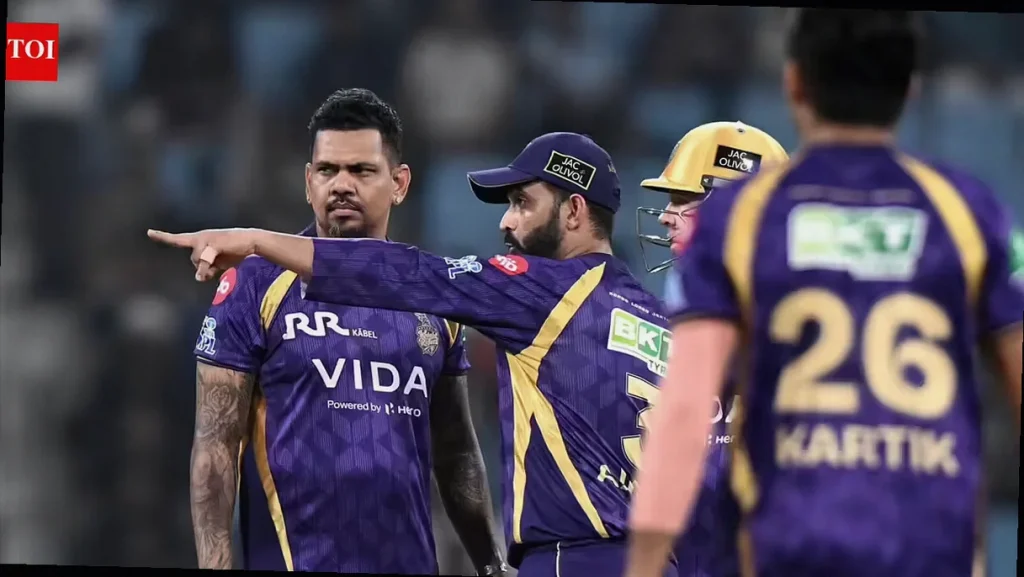
NEW DELHI: Kolkata Knight Riders’ 2026 season turned into yet another painful reminder of how quickly IPL momentum can vanish. After securing their third title in 2024 and breaking a decade-long drought, KKR were unable to build on that success, missing the playoffs for the second straight year.
Under captain Ajinkya Rahane, the franchise endured one of the toughest openings in its IPL history. KKR managed not a single win in their first six outings—five defeats and one no result—leaving them anchored near the bottom and struggling to find rhythm.
KKR’s early phase was the main culprit, with the side collecting just one point from those opening matches. Even as the tournament progressed, they couldn’t quite settle into a consistent pattern until late in the league stage.
Quick facts
- KKR missed the playoffs for the second consecutive season in IPL 2026.
- They were winless in the first six matches: five defeats and one no result.
- They finished seventh with 13 points and a net run rate of -0.147.
- Final league record: six wins, seven losses, and one no result from 14 matches.
- In their last league game, KKR lost to Delhi Capitals by 40 runs.
- To stay alive for the playoffs before the final round, KKR needed a big win vs Delhi Capitals and a loss for Rajasthan Royals against Mumbai Indians—neither outcome happened.
Despite the bleak start, KKR did stage a late surge. The team won six of their next seven league matches, suddenly looking like a contender and reigniting their playoff hopes.
Going into their final league encounter against Delhi Capitals, KKR still had an outside chance. Their route to the top four depended on two things happening elsewhere and on a dominant performance in their own match.
They required a massive win over Delhi Capitals, while also needing Rajasthan Royals to lose to Mumbai Indians. Those results didn’t fall their way—Rajasthan secured a victory that sealed their place in the playoffs and ended KKR’s contention.
KKR also failed to finish strongly, suffering a 40-run setback against Delhi Capitals in their last league fixture. In the end, their recovery run wasn’t enough to compensate for the damage done during the opening stretch.
What went wrong for KKR in 2026?
Several themes shaped KKR’s campaign, starting with how they tried to solve the top-order puzzle and how injuries disrupted key bowling options throughout the season.
If not Allen-Seifert, then who?
With Finn Allen and Tim Seifert in the squad, the expectation was that KKR would pair the two explosive batters at the top and allow Ajinkya Rahane to bat at No. 3 or No. 4. That plan, however, didn’t materialise.
KKR opted to open with Allen and Rahane instead, and that combination did not deliver steady outcomes. There was also the option of using Sunil Narine as an opener—something he has done successfully for the franchise in the past—but uncertainty around the opening roles ultimately became a recurring problem.
Rahane’s strike rate at the top
Batting as an opener, Rahane struggled to consistently provide the kind of rapid starts that can put pressure on opposition bowlers during the powerplay. In 14 matches, he scored 335 runs at a strike rate of 135.08, a return that often didn’t translate into sustained dominance early in innings.
Pathirana injury blow
KKR spent Rs 18 crore to bring in Matheesha Pathirana at the auction, but a sequence of injuries derailed his season. The Sri Lankan pacer joined the squad late after a left calf problem during Sri Lanka’s T20 World Cup campaign.
After being cleared to play in mid-April, Pathirana remained on the bench before finally making his debut against Gujarat Titans. His comeback was brief—he bowled only 1.2 overs before leaving the field with a hamstring injury.
Mustafizur absence hurt KKR badly
Another major setback was the absence of Mustafizur Rahman, who can trouble batters, break partnerships, and deliver wickets in high-pressure phases. KKR had bought him for Rs 9.2 crore, but he was released later after BCCI instructions following geo-political developments in the region.
Without Mustafizur, KKR missed both his wicket-taking impact and his ability to contribute with the bat lower down when moments demanded quick hitting.
Varun Chakravarthy’s injury concerns
Star spinner Varun Chakravarthy battled recurring injury issues across the season. He was frequently seen with knee braces and using crutches while away from the field.
After going wicketless in KKR’s first three matches, Chakravarthy bounced back with 10 wickets across the next four games. Still, his continuing fitness struggles—and the fact that he bowled without being fully ready—had a noticeable effect on the team’s overall campaign.
IPL 2026: KKR’s report card
While the season exposed weaknesses, it also highlighted bright sparks. One of the most encouraging developments was the emergence of a new middle-order figure who helped KKR stay afloat after top-order collapses.
Batting in the middle, the 21-year-old produced several determined knocks and often rescued the team when innings threatened to slip away. He also made an impact behind the stumps with the gloves.
Raghuvanshi ended as KKR’s leading run-scorer, amassing 422 runs in 13 matches at an average of 42.20.
Another positive came from young pacer Kartik Tyagi. Bought for Rs 30 lakh after going unsold in the IPL 2025 auction, Tyagi impressed with his pace and wicket-taking ability, finishing with 18 wickets—third-highest among Indian bowlers in the league stage.
What next for KKR?
KKR showed genuine fight after their early stumble, but the poor start proved too large a gap to close. For a franchise that has lifted three IPL trophies, another playoff miss will push management to reassess multiple areas before IPL 2027.
The KKR think tank will have plenty to review, and the debate could even extend to captaincy decisions as they plan their next attempt at returning to the business end of the tournament.
