
In modern T20 cricket, the game can start to feel like the financial markets: fast-moving, emotionally charged, and driven by patterns that only reveal themselves over time. Some players behave like the kind of volatile small-cap names that can surge from nowhere to dominate headlines. Others resemble blue-chip stalwarts—trusted, steady performers who rarely let supporters down. And then there are the quiet compounders, the ones who may not always look loud in the moment, yet steadily build value across a whole season before the wider crowd fully catches up.
Because cricket is still the nation’s emotional heartbeat, T20 fandom can also become momentum-driven, with supporters sometimes reacting like first-time retail traders—chasing hype, riding viral form, and overvaluing spikes. The more experienced fantasy managers tend to think differently. They focus on repeatable output, dependable roles, proven matchups, and season-long returns rather than short-lived fireworks.
That’s where fantasy platforms have effectively turned into a trading floor. Every day, millions of users “invest” in players based on belief, confidence, and perceived upside. In real markets, price action and volume guide decisions; in fantasy cricket, runs, wickets, strike rates, and overall consistency are the metrics that shape a player’s value.
IPL’s official fantasy setup works like a portfolio system. Each participant receives a fixed amount of 100 credits to assemble a squad of 11 players. Every pick comes with its own credit price, so the key challenge becomes balancing the team, spotting undervalued assets, limiting risk, and making high-impact leadership choices—captain and vice-captain—where fantasy returns can be multiplied.
IPL 2026: The season’s “best stock” and the fantasy logic behind it
- The 2026 IPL league stage has largely run its course, with 74 league games already completed and the tournament now set for the playoffs with four teams remaining.
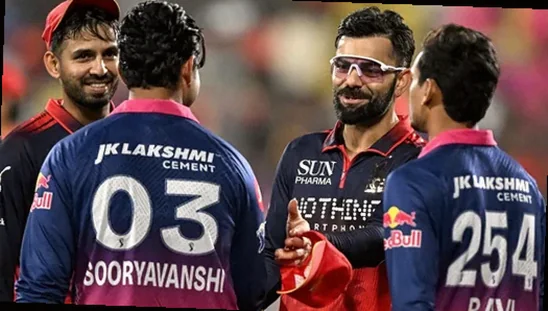
- At the end of the league phase, 15-year-old Vaibhav Sooryavanshi emerged as the most talked-about “trading stock” of IPL 2026.
- Sooryavanshi delivered 583 runs across 14 league matches at a strike rate of 232.27, including a century off 36 balls and a 93 off 38 deliveries, and he struck 53 sixes during the campaign.
- His fantasy surge wasn’t only about boundary-hitting on the field; it also reflected how quickly his price and popularity moved in fantasy “trading” circles.
- Sooryavanshi was selected in 46.47% of teams—the highest selection rate for any player in the season.
- He was also backed as captain by 13.36% of users, making it the second-highest captaincy percentage overall.
- In market terms, he became the high-risk, high-reward growth pick that fantasy investors couldn’t stop piling into.
- Even so, when it came to trust and reliability, many fantasy managers still preferred Virat Kohli, who fits the “blue-chip” profile in this fantasy economy.
- No batter in IPL history has produced more seasons of 500 runs or more than Kohli, and fantasy owners leaned on that proven reliability again.
- For the ninth time in his IPL career—and the fourth straight season—Kohli crossed the 500-run mark, scoring 557 runs in 14 innings with four fifties and one century.
- Kohli ranked as the second-most selected player of the season with a 41.93% ownership share, but more importantly, he remained the most trusted captaincy option.
- He was named captain in 15.73% of teams, the top captaincy percentage for the season.
- Then came the league’s standout “wealth creator” in fantasy terms: Shubman Gill.
- Gill, Kohli’s India teammate, functioned like the premium mid-cap compounder—someone who didn’t require constant hype, yet generated the strongest overall returns for those who backed him over time.
- Gill was selected in roughly 17% of teams and captained only about 2.5% of the time, but he still powered to 989 league fantasy points—66 more than Sooryavanshi.
- Kohli finished ninth on the overall returns chart with 880 points.
- For the second consecutive season, Gill crossed the 600-run mark in the IPL.
- After being dropped from India’s T20 World Cup squad just six months earlier, Gill responded with 616 runs at a strike rate of 161.67, including six half-centuries.
- Sooryavanshi represented speculative small-cap frenzy, Kohli remained the dependable blue-chip leader, and Gill emerged as the elite mid-cap pick whose long-term compounding delivered the biggest fantasy wealth.
