
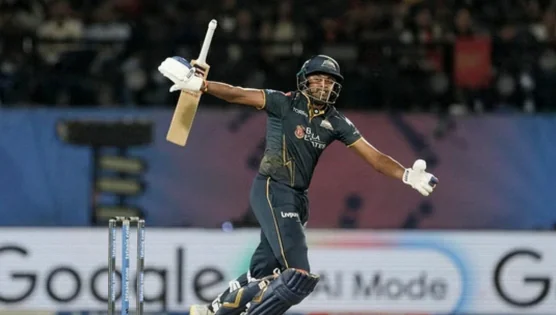
RCB’s Qualifier 1 against Gujarat Titans had already entered a high-pressure zone when Sai Sudharsan walked out to bat. Bengaluru had posted 254/5, transforming the chase into a test of discipline and composure, where timing and decision-making mattered just as much as raw power. For Gujarat, the priority was never a quick cameo—it was stability. They needed a batter to keep the innings flowing long enough for the required run-rate to stay within touching distance. That is why Sudharsan’s dismissal carried far more weight than a routine early wicket: it removed the most trusted top-order presence Gujarat would have relied upon to give the chase a backbone.
Key takeaways
- RCB set a target of 254/5 in Qualifier 1 against Gujarat Titans.
- Sai Sudharsan was dismissed hit-wicket after a square-drive that otherwise looked well timed.
- Sudharsan became the first player in IPL history to be out hit-wicket twice.
- Gujarat’s chase was further disrupted when Shubman Gill fell to Bhuvneshwar Kumar.
- Josh Hazlewood also created another setback for the Titans by disturbing the stumps behind Jos Buttler.
How the hit-wicket happened
Sudharsan had been Gujarat’s most dependable top-order batter across the season. His value went beyond accumulating runs; he consistently provided the innings with structure. With 255 in front of them, that role became even more critical. Gujarat required boundaries early, but they also needed control—someone who could absorb the initial pressure, make the most of any loose deliveries, and then allow the rest of their batting group to attack around him.
For a brief spell, Sudharsan looked set to deliver exactly that. He moved to 14 runs off 9 balls, showing the kind of timing that has made him one of the tournament’s more imposing batting presences. Then came the sudden, cruel twist that turned a promising stroke into a dismissal.
Jacob Duffy bowled a short delivery around the fourth stump. Sudharsan stayed back and opened the face of the bat, reaching it cleanly. The square drive off the middle of the bat raced toward the point boundary. On most nights, it would have signaled that Gujarat were not going to retreat. But as Sudharsan completed the shot, the bat slipped from his grasp—so the ball left the blade while the bat itself swung away. The handle crashed back onto the stumps, the bails came off, and RCB erupted.
The wicket was officially recorded as hit-wicket, ending Sudharsan’s innings in the harshest possible way. The dismissal was especially brutal because it carried the contradiction of a well-executed plan going wrong. He was not beaten by pace, he did not misjudge the line, and he did not play a poor shot—he struck the ball well, found the gap, and still lost his wicket.
There was also a historic element to it: Sudharsan became the first batter in IPL history to be dismissed twice through hit-wicket. It was one of those rare dismissals that feels both inevitable and inexplicable at the same time—perfect contact, yet the wicket still comes.
After Sudharsan: the chase unravels
For RCB, Duffy’s breakthrough mattered immediately. In a chase like this, an early dent is never just a wicket—it changes the entire rhythm of the innings and raises the pressure on every subsequent delivery. For Gujarat, the blow was both emotional and tactical. Their reliable anchor was gone before the chase could truly settle into its rhythm.
Sudharsan’s exit did not merely reduce the batting list—it made Gujarat’s task feel increasingly solitary, with less room to absorb pressure. The pressure intensified further soon after, when Shubman Gill was dismissed by Bhuvneshwar Kumar, leaving the game more open for the defending champions. The momentum swung even more firmly towards RCB when Josh Hazlewood disturbed the stumps behind Jos Buttler at a moment when Buttler was beginning to look dangerous.
