
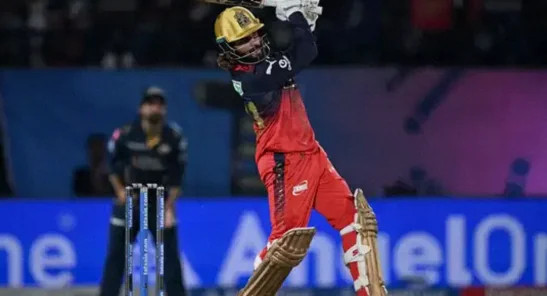
After the final whistle, Rajat Patidar was asked whether Royal Challengers Bengaluru had a specific plan to target the bowling attack of Gujarat Titans. Patidar’s response was measured: “It’s not a neatly mapped plan, but we’re prepared. You need to show in your body language that you’re coming for someone.” For all the calmness around him, his message was loudest in one moment during the chase—an eye-catching back-foot six over extra cover off Kagiso Rabada. It was the second consecutive maximum off the fast bowler, delivered in the same over that also ended Krunal Pandya’s stay. The timing and character of that strike did more than just shift momentum; it underlined a batting mindset that was never waiting for the game to arrive.
RCB director of cricket Mo Bobat later offered insight into Patidar’s intent, even joking that the captain had taken umbrage at an earlier comment. “I think I called him a spin basher once and he got quite annoyed with me because I was implying it was only spin,” Bobat said with a smile. In Bobat’s telling, Patidar’s approach is designed to make the ball meet his skill set, regardless of what’s bowled. “I think he’s probably trying to prove a point to me.” He added that whether Patidar faces pace or spin, and whether he sets up from the front foot or the back, the ball regularly finds the middle of his bat. “He’s got really sound basics and a pretty fearless intent, which is great to see,” Bobat said.
Patidar’s knock and RCB’s route to the final
- During RCB’s run towards a second successive IPL final, Patidar produced a decisive effort that anchored the team’s progress.
- His unbeaten 93, struck off 33 balls, came on a pitch in Dharamsala that was described as up-and-down, but he still controlled the tempo of the innings.
- That performance helped RCB secure a convincing win over Gujarat Titans and book a place in another final.
- Bobat pointed to the special nature of the innings, saying it reflected how Patidar has been batting throughout the tournament and that it will matter even more in a major qualifier-style contest.
- He emphasised that having the captain perform at the highest level lifts the belief of the entire squad, strengthening confidence going into the biggest games.
Bobat also highlighted the leadership side of Patidar’s batting—how the captain sets the tone without needing theatrics. “That was a pretty special knock. It’s the sort of innings we’re becoming accustomed to seeing from him now,” Bobat said. “Some outrageous shots, but with really aggressive intent. I think that’s leading by example.” Beyond the boundaries, he credited Patidar’s ability to stay composed under pressure and to manage his energy so that the key moments land with maximum impact.
“He’s a very calm individual,” Bobat said of the skipper. “He keeps things pretty simple.” Bobat added that Patidar’s focus is on doing his job once he steps onto the field, while his off-field demeanour remains relaxed. “So he’s very good at managing his own energy, which is serving him well right now because he’s saving that energy for his batting,” Bobat explained, “and also for when he needs to get his tactics right out in the middle.” Bobat concluded with a wish that the same balance continues into the tournament’s defining stages.
Why the win mattered: collective execution
While Patidar’s brilliance was central, Bobat said the most satisfying element of the victory was how many players contributed in ways that intensified pressure on the opposition—something he described as a recurring theme across the season. “I’m especially pleased that we’ve got a number of people contributing to wins,” he said. “It was a pattern in the way we played last year.”
Bobat noted that the team’s approach allowed multiple performers to influence the game when they had their opportunities. “Everybody who had a chance to impact the game and put pressure on the opposition was able to do that.” He argued that when roles are fulfilled consistently and contributions are frequent, the results naturally follow. “If you can recruit a team where the guys walk towards those pressure situations and they can either counter-attack, take on a fiery opposition or absorb pressure and then execute really clinically, those are the things you’re looking for,” Bobat said. “I think we’ve got some fantastic characters with that sort of experience, and they were on show today.”
Planning against Gujarat’s top order
RCB’s preparation also reflected the threat Gujarat Titans pose through their top order. Bobat said RCB did not believe that a score that was merely competitive would be enough. “I’ve got a lot of respect for GT’s batting line-up,” he said. “They’ve got a very high-performing top order, so we put ourselves under a bit of healthy pressure and said we needed to take the game beyond them if we could.”
He explained that the aggressive intent from the beginning was rooted in respect rather than overconfidence. “That aggressive intent from ball one mainly came out of respect for the opposition. We know how good they are.” According to Bobat, the plan was to push the match beyond Gujarat’s most reliable phase for as long as possible. “We know the quality of their top order, so we wanted to push the game beyond them as best we could,” he added.
With the win, RCB now travel to Ahmedabad for the final, carrying the chance to become just the third team in IPL history to successfully defend their title. There will be more moments of bold “body language” in the championship match—but none may speak as clearly as Patidar’s one-shot declaration that RCB were not content to wait for the opposition to set the terms.
