
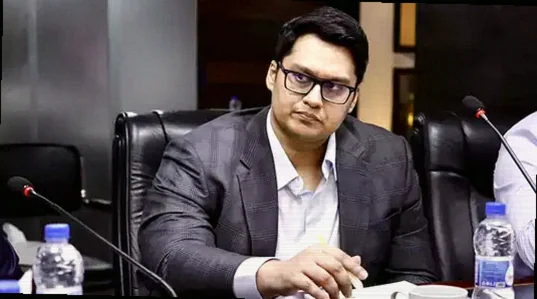
Bangladesh Cricket Board (BCB) officials have indicated that match-fixing could be treated as a criminal offence, with the board set to consult the government on the legal route if that step becomes necessary. Speaking ahead of the BCB election scheduled for June 7, Sayeed Ibrahim Ahmed said the current zero-tolerance stance—reinforced by recent bans handed to cricketers and organisers linked to corruption in the Bangladesh Premier League (BPL)—is meant to function as a serious warning to everyone involved in the domestic circuit.
Key takeaways
- BCB’s ad-hoc committee member Sayeed Ibrahim Ahmed said the board will consult the government on whether fixing should be reclassified as a criminal offence.
- Ibrahim framed the recent bans of players and organisers tied to BPL fixing activity as part of a tougher direction and urged stakeholders to view it as a warning.
- The BCB has charged players and team owners under the ICC Anti-Corruption Code.
- BCB’s Integrity Unit counsel Mahin M Rahman indicated a legal process is likely after Eid, involving lawmaking via the Law Commission and approvals through the law ministry.
- Mahin pointed out that match-fixing has already been criminalised in other countries, including Sri Lanka, with laws tailored to cricket and related sports.
BCB signals a tougher legal approach to fixing
Sayeed Ibrahim Ahmed, who serves as an ad-hoc committee member of the Bangladesh Cricket Board, said the organisation plans to discuss with the government whether match-fixing can be moved from civil treatment to criminal classification. He emphasised that the BCB is not willing to soften its stance on corruption and insisted that the recent disciplinary actions—bans affecting cricketers and those working behind the scenes—are intended to underline that the board will escalate measures when required.
Ibrahim, whose father is Salahuddin Ahmed, the current home minister of Bangladesh, told Cricbuzz on Wednesday that the BCB has “zero tolerance” for fixing-related issues. He also said the ongoing BCB election campaign places him in a strong position to secure a role in the next elected board after the June 7 poll.
He further argued that if fixing cases are brought under criminal law, people will think twice before getting involved. “If the cases (fixing) are changed from civil to criminal, then people will definitely think and consider it (that fixing is a criminal offense) before doing such a thing,” Ibrahim said.
Speaking about the board’s actions so far, he noted that BCB members have already served notices to five individuals connected to a fixing scandal. Ibrahim said the decision was taken after reviewing a report from the board’s Anti-Corruption Unit. “So, I hope this serves as a warning to everybody,” he added, urging all stakeholders to keep sport clean.
Ibrahim said the BCB may also approach stakeholders to begin initiatives aimed at making fixing a criminal offence, if the process is deemed necessary. “Lets keep sports clean. If required we can talk to the various stakeholders and start the initiatives( of turning fixing into a criminal offense),” he stated.
Legal process after Eid: criminal law tailored to cricket
Mahin M Rahman, counsel for the BCB Integrity Unit and the head of its legal team, said the board intends to initiate the process after the Eid vacation because parliament will be in session. He explained that the lawmaking path must follow formal stages: first drafting and shaping through the Law Commission, followed by approval from the law ministry after the necessary clearances.
“First the law needs to be made from the Law commission and later it needs to be approved by the law ministry after getting the approval,” Mahin said. He added that, to his knowledge, a draft law is already being prepared on the issue. After Eid, Mahin said he will closely follow up with the government regarding progress.
Mahin stressed that match-fixing must be criminalised under the laws of Bangladesh. He pointed to international examples, saying that several countries—Sri Lanka included—have already moved to criminalise match-fixing. He also noted that these rules have been framed specifically to target cricket and are not generic offences.
“They have criminalised it in a way that directly targets cricket. There will be a specific law that clearly addresses these issues in cricket and other sports, including what happens if someone is involved in fixing or corrupt practices,” Mahin said.
He further clarified how such an approach would fit within the legal structure. “It will fall under criminal law, which is a subject of penal law. Not exactly inside the existing penal code, but there will be a separate law,” he added.
BPL fixing history and prior bans
Match-fixing is not a new problem for the BPL, with the league having been repeatedly linked to controversies since its launch in 2012. Spot-fixing and match-fixing incidents have come to the surface over the years, reflecting the ongoing challenge of corruption risks in franchise cricket.
Former Bangladesh captain Mohammad Ashraful was later banned for eight years—though three years were suspended—by the BPL anti-corruption tribunal for match and spot-fixing connected to the 2013 edition. Following that, the BCB was forced to postpone the 2014 season of the BPL.
