
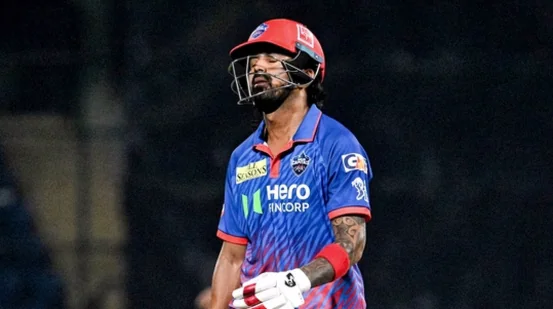
Delhi Capitals were given a late jolt at the Arun Jaitley Stadium after Gujarat Titans posted 210/4, and the chase demanded a captain’s-level push. Shubman Gill’s 70 and Washington Sundar’s 55 had already tilted the match into a territory where one batter had to stay long at the crease. KL Rahul did exactly that, striking 92 off 52 balls, but DC ultimately finished on 209/8—falling just one run short.
Key takeaways
- Gujarat Titans compiled 210/4 at the Arun Jaitley Stadium before DC’s chase began.
- KL Rahul struck 92 off 52, including 11 fours and 4 sixes, in a chase that ended at 209/8.
- Rahul’s effort was DC’s biggest reason the match stayed alive, but it still wasn’t enough to cross the line.
- In IPL 2026’s balance-sheet framing, Rahul’s innings represented his first meaningful recovery after an early deficit.
- Despite a reported gain of ₹23.2 lakh from this match, the season ledger still shows an unrecovered gap of about ₹1.6862 crore.
Rahul’s innings: impact on the field, not the full fix off it
Rahul’s knock is what makes the night stand out when you view it through both a cricket lens and a financial one. On the field, it was the innings that finally made his IPL 2026 campaign look properly awake—he delivered the kind of long, controlled batting that a 210 chase requires. Yet the numbers also underline a bigger theme: while this was a step in the right direction, it did not reset the season’s overall picture for DC’s ₹14 crore batter.
Before this match, Rahul’s first two appearances had already created a significant running shortfall. His cumulative deficit across those outings was pegged at ₹1.9182 crore. That kind of early damage can quickly make even a proven franchise purchase look like a liability on the ledger—because premium signings are expected not only to perform, but to stabilize results from the start.
Against Gujarat, Rahul finally produced innings-grade value for that bracket. His 92 was scored at a high impact rate and came with 11 boundaries and four maximums. Using the monetary model described for this analysis, the performance was valued at ₹1.232 crore against a notional per-match cost of ₹1 crore. Put simply, the innings generated a profit of ₹23.2 lakh for that single contest.
What the numbers still demand: a bigger correction than one big score
The return was undeniably strong—there was recovery, and it arrived at the right moment. But the ledger view makes one thing clear: this ₹23.2 lakh improvement can’t erase the earlier ₹1.9182 crore hole. Measured against the damage from the first two matches, Rahul has recovered only about 12.1% so far. That leaves Delhi Capitals carrying an unrecovered deficit of roughly ₹1.6862 crore across the season’s accounts.
This is where the story becomes more revealing than the scorecard alone. In cricket terms, a 92 in a 210 chase would normally be treated as a statement innings. Rahul kept DC in the contest, managed phases intelligently, and ensured the result stayed uncertain for longer than it might have otherwise. However, in the economics of an IPL franchise slot, one top-tier innings does not automatically translate into a full comeback. It signals repair work has started, but it doesn’t complete the job.
Relief, not closure
Rahul’s situation can be compared to a blue-chip stock that begins the season with a steep dip: the underlying value and faith in the brand remain, but the early drop has already unsettled investors. A strong rebound day can calm the panic and stop the slide, yet it typically doesn’t undo everything that happened earlier.
The ₹23.2 lakh recovery from this match is not a small figure in real-world terms. It is the sort of amount that can cover major purchases in many settings or pay for high-end living costs over a year in several Indian cities. On most days, it would be viewed as a respectable return in sports-business terms. Still, the remaining ₹1.6862 crore gap is the headline item—far from “loose change” in franchise accounting. It sits in the range associated with luxury-car territory, and it leaves the franchise reminded that one good night can improve mood, but it does not restore the full investment thesis.
That is the proper way to read Rahul’s 92. It was valuable and timely, and it gave DC a real chance in a steep 210 chase while placing his own IPL 2026 run in profit for a single game. But the broader financial reading remains demanding. Delhi Capitals did not spend ₹14 crore on a one-off correction after three appearances; they paid for consistent insulation against precisely the sort of early wobble that began Rahul’s campaign.
So yes, Rahul is moving in the right direction. But the ledger is still delivering the harsher verdict: the scorecard suggests KL Rahul is back, while the balance sheet indicates he still has about ₹1.68 crore to recover.
