
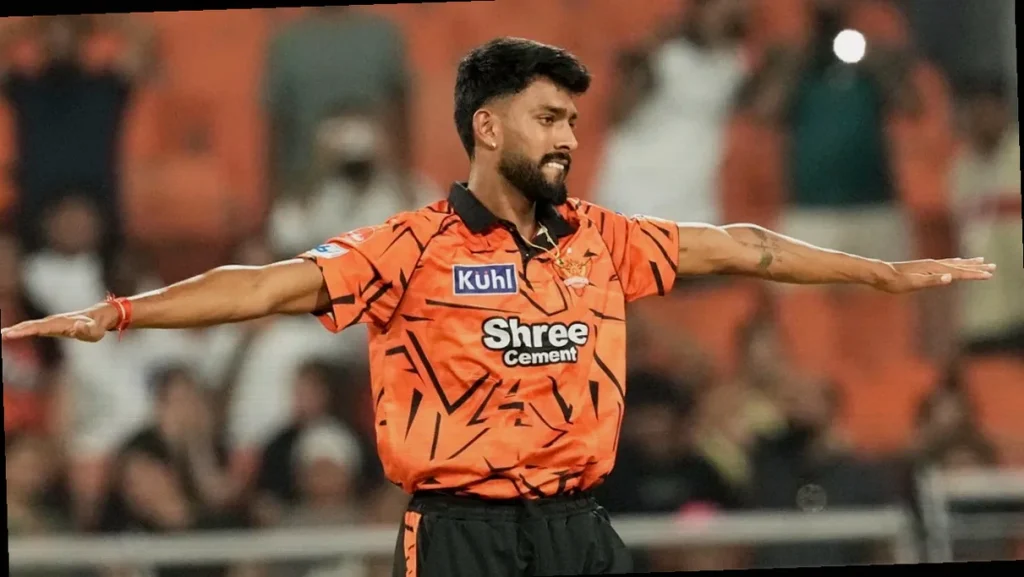
Sunrisers Hyderabad (SRH) finished the IPL 2026 league phase with 9 wins from 14 matches and ended up third in the standings, edging Gujarat Titans (GT) only on net run-rate. The campaign ultimately ended in the Eliminator, but SRH’s pace-bowling coach James Franklin insisted the season still represented “a really good” overall effort. Former SRH title-winning coach Tom Moody, who was at the helm when the franchise lifted the trophy in 2016, offered a more pointed view—arguing that SRH’s batting-first construction has left them financially constrained when it comes to building a balanced bowling group.
League success, then Eliminator exit
SRH’s league-stage record—nine victories out of 14 round-robin games—was strong, yet the points table placed them behind the top two. Franklin said the outcome reflected fine margins rather than a collapse in performance.
- SRH won 9 of their 14 league matches in IPL 2026.
- They finished third on the league table, with GT above them only on net run-rate.
- Because of the third-place finish, SRH had to play the Eliminator rather than receiving the advantage of two chances reserved for the top two teams.
- Franklin maintained that the season did not “go wrong,” adding that SRH’s third-place position was a run-rate outcome.
Batting core: big scores, big impact
Moody suggested SRH’s identity is centred on their “big batters,” and that approach has consequences elsewhere in the squad planning. He argued that the franchise has been left “short” in resources, limiting the ability to assemble a deep and reliable bowling unit to complement their batting emphasis.
In terms of production, Travis Head struggled to reach his best form this season, finishing with 410 runs at a strike rate of 170.12. SRH’s top order, however, delivered consistently through the middle.
- Heinrich Klaasen: 624 runs at a strike rate of 160.00.
- Ishan Kishan: 602 runs at a strike rate of 182.42.
- Abhishek Sharma: 563 runs at a strike rate of 204.72.
Moody and Franklin both pointed to the team’s batting structure and the way partnerships and top-order output helped SRH win matches. Nitish Kumar Reddy was also highlighted as the fifth batter who could reliably follow the leading quartet.
Bowling picture: standout wicket-takers and developing talent
While the batting unit carried much of the scoring load, SRH’s bowling story featured a couple of clear success points alongside a group of players still on the learning curve.
- Eshan Malinga led the wicket-taking impact with 20 wickets and an economy rate of 9.33.
- Sakib Hussain contributed 15 wickets at an economy rate of 9.45.
- Praful Hinge and Shivang Kumar were described as showing promise, though still not finished products.
Moody’s critique: the money behind the “brand”
Moody, who coached SRH during their 2016 title-winning campaign, argued that SRH’s style is admirable but expensive. He said the franchise has not lifted the trophy with this brand yet, and that the cost of investing in a batting-heavy approach is that the bowling side often ends up underfunded.
He also referenced SRH’s Eliminator defeat, noting they were blown away by Vaibhav Sooryavanshi and Jofra Archer. Moody’s core message was that the franchise needs to put investment into the way it plays as a batting unit, and that money is then “lost” when it comes to building the bowling support required for sustained success.
Overseas planning, salary-cap balance, and youth emergence
SRH have previously made a significant overseas investment, breaking the IPL auction record for an overseas player by signing Pat Cummins for INR 20.50 crore ahead of the 2024 season. However, Moody suggested that the squad has lacked another major overseas name, and especially a big spinner, in the composition.
- SRH’s overseas options include Malinga, Gerald Coetzee, and Dilshan Madushanka alongside Pat Cummins.
- Harshal Patel—who won the Purple Cap in 2021 and 2024—played only five matches this season, took no wickets, and conceded at an economy of 10.82.
Comparisons and calls for balance
Moody also stressed the need for balance under the salary-cap structure. He said he is not opposed to SRH’s brand of cricket, but that teams must balance the approach when accounting for cap constraints.
He pointed to another franchise’s squad balance, saying RCB (Royal Challengers Bengaluru) have found that equilibrium and that this is something SRH should aim to replicate.
Ambati Rayudu backed the same theme, describing SRH’s style as “brilliant” and “very exciting” to watch, but argued that winning an IPL requires both clever planning and power on the field. He added that improvement will come only if SRH add the right personnel, maintain balance, and are able to adapt to different conditions.
Indian talent rises inside SRH’s XI
Franklin viewed one of the biggest positives of SRH’s season as the emergence of Indian players. He said the franchise benefited from a group of young batters and bowlers breaking into the starting XI, while senior contributors continued to deliver at key moments.
- Franklin said that Shivang, Praful Hinge, Sakib Hussain, Salil Arora, and [R] Smaran provided five players in SRH’s starting XI who came through during the year.
- He described this as exactly what a franchise wants: young talent emerging each season alongside senior contributors.
- Franklin highlighted SRH’s top four performers as “amazing,” citing the runs they amassed, the games they helped win, and the partnerships they built.
Reddy’s dual role praised
Franklin also singled out Nitish Kumar Reddy, praising the bat contributions and the vital wickets he took. He called Reddy the “beauty” of having a genuine allrounder—someone who can influence matches through both batting and bowling.
Looking ahead: retention decisions and the next auction
Despite the tournament end in the Eliminator, Franklin and the SRH staff framed the season as one with multiple positives. He said SRH would reflect after the campaign, with significant time now before the next IPL begins. That gap, he noted, will be used to decide who to retain ahead of the subsequent auction.
Franklin’s closing assessment was that “not a lot’s gone wrong,” and that—like every team—SRH will step away, review, and plan for what comes next.
