
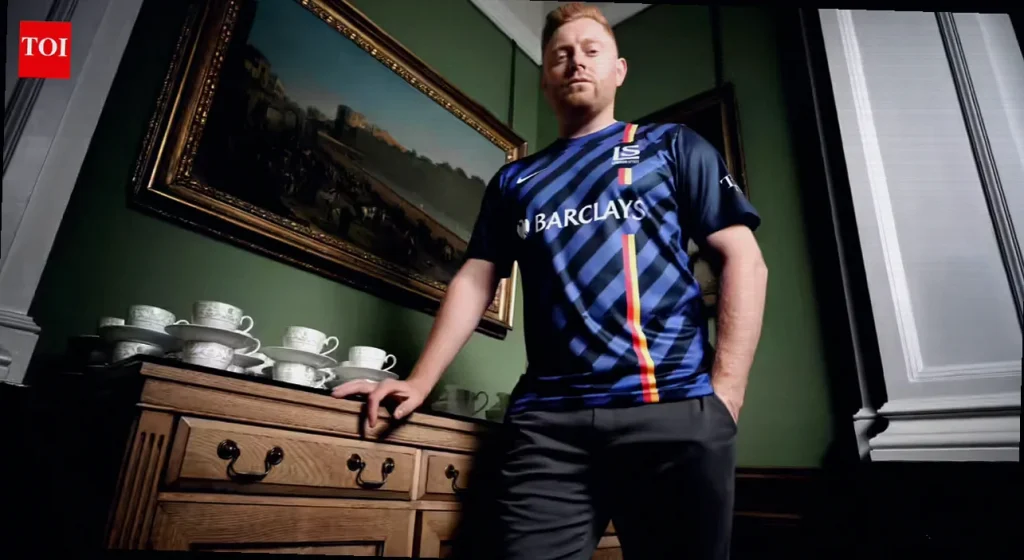
London Spirit have introduced a bold new blue playing kit for the next season of The Hundred, blending their fresh look with the well-known “egg and bacon” colours linked to the historic Marylebone Cricket Club (MCC). The design is intended as a direct tribute to the cricket heritage of Lord’s, where the franchise’s home matches are played.
The kit features the familiar yellow-and-red striped theme that has long been associated with MCC membership. Those colours and the traditional blazers and caps that go with them are a regular sight at Lord’s, particularly during Middlesex fixtures and England’s Test matches. With the MCC owning Lord’s and holding the majority stake in London Spirit, the choice of palette is also a symbolic acknowledgement of the venue’s standing in the game.
The announcement arrives as preparations intensify for another campaign of The Hundred, England and Wales’ 100-ball tournament. The competition was created with the aim of capturing some of the commercial momentum and entertainment value that the IPL has delivered in India.
London Spirit will begin the new season with a squad featuring several major names, including Liam Livingstone, Jonny Bairstow, Adam Zampa, Dewald Brevis, Jamie Overton and David Willey.
Alongside their playing group, the franchise has refreshed its support setup by bringing in Dinesh Karthik as mentor and batting coach. The former India wicketkeeper-batter takes on his first role with a franchise team outside the IPL.
The Hundred, explained: structure, rules and presentation
Unlike England’s traditional county pathway, The Hundred is built around eight newly formed city-based franchises created to broaden appeal—particularly with younger audiences in mind. London Spirit represent the capital and stage their home matches at Lord’s, commonly known as the “Home of Cricket”.
- Each innings is limited to a maximum of 100 legal deliveries.
- Bowlers can be used in spells of either five or 10 consecutive balls.
- A bowler cannot exceed 20 balls in a single innings.
- Ends change every 10 balls, rather than at the conclusion of each traditional over.
- The tournament includes a 25-ball powerplay, during which only two fielders are allowed outside the circle.
- No-balls carry two runs plus an immediate free hit for the batting side.
- If the bowling team falls behind on the required pace of play, it can face fielding restrictions.
- Instead of using conventional “over” terminology, the broadcast and scoreboard presentation is simplified with the match framed around “sets of five balls”.
- Games are scheduled to wrap up in roughly two-and-a-half hours to maintain a quicker, more audience-friendly tempo.
