
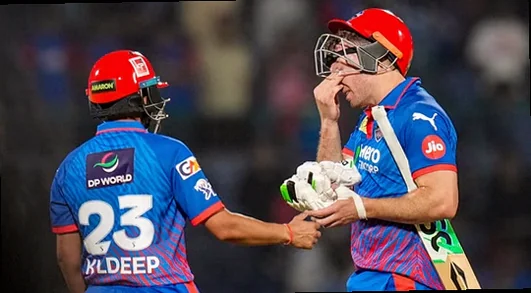
Two swings of fate in the final over proved decisive for Delhi Capitals on Wednesday, when a chaotic finish in their 211-run chase ended in a narrow one-run defeat to Gujarat Titans. It was Delhi’s first loss of IPL 2026 at home, and the sting was sharpened by the way the last two balls unfolded around David Miller. Under the spotlight for not taking a single on the penultimate delivery, Miller became the focal point of debate as former players Dale Steyn and Ambati Rayudu suggested that the moment could haunt Delhi when the season tightens and qualification scenarios turn unforgiving.
Delhi had started the chase with purpose, building a 76-run opening partnership that set the tone for a competitive total chase. Once KL Rahul settled, the innings shifted gears. After a cautious start, Rahul found his rhythm and accelerated with controlled aggression, keeping the boundary flow going even as wickets continued to fall at the other end. His knock was the backbone of Delhi’s pursuit, with a composed 92 that kept them well within reach, before he departed with 45 still required from the final three overs.
Miller’s spell and batting contribution at the Arun Jaitley Stadium turned the contest into a roller-coaster. He had initially walked off injured earlier in the innings, but returned after Tristan Stubbs’ dismissal, and the momentum visibly shifted in Delhi’s direction. One of the most telling phases came when Miller struck a 23-run over off Mohammed Siraj, tightening the target and bringing the chase down to a razor-thin margin—two runs needed from the final two balls.
That is where Delhi’s momentum slipped. A dot ball on the penultimate delivery left the equation delicately balanced: with Miller refusing a single, Delhi needed two runs off the last ball. Miller failed to make contact, and the story then turned to Kuldeep Yadav’s desperate attempt to force a Super Over. Kuldeep tried to steal the needed run, but he was run out inches short, with wicketkeeper Jos Buttler completing the decisive distance as Delhi fell agonisingly short.
Steyn, weighing in on the decision-making at the death, acknowledged that Miller had every right to back himself—particularly after smashing a 106-metre six earlier in the over. Still, Steyn argued that the endgame demanded a different kind of calculation.
“You are reading Kuldeep’s body language there, where he is telling Miller, ‘Trust me, I’ve got this.’ And you see that as he’s hit it, he’s taken off for the run, but then decided against it. He was backing himself. He just hit a 106-metre six, so he’s in the zone. He was feeling it,” Steyn said. “But Miller’s too good a player not to take a single. You take what’s given to you—it’s a draw or a tie—and then you back your tail end there in terms of Kuldeep to get that single. Or even if he misses it, that you’re quick enough and smart enough to run and get that bye, which in the case of Kuldeep wasn’t able to do. Maybe just a slight hesitation, believing that Miller’s the kind of player that can hit the ball off the ground. And errors that will cost them massively.”
Rayudu echoed Steyn’s assessment, revealing that the conversation between the batters had been discussed earlier in the final sequence. In his view, Miller’s plan appeared to change at the last moment—an adjustment that proved costly.
“I think so, because I think the chat was all about, uh, let’s tie the game first and then, you know, maybe I can in the last ball. Yeah, it’s quite unfortunate for Delhi. They were, they were. They played the game for most of the batting innings, and they had a chance to really tie the game and go to the super over on maybe a minute of the last ball. Things happen, but as Dale said, that’s the last thing when it comes to qualifying—when it’s close, this game might actually happen,” Rayudu said.
