
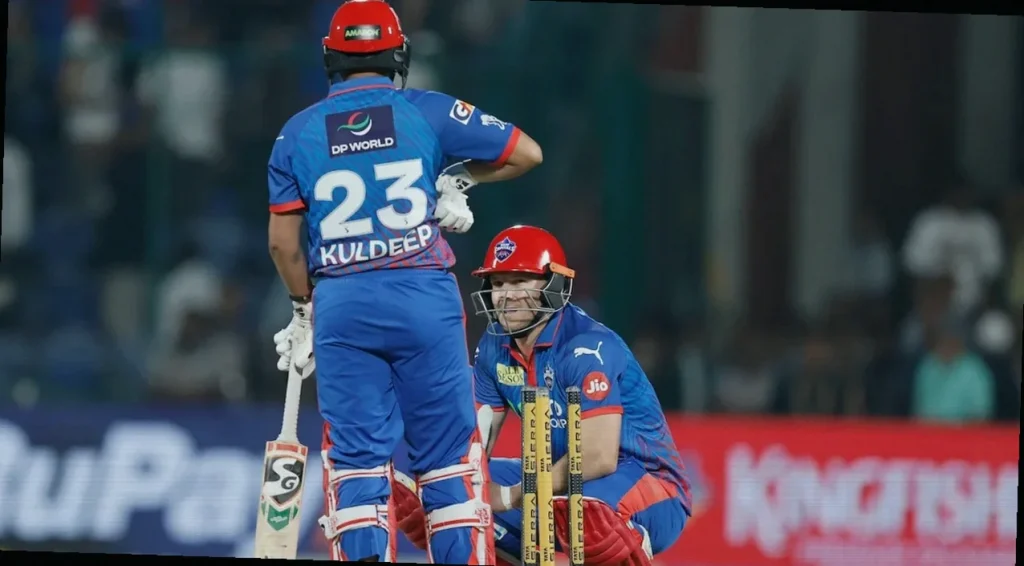
Every Delhi Capitals supporter has a single image stuck in their mind from the Arun Jaitley Stadium: David Miller, at the non-striker’s end, choosing not to take the run on the penultimate delivery—only for the chase to end by one run against Gujarat Titans. It’s a moment that has split opinions and sparked a familiar T20 debate: when the game is that close, do you take the “safe” option, or trust your power-hitting at the last ball?
The rewind starts in the 13th over of DC’s chase. Miller was already nursing a left-hand niggle. After he struck Prasidh Krishna for a one-bounce four into deep midwicket, the pain flared again, a problem that had briefly been treated earlier in the innings. By the end of that over, Miller felt he couldn’t continue and retired hurt on 12 off ten balls, leaving DC to rethink their path forward.
DC were chasing 211 and needed 81 from seven overs when things shifted again. With 11.57 required per over, the asking rate was tough but not out of reach in the current Impact Player era. They also had plenty of room to maneuver with seven wickets still in hand, and KL Rahul looked in excellent rhythm on 69 off 37 deliveries.
Yet the contest didn’t stay on DC’s terms for long. A few overs later, they suffered a double blow: Rashid Khan dismissed Axar Patel, and a direct hit from Sai Sudharsan sent Tristan Stubbs back. When Miller returned to resume, DC weren’t fully out of it—but the next setback arrived quickly.
Two balls after Miller took guard, Rahul fell to Mohammed Siraj. With 45 needed from three overs and only four wickets left, DC’s chances took a sharp turn. They were no longer in the “favourites” bracket, even if the chase still had enough time for one explosive spell to rewrite the narrative.
Miller, however, refused to let the game drift away. He launched Kagiso Rabada over extra cover, tightening the equation until DC needed 36 from 12 balls. Then the 19th over arrived, and it felt like the match turned on a single sequence.
Siraj opened the over with a wide. The next ball was short, and Miller pulled it into the stands beyond deep midwicket. On the following delivery, Siraj served a fuller ball just outside off—right where Miller likes to attack. He struck it with such force that it smashed into the deep-extra-cover boundary cushion almost on the full.
The next moment was even more telling. Siraj’s third ball looked like a half-volley begging to be hit, and Miller produced a no-look strike straight over the bowler’s head for a six. Later in the over, Vipraj Nigam also found the boundary, adding to the sense that the chase was suddenly tilting.
That set up a final-over task for Prasidh: defend 12 with the pressure cranked up. He also had a constraint due to a slow-over-rate penalty that limited Gujarat’s options at the boundary—only four fielders could be stationed outside the 30-yard circle.
Prasidh’s only real advantage was that Nigam was on strike for the opener. Nigam lofted the first ball over mid-off for four, but the very next delivery didn’t go the distance, and Kuldeep Yadav came in.
Gujarat knew Miller would want the strike back, and if Kuldeep missed his contact, they would push for a bye to keep the plan intact. Buttler adjusted quickly, with both gloves on, prepared to whip the ball at the stumps if the batters went for the extra option. Kuldeep, though, guided it to deep third for a straightforward single—giving Miller the ball he wanted.
With eight needed from three balls, the contest belonged to whoever could control the risk. Miller had a reason to believe the job could be done, too. In Qualifier 1 of IPL 2022, he had needed a similar kind of turnaround—16 off the last over—when he smashed Prasidh for three sixes off the first three deliveries to help deliver a memorable finish. Different match, different context, but the same instinct: trust the swing when the moment arrives.
Still, death overs are brutal for even the most confident hitters. In IPL 2025, Prasidh’s economy in this phase sat at 11.06, and among the 14 bowlers who bowled at least ten overs at the death, his rate ranked fourth from the bottom—numbers that hint at how difficult it is for batsmen to consistently impose themselves in the final stretch. Here, with eight required from three, Prasidh couldn’t land the yorker from around the wicket, and Miller punished it with a towering 106-metre six, igniting the DC dugout and leaving Gujarat unsure how to steer the final balls.
With two needed from two, Miller and Kuldeep held a long, intense discussion at the crease. The debate was obvious: if a single was available on the fifth delivery, should DC take it to tie the game and bring Kuldeep on strike for the last ball, ensuring they wouldn’t lose in the regular contest? A tie would at least mean a Super Over. But if they refused the single, Miller would stay on strike with a direct chance to win on the final delivery—at the cost of increased danger if the shot didn’t come off.
Prasidh bowled a short, slower ball. Miller pulled it toward deep square leg, and DC didn’t take the single. With the way he had been timing the ball, Miller backed himself to finish the chase on the last ball.
Before that final delivery, Gujarat captain Shubman Gill had a detailed conversation with Prasidh. After the match, Gill explained the thinking: “We were discussing whether to go for the yorker or the slower one. Given how the wicket was playing, we decided the slower one would be difficult to hit for a boundary.”
Prasidh went with the slower bouncer, just outside off. Miller swung and missed, forcing a run at the last second. For some reason, Buttler took both gloves into the moment, but he still managed to hit the stumps cleanly with an underarm throw. Kuldeep, despite a desperate dive, was short of his ground—so clearly that there was no need for the third umpire. Even DC head coach Hemang Badani, visible from the dugout, raised a finger immediately.
The batters in the middle still chose to take DRS, looking for any chance of a miss on height or width. However, the system couldn’t help. Miller’s height is 1.87 metres, while the ball travelled past the popping crease at 1.75 metres, confirming the outcome.
In T20 cricket, every delivery becomes a storyline, and a one-run defeat always invites a dozen “what ifs” in hindsight. What makes this one sting is that, at the time of Miller’s decision at 19.5, there was no uncertainty about the trade-off—DC chose the bold path, and Miller backed his power. In the end, it didn’t come off, and the question remains the one that refuses to fade: why didn’t he take that single?
