
Rajasthan Royals arrived at IPL 2025 with a season that never quite got going. They ended up ninth, managed only one win in their first nine games at one stage, and Sanju Samson spent much of the campaign sidelined due to injury. The start of IPL 2026, however, looked like a different franchise entirely. RR won their opening four matches, secured a playoff berth on the final day thanks to a 30-run victory over the Mumbai Indians, then continued their momentum by dismissing Sunrisers Hyderabad in the Eliminator. In Qualifier 2, they set the Gujarat Titans a towering target of 214, but Shubman Gill’s blistering 104 brought the Titans through, ending Rajasthan’s run. Even so, RR finished third—their strongest league finish in years.
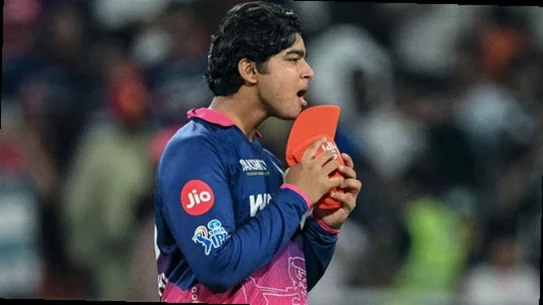
Along the way, one individual carried the side further than the rest of the squad may have suggested. A 15-year-old from Bihar, Vaibhav Sooryavanshi, delivered performances that looked far beyond his age and experience: 97 off 29 balls in the Eliminator and then 96 off 47 in Qualifier 2, both coming against what was widely seen as the competition’s sharpest bowling group. If you’re watching and still wondering what he could command in the current market, you’re missing the point.
The IPL 2026 numbers that stand out
Over 16 matches in IPL 2026, Sooryavanshi amassed 776 runs at a strike rate of 238, with his average sitting at 48.5. His boundary count reads 63 fours and 72 sixes, and the simple imbalance—more maximums than fours—points to the kind of batting style he brings to the crease. He finds the boundary roughly every 2.4 balls. By impact ranking, he finished IPL 2026 as the top batter. He was also second overall in impact for the season, only behind Shubman Gill, with Gill placed ahead due to a captaincy-related bonus in the model.
What makes the numbers more revealing is how his aggression holds up across phases. In the powerplay, his strike rate is 233; in overs 7 to 11 it rises to 234. Then, in overs 12 to 16, it jumps dramatically to 265. Even in the death overs, where the sample is smaller, he posts a strike rate of 325. Just as important, he doesn’t appear to ease off as an innings progresses—he accelerates.
The match-by-match impact breakdown further explains why his season mattered so much. Across his 16 league appearances, seven were classified in the highest tier of the system as historic or freak performances, while three more landed in the elite game-breaking category. He produced one match-defining effort and another that had meaningful positive value. There were also three damaging outings, but those were not collapses; they were single-figure dismissals off minimal deliveries. In other words, the risk is present—but it is limited by the volume. When he stays in, this tournament has not seen anything comparable.
Sooryavanshi’s IPL 2025 century—101 off 38 balls, also making him the youngest men’s T20 centurion in cricket history—was not a one-off burst. The 2026 season has reinforced that it was the start of a repeatable pattern.
What is he actually worth—and why it matters for IPL 2027
The question of value needs a framework, not just buzz. Using a performance-based system that assigns monetary worth to output, the analysis places Sooryavanshi’s IPL 2026 value at INR 34.97 crore, compared with his retained price of INR 1.1 crore. That implies a profit-and-loss impact of +INR 33.87 crore and a worth-to-price multiplier of 31.8x. Put simply, he is the tournament’s most underpaid player.
The INR 34.97 crore figure is not a bid prediction. It represents what his production would cost in a model designed to measure performance value separately from sentiment and market noise. In the wider discourse around the season, his output has been likened to an extraordinary conversion rate—effectively turning a retained INR 1.1 crore into a value far beyond what the franchise paid for at the time.
But the bigger question is what happens next. If Rajasthan Royals retain him for IPL 2027 at the same ₹1.1 crore, the underpayment becomes more than a temporary mismatch—it turns structural. Sooryavanshi has not yet made his senior India debut. At the start of IPL 2026, he had just turned 15 and became eligible under ICC pathways for senior international cricket. He remains uncapped, and under the IPL retention rules for the 2025 to 2027 cycle, an uncapped player retained by a franchise faces a fixed purse deduction of INR 4 crore. RR kept him at INR 1.1 crore because, at 14, he had no leverage. At 15, he still has very little.
That situation changes at the next mega auction, scheduled before IPL 2028, when open market bidding will set the price. For IPL 2027 itself, he can still be retained under the uncapped slab and paid INR 1.1 crore, keeping the conversation from becoming public unless a party forces it. Even after accounting for the INR 4 crore uncapped deduction, Rajasthan would still be getting him at roughly a 97 per cent discount versus what the performance-based system values his output at for that season alone. At INR 1.1 crore, he is not only RR’s bargain and the IPL’s most underpaid player—he is, by a wide margin, the most underpaid athlete in Indian sport.
Still, the market reality is more layered than a single figure can capture. The current auction ceiling for an IPL player is linked to the highest price paid by an Indian franchise, which stands at Rishabh Pant’s INR 27 crore paid by Lucknow Super Giants before the 2025 season. Pant’s valuation reflected more than batting: he was already 27, had established himself as India’s first-choice Test wicketkeeper, and carried the profile of captaincy. LSG weren’t just buying runs; they were buying a franchise identity anchored by leadership and a complete skill set. Sooryavanshi is different—he is a pure batting weapon with no keeping duties, no bowling, and no captaincy lever at present. That distinction matters when franchises calculate what they’re truly purchasing.
A closer comparison, in terms of a batter-only valuation, is Yashasvi Jaiswal, retained at INR 18 crore before the 2025 mega-auction, when his valuation became a benchmark for specialists. Sooryavanshi can be viewed as a more disruptive version of that batter-only profile.
On an open-market basis, a realistic valuation is placed around INR 20 to 25 crore, with a potential ceiling of INR 27 to 28 crore if two franchises decide to engage in a bidding war. Given his Eliminator impact and the kind of performances he’s already produced, that outcome is entirely plausible. Rajasthan Royals, fully aware of what they hold, would be well served to retain him before the market catches up.
In football terms, the comparison is not to Mbappé, whose price reflected captaincy-adjacent status and a complete profile. Sooryavanshi is closer to Lamine Yamal: 15 years old, operating at an elite senior level, with the kind of trajectory that tends to point in one direction only.
Method note on the valuation
The monetary worth numbers referenced here are produced using an Impact Model, a proprietary match-by-match player valuation system built for this analysis. It turns ball-by-ball win probability data into individual impact scores, then converts those scores into rupee value using a multiplier approach anchored to auction prices. “Performance worth” reflects what a player’s output would cost at fair market value rather than what a franchise is likely to bid in a given window. The figures cover IPL 2026 only.
This assessment is based on data through the IPL 2026 Eliminator on May 27, 2026. Any auction valuations discussed are projections, not guarantees, and they remain sensitive to market conditions, player availability, and the BCCI regulations that apply at the time of any future auction.
