
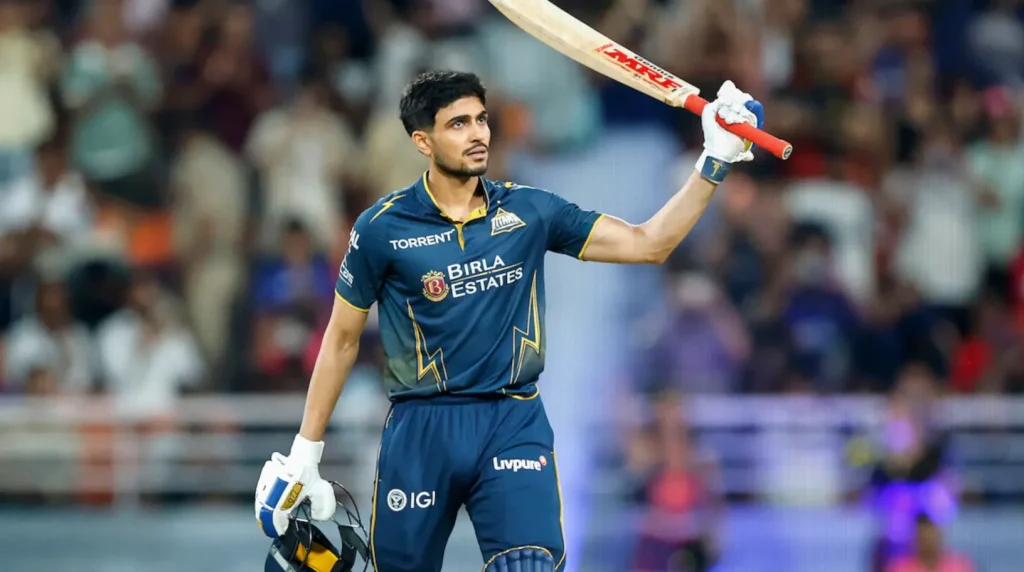
Standing just one game away from his first Indian Premier League crown as captain, Shubman Gill insisted he feels no extra weight from the build-up, even with Gujarat Titans set to play Royal Challengers Bengaluru in the final at the Narendra Modi Stadium on Sunday. Both franchises, already chasing their second title in the tournament, will be aiming to turn the occasion into history at a venue that is expected to host a full-throttle contest. Gill said in the pre-match press conference that he views the pressure differently, arguing that familiarity can be a genuine edge rather than a burden. “Honestly, I don’t really get the burden of expectations. There are advantages—there’s familiarity when we play here. We know the wicket and the ground, so we know what kind of cricket we need to play here to win,” he said. He added that the home atmosphere helps, but also clarified that the season’s value isn’t only measured by the trophy. “So, in that context, yes, I see it (playing at home) as an advantage, because there’s a little bit of familiarity. If you win, it’s going to be a great season. If you don’t win, it’ll still be a good season, but it’ll be better if you win,” Gill concluded.
Gujarat’s path to the summit clash has been built on momentum and recent travel, and the Titans reached the final after beating Rajasthan Royals by seven wickets in Qualifier 2 at Mullanpur on Friday night. They then made the trip back to Ahmedabad ahead of Sunday’s match. Gill also reflected on the tournament’s shifting locations, noting that the movement between venues can test teams physically. Before Qualifier 2, the Titans had played Qualifier 1 against RCB in Dharamsala, where they were outplayed by a significant margin of 92 runs. That sequence raised a practical question: will fatigue matter after shuttling around the country? Gill’s response leaned heavily on mental preparation. “Dharamsala is kind of a difficult venue to, you know, get there and travel. But, yes, physically they (RCB) might have an advantage,” he said. “But I think finals are all about mental. So the team that’s mentally up there for the challenge is the one that’s going to win,” he added.
While many teams in the IPL have leaned into early aggression, Gujarat have often chosen a more controlled rhythm—protecting wickets in the opening phase and then accelerating as the innings develops. Gill defended that approach as both pragmatic and effective. “I think it’s all about getting the job done, isn’t it? Like, it doesn’t matter how you get it done, as long as you keep getting the job done, that is what it’s about,” he said. He pointed to the way he and opening partner Sai Sudharsan have been shaping their starts, combining singles and doubles to keep the scoreboard moving consistently. When the pitch slows down, that steadiness becomes even more important, Gill suggested. “The wickets have been really good, but sometimes the wicket tends to be a bit on the slower side, then it’s important to find gaps, run well, because I think that’s the foundation of any format you’re playing,” he explained. He also linked scoreboard pressure to discipline in the fielding side of the game: “The team that plays fewer dot balls has a better chance of, you know, getting a better score.”
Gujarat’s bowling plan, Gill said, has also drawn from traditional thinking rather than chasing only short-burst tactics. He described how the pacers have used a Test-match style length effectively in this IPL to reduce scoring opportunities. Gill explained the logic behind that line and length, especially with the new ball. “The message is simple. When you’re bowling with the new ball, if there is a little bit (of help) in the wicket, as a batsman I know the hardest ball to hit is the good length ball, but that good length changes according to the wicket—black soil, red soil etc—because it varies probably a metre back or forth,” he said. “So, there’s a reason why Test match length works, because it is the hardest ball to hit as a batsman with the new ball.”
Gill also highlighted how Gujarat have employed bouncers at key moments, citing their execution against a Rajasthan Royals batting line-up led by Vaibhav Suryavanshi in Qualifier 2 at Mullanpur on Friday. Suryavanshi struck a 96, but Gill stressed that he did not get a completely free run for much of his 47-ball innings. “I think the way we executed our bouncers (vs RR), was quite exceptional. In every over we used our bouncers very well and the accuracy of bouncers that we bowled, I’ve actually not seen in a T20 game,” Gill said. He added that the volume and effectiveness of those deliveries were central to the plan. “The number of bouncers that we used and the success that we got with the bouncers was tremendous,” he concluded.
