
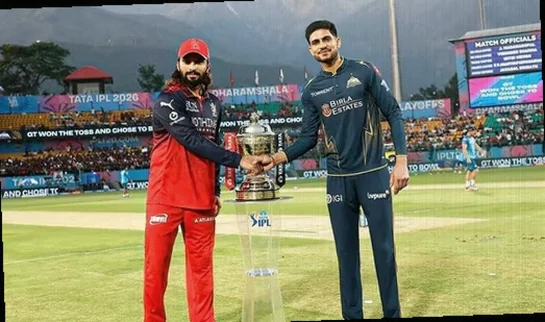
The IPL 2026 final is set with a familiar cricketing contrast: Gujarat Titans take on Royal Challengers Bengaluru. Gujarat arrive with a point to prove after a heavy defeat in Qualifier 1, while RCB look to turn a particularly well-rounded campaign into silverware.
Yet the match’s real hook is written in numbers. Shubman Gill comes into the title clash as the tournament’s most “valuable” contributor, holding ₹35.14 crore in surplus value. Rajat Patidar is close behind at ₹35.06 crore. Together, the two captains account for more than ₹70 crore in profit before a single ball is bowled in the final.
Quick facts: the value battle before the final
- Match: Gujarat Titans vs Royal Challengers Bengaluru, IPL 2026 final.
- Gill surplus value: ₹35.14 crore (top of the season’s ledger).
- Patidar surplus value: ₹35.06 crore (near-equal, second on the ledger).
- Total surplus value combined: more than ₹70 crore.
- Gill’s season impact reads as the most complete across volume, consistency and control.
- Patidar’s season impact is framed as a sharper “value spike” through bursts of acceleration.
Gill’s case is built on completeness: the ability to supply runs reliably, to set the tempo from the top, and to keep authority across matches. Patidar’s signature is different—he has repeatedly delivered violent bursts that shift momentum, especially during the middle overs, and he has also shown leadership that turns knockout pressure into scoreboard damage.
Two captains, two different ways to win innings
Gill’s run-getting has been relentless. He has scored 722 runs from 441 balls at a strike rate of 163.72. He has made 30-plus in 11 of 15 innings, 50-plus seven times, and 80-plus four times. When Gujarat needed a rescue, Gill produced 104 off 53 against Rajasthan Royals in Qualifier 2.
That century mattered beyond the totals. Gujarat had been stripped down in Qualifier 1, dismissed for 162 after Gill contributed just 2 off 7. The hundred versus Rajasthan acted like repair work—getting Gujarat back into the final and restoring the captain’s command before the rematch.
Patidar’s value has arrived with a different texture. He has 486 runs from 246 balls at a strike rate of 196.76. The deliveries are fewer, but the damage per ball is heavier. His dot-ball rate stands at 22.76 compared to Gill’s 29.47. Patidar also finds a boundary every 3.51 balls, while Gill does it every 4.20.
Individually, those gaps can look modest. Across an entire innings, though, the effect is stark: one approach builds steady structure, while the other can make a competitive chase feel out of reach.
The contrast can be described as architecture versus detonation. Gill constructs innings with control, while Patidar ruptures them once the field opens. The phase numbers sharpen the picture. Gill has 320 powerplay runs at 159.20, 226 in overs 7–11 at 162.58, and 152 in overs 12–16 at 176.74—evidence of control through every major batting section.
Patidar, by comparison, barely registers in the opening phase. His tally is 36 from 39 balls in the powerplay. The season truly begins when the field tightens less: overs 7–11 bring 138 off 71 at 194.36, overs 12–16 deliver 234 off 108 at 216.66, and the death overs produce 78 off 28 at 278.57. Gill is described as Gujarat’s innings spine; Patidar is RCB’s acceleration switch.
The captaincy inversion: who leads when leadership is isolated
In the full impact table, Gill sits at the top with 2556.06, while Patidar is third at 2197.55—reflecting batting volume, fielding involvement, and leadership that has accumulated match by match. But if captaincy alone is isolated, the order flips.
Patidar leads the captaincy score at 708.3, while Gill is second at 619.2. RCB’s advantage is not only that they have benefited from Patidar’s runs; it’s also that his leadership has delivered significant tactical value.
Qualifier 1 made that visible. Patidar scored 93 off 33 with zero dot balls, including five fours and nine sixes. That spell turned RCB’s innings into 254/5 and left Gujarat’s reply in ruins. In effect, the final’s narrative was shaped inside that one innings, even before the rematch was formally arranged.
Gill answered in Qualifier 2 with his century. Put together, the two title contenders present a clean storyline: Patidar broke Gujarat, Gill rebuilt them, and now they meet again with the trophy at stake.
Their three earlier meetings offer no comfortable lean. In the first match, Gill made 32 off 24 and Patidar 8 off 5, as RCB won. In the second, Gill scored 43 off 18 and Patidar 19 off 15, with Gujarat getting the win. In Qualifier 1, Gill made 2 and Patidar struck 93, and RCB won by 92 runs. The most recent memory belongs to Patidar—meaning Gill has one opportunity to rewrite it tonight.
Fielding fine print that could decide a title
There is also a fielding dimension in this matchup. Gill has taken 12 catches at 85.71% efficiency, while Patidar has eight catches without a drop. Gill has faced more chances, but Patidar has been cleaner. In a final between two batting-heavy teams, even a single spilled chance can swing the value ledger within minutes.
That is why the ₹70 crore figure is not just decoration. It reflects how much of the tournament has run through these two captains. Gill is framed as the better season-long asset: more runs, more control, and higher total impact. Patidar is framed as the sharper weapon: a stronger strike rate, less dot-ball pressure, a higher boundary frequency, and the highest captaincy score of the season.
If this final becomes a contest of innings construction, Gill is Gujarat’s central axis. If it turns into a contest of middle-overs acceleration and tactical violence, Patidar is the most dangerous captain on the field.
One has carried the campaign like a mainframe—reliable, structured, and relentless. The other has attacked it like a live wire—fast, disruptive, and decisive. Only one side can leave with the trophy, and both arrive after turning their price tags into dust across the season.
Method note
The monetary values and impact comparisons in this article are based on an IPL 2026 performance valuation model created by the author. It converts batting, bowling, fielding and captaincy impact into estimated monetary value against each player’s season cost. These are analytical estimates, not official IPL financial valuations.
