
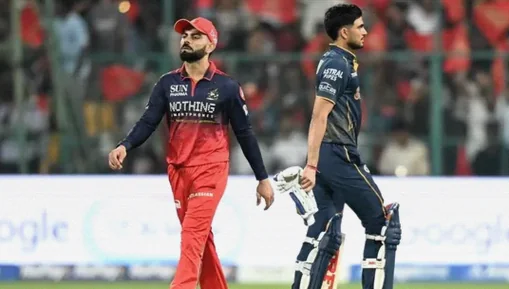
When the dust settled, it came down to the leading two sides. Across 19 prior editions of the IPL, the teams finishing first and second in the league phase have reached the final together 11 times. In the last 10 instances where the top-ranked team met the runners-up in the title match, the table-toppers lifted the trophy on six occasions. With that backdrop, the question is whether Royal Challengers Bengaluru can convert a second straight opportunity into another championship.
The story has often been decided by razor-thin margins, and this time the balance tilts slightly towards RCB. In head-to-head meetings between the two franchises, RCB hold a slender 5-4 advantage over Gujarat Titans. Even though both teams shared a win each in the league stage this season, RCB stepped up in the most critical game of the campaign—Qualifier 1—defeating Gujarat to take a 2-1 lead in the season series. That success secured RCB a direct passage to the final and also delivered a crucial rest advantage, while Gujarat were forced to make the trip to Chandigarh and then manage the pressure cooker of Qualifier 2.
Still, Gujarat will not go into the final without confidence. The match will be staged at their home venue, the Narendra Modi Stadium in Ahmedabad. Their only win over the defending champions this season also came at the same ground. In fact, Gujarat have won each of their last four matches in Ahmedabad, a run that could give them a strong sense of control heading into the decider.
Where could the RCB vs GT IPL 2026 final be decided?
The Qualifier 1 playbook
Gujarat’s path to the final has been powered heavily by Kagiso Rabada and Mohammed Siraj during the powerplay. Their decision to attack aggressively with the new ball paid dividends in the second half of the season and proved central to the late resurgence. Together, they have produced a strike rate of 16 in the tournament—best among all teams—while maintaining an economy of 9.49.
Those figures look even sharper in Ahmedabad. At this venue, Gujarat’s strike rate improves to a wicket every 13.5 deliveries, and they concede just 8.72 runs per over. Yet there was a clear contrast in Qualifier 1 at Dharamsala, where Gujarat were hammered for 76 runs in the powerplay. It was the second-highest total against them in that phase this season, only behind Rajasthan Royals, who posted 78/3 in Jaipur. In that game, Rabada and Siraj combined to concede 64 runs in five overs while taking just one wicket.
What shifted was RCB’s approach. Much of Gujarat’s success with the new ball has come from disciplined bowling—especially hard lengths that challenge batters on the off side. RCB unsettled that plan by constantly adjusting their positioning at the crease. Their intent eventually forced Shubman Gill to abandon Gujarat’s preferred powerplay pattern and bring Jason Holder into the attack early.
The Holder factor
Alongside Siraj and Rabada, Gujarat have two other pace options who have thrived in the middle overs. Prasidh Krishna and Jason Holder have both taken 13 wickets each between overs 7 and 16. Still, Holder may have been the more impactful option, with an economy rate of only 7.63 in the season. His effectiveness has come from a mix of tight lengths and short balls delivered with purpose. Those short-ball deliveries alone have produced seven wickets for him this campaign.
While the spotlight has been on the matchup between Virat Kohli and Rabada, the RCB batter has actually hit trouble with Holder twice this season, with both dismissals coming off short-pitched deliveries. Adding another layer to the contest, Kohli has been more aggressive against shorter balls this year overall, striking at 156 even after being dismissed four times. That combination—Holder’s control versus Kohli’s willingness to attack—adds intrigue to the final.
Can Bhuvneshwar stop Gill?
Ahmedabad has been Gill’s most productive ground across T20 cricket and other competitions. Out of his 6,134 T20 runs, 1,500 have been scored at this venue, at an average of 53.57 and a strike rate of 165.56—both comfortably higher than his career benchmarks. Gill is also entering the title match after a hundred in Qualifier 2 against Rajasthan, another reminder of his reliability throughout the season.
However, Bhuvneshwar Kumar could be the key obstacle. The experienced seam bowler has dismissed Gill six times in 79 balls while conceding only 80 runs in the process. Two of those wickets have already come this season, with Gill scoring just 15 runs off 14 deliveries in those encounters. Bhuvneshwar has also removed Jos Buttler twice this season, conceding just 17 runs in 15 balls.
He has even accounted for Sai Sudharsan once. That detail stands out because Sudharsan heads into the final having registered eight scores of fifty-plus in his last 10 innings, underlining how dangerous he has been recently.
Chasing the preferred option in Ahmedabad?
Ahmedabad has largely rewarded teams that bat second. In the last 24 IPL and T20I matches at the venue, sides chasing have won 16 times. The trend shows up strongly in the biggest matches as well: four of the last six finals here have been won by the chasing team.
The title game will be played on the same surface that hosted last year’s final. It has already been used twice this season, with both matches won by the team batting second—one of those wins even ended with RCB on the losing side. With the evidence pointing towards chasing as the safer route, the real test will be whether that pattern holds firm on the biggest night of the IPL season and, ultimately, determines where the trophy lands.
