
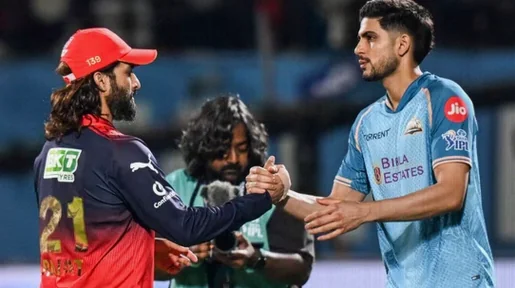
Gujarat Titans are set to step out in front of their own supporters in Ahmedabad for the IPL 2026 final, carrying the familiar comforts of routine, local knowledge and crowd energy. Yet Virender Sehwag insists that none of it should be treated as a guaranteed advantage against Royal Challengers Bengaluru, arguing the title game is essentially even-stevens.
Sehwag’s “50-50” view ahead of the final in Ahmedabad
Speaking on the final preview show, Sehwag labelled the summit clash a “straight 50-50” contest. He pointed out that while Gujarat’s home venue is the Narendra Modi Stadium—where they normally benefit from familiarity—the nature of a final changes the usual equation.
Sehwag said RCB’s brand of cricket has been exceptional, placing them on a level footing with Gujarat heading into the decider. His belief is that the matchup is balanced enough that small margins—especially in early phases—could determine the outcome rather than routine home-ground factors.
One reason Sehwag expects that balance is the difference between a typical league game and a final. In league fixtures, a franchise can usually influence conditions more freely to match its strengths. But in the final, the wicket preparation is controlled centrally, meaning Gujarat may not receive the same sort of pitch profile they would normally try to engineer at home.
“This is GT’s home ground, but because it’s a final, they can’t make any pitch that they want, so they won’t get that advantage,” Sehwag explained. He added that since the BCCI prepares the wicket for the showpiece, the contest becomes a more level playing field in terms of surface conditions.
For Sehwag, that detail is crucial. Gujarat may still enjoy the atmosphere and geography of Ahmedabad, but he believes they cannot lean on a ground that is tailored entirely to their preferred style. With RCB entering the final on momentum and backed by recent dominance over the same opposition, the usual pre-match assumption about home comfort losing less often than it should is, in his view, less reliable.
How RCB reached the final and what it signalled
RCB secured their place in the final after a convincing win over Gujarat in Qualifier 1. In that match, Rajat Patidar’s team posted a big total and then bowled out the chase, delivering one of the most ruthless playoff performances of the season.
Sehwag’s framing also reflects what that qualifier result demonstrated: Gujarat can be forced out of their preferred rhythm quickly when their top order is disrupted early. That makes the opening phase in the final a decisive zone—because if Gujarat lose control early, the match may swing away from their comfort plans.
For RCB, the final is also about proving consistency beyond a single campaign. They arrive as defending champions, back in the title race again, and with a batting structure that has repeatedly made them hard to dismantle.
Virat Kohli’s steadiness, Devdutt Padikkal’s ability to set the tempo, Patidar’s aggression in the middle overs and the range of finishers behind them give RCB multiple ways to build—and then accelerate—when the match demands it.
GT’s response in the playoffs and Sehwag’s warning
Despite the Qualifier 1 setback, Gujarat bounced back strongly, relying on the same core template that has defined their season. Sehwag highlighted how the opening partnership of Shubman Gill and Sai Sudharsan forms the foundation for Gujarat’s recovery and platform-building.
Gujarat’s route back to the final was secured with Gill’s century in Qualifier 2, while Sudharsan provided fluent support to help set up the chase/target structure needed to move forward. That combination produced the momentum Gujarat required to reach the decider again.
Sehwag believes Gujarat’s winning path is tied to repeating that exact approach. “GT will have to play the kind of cricket they did in Qualifier 2 to get the better of RCB in the final,” he said.
In practical terms, that places the spotlight on the start of Gujarat’s innings. If Gill and Sudharsan can survive RCB’s early burst—particularly the new-ball phase—Sehwag expects Gujarat can drag the final into familiar territory where their method works best.
But if RCB’s seamers strike early, Gujarat could be forced into damage control once more. Sehwag specifically referenced the threat of Bhuvneshwar Kumar and Josh Hazlewood, along with RCB’s supporting fast-bowling options, suggesting that early wickets could disrupt Gujarat’s flow the way it did in Qualifier 1.
Ultimately, Sehwag’s “50-50” call is less about neutral guessing and more about a direct message: Ahmedabad may have belonged to Gujarat during the league stage, but the final will be decided by who adapts faster to pressure, conditions and momentum.
With RCB already showing they can hurt Gujarat, and Gujarat already proving they can recover after a punch, Sehwag’s prediction sets up a decisive question for Sunday night—whether Gujarat can truly convert home familiarity into match-winning advantage, or whether RCB’s form makes the venue factor feel irrelevant.
