
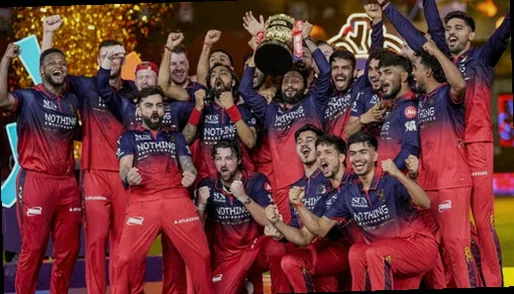
Royal Challengers Bengaluru’s IPL 2026 triumph wasn’t delivered by a single marquee moment—it was stitched together by a group that consistently found the right answer when pressure arrived. The campaign carried the familiar steadiness of Virat Kohli, the authority of Rajat Patidar, and the rising worth of Devdutt Padikkal. It also benefited from Bhuvneshwar Kumar’s precision, Krunal Pandya’s two-way balance, Tim David’s closing power, Rasikh Salam’s burst spells, and Venkatesh Iyer’s late-season interventions. That combination is what made the title feel truly finished rather than merely won. RCB ended the league stage as the best side “on the field” while also topping the league in both monetary value and overall impact. Over 16 matches, they generated ₹186.81 crore in total monetary worth and recorded a net profit of ₹83.53 crore. Their impact score finished at 12635.07, the highest in the competition. In other words, RCB didn’t just collect wins—they discovered different routes to them, which is the distinction between a good season and a complete one.
Patidar led the profit table, but RCB were not a one-man economy
Every championship team tends to have a figure at its centre. For RCB, that pivot was Rajat Patidar. Patidar’s season produced ₹49.34 crore of value against an auction price of ₹11 crore, translating to a ₹38.34 crore profit from one player alone. That placed him at the top of the franchise’s surplus chart and made him both the captaincy reference point and the performance engine of the campaign. Yet the story didn’t stop there. Devdutt Padikkal added ₹19.43 crore of output from a ₹2 crore auction investment, resulting in a ₹17.43 crore profit—one of the cleanest value returns in RCB’s season. Krunal Pandya contributed a further ₹10.15 crore in profit, while Bhuvneshwar Kumar returned ₹8.06 crore. Tim David brought in ₹7.76 crore, and even Virat Kohli—despite a hefty ₹21 crore tag—still finished with a ₹5.24 crore profit.
This was not a roster where one dominant performance concealed multiple weak links. RCB finished with 11 profitable contributors and only six players who ended in the red. Their profitable group generated ₹97.76 crore in surplus, while the total losses across the season summed to ₹14.23 crore. The overall balance of the campaign was built on that spread rather than leaning on a single standout. The title run wasn’t financially flawless in every corner: Jitesh Sharma ended on a ₹6.37 crore loss, Josh Hazlewood on a ₹6.09 crore loss, and Jacob Bethell, Suyash Sharma, and Romario Shepherd also finished in negative territory. Still, those deficits didn’t fracture the season because RCB had sufficient profit centres operating elsewhere. That’s what complete teams do—they absorb setbacks without letting them become their identity.
The impact spread tells a deeper story
RCB’s impact distribution wasn’t flat, and champions rarely are. Patidar, Kohli, and Bhuvneshwar formed the spine of the side, giving the campaign a consistent structure. Patidar ended with an impact score of 2335.09, while Kohli followed with 1842.06. Bhuvneshwar’s number was 1503.04, and Padikkal added 1329.44. Krunal contributed 1113.06, and the rest of the squad—Tim David, Rasikh Salam, Venkatesh Iyer, Phil Salt, Jitesh Sharma, and Hazlewood—also cleared significant contribution thresholds. The top three players collectively accounted for 45% of RCB’s total impact, the top five made it 64.3%, and the top seven pushed the figure to 77.4%. That doesn’t suggest the side was top-heavy; it suggests a layered structure. There was a command layer, a batting reliability layer, a bowling control layer, a finishing layer, and a support layer. RCB didn’t need every player to carry identical weight—they needed enough contributors to be crucial in different match scenarios, and that’s exactly how the season played out.
Nine different RCB top performers across 16 matches
The clearest sign of completeness often isn’t the final standings—it’s the pattern of responsibility. Across RCB’s 16 matches, their highest-impact performer changed nine times. Padikkal led their first win against SRH. Tim David took charge against CSK. Patidar led in the defeat to RR. Phil Salt topped RCB’s chart against MI and DC. Rasikh Salam became the standout versus LSG. Kohli stepped forward against GT, KKR, and in the final itself. Hazlewood led the bowling-led win over DC. Bhuvneshwar Kumar produced top performances twice, and Venkatesh Iyer emerged late against PBKS and SRH. This kind of shifting leadership isn’t typical of an ordinary campaign—it’s championship distribution.
RCB’s season also showed that different players owned different nights. Their internal top performer list across the year included Devdutt Padikkal, Tim David, Rajat Patidar, Phil Salt, Rasikh Salam, Virat Kohli, Josh Hazlewood, Bhuvneshwar Kumar, and Venkatesh Iyer. Nine names. Sixteen matches. One title. That’s the hidden beauty of RCB’s run: the trophy didn’t arrive through a single repeating script. It was powered by a dressing room that kept finding the right player for the right crisis.
The batting was elite without becoming reckless
RCB’s batting output looked strong because they blended scoring speed with control. The side amassed 3057 runs in the season, the third-highest total in the league. Their run rate was 10.48, also the third-best figure in the competition. However, the more meaningful stat was runs per wicket, which came out to 36.39—second in the tournament. They weren’t simply quick; they were durable. Their dot-ball percentage was 29.14%, the lowest in the league, a key indicator of batting health. RCB didn’t regularly stall under pressure—they kept the innings moving, rotated strike, found release shots, and reduced the number of overs that felt “dead.”
Virat Kohli’s 675-run season gave RCB the volume and stability needed to build platforms. Patidar provided force and command, while Padikkal offered low-cost, high-return batting value. Salt delivered bursts that changed the tempo, and Tim David along with Venkatesh Iyer supplied finishing touches and match-specific acceleration. The batting wasn’t dependent on one great hand; it was built around pressure never staying in the same place for too long.
The bowling made them champions, not just entertainers
RCB have often had batting-heavy seasons, but IPL 2026 carried a different balance because the bowling held firm. The team took 104 wickets, the second-most in the league. Their economy rate was 9.41, again second-best. They conceded boundaries at a rate of 21.51%—the third-best in the tournament—and their balls per wicket stood at 17.79, also the second-best mark. Those figures help explain why the title run didn’t feel fragile. The attack was led by Bhuvneshwar Kumar, whose 28 wickets at an economy of 7.95 gave RCB control and frequent breakthroughs. Rasikh Salam added valuable bowling returns, while Hazlewood—despite ending the season with a monetary loss due to his price—still delivered a major match-winning spike. Krunal provided utility overs, matchup flexibility, and overall equilibrium. This bowling layer transformed RCB’s season from merely exciting to genuinely complete. They could win high-scoring contests. They could also grind out tight games, defend totals, squeeze the contest, and survive when batters didn’t bury the match early.
The final summed up the season
RCB’s title did not arrive as a surprise ending—it arrived as a confirmation. The championship match against GT provided the ideal closing frame. Kohli, the long-time face of RCB’s hunger, produced a premium chase performance. Patidar had already shaped the campaign through captaincy and batting, while Bhuvneshwar had already established bowling authority. Padikkal and Krunal had already strengthened the value case, and Tim David, Rasikh, Venkatesh, and Salt had already given the season its many hands. The final didn’t create the RCB story; it sealed it.
This was a season where RCB could win 250-run shootouts and also prevail in low-scoring scraps. They could succeed through top-order batting, middle-order finishing, seam bowling, spin balance, captaincy choices, and fielding support. They had stars, but they also had a system. They had profit, but also distribution. They had a captain, but also a squad. That is why IPL 2026 wasn’t merely RCB’s title defence—it was their most complete season.
Method note
This analysis is based on a monetary and impact model built exclusively by the author. The framework evaluates player output across batting, bowling, fielding, match context, captaincy influence, and performance importance. It then compares season value with auction cost to estimate profit and loss. The monetary figures used here are analytical estimates, not official IPL valuations or actual payments. They are meant to reflect cricketing contribution and contextual impact rather than real-world earnings.
