
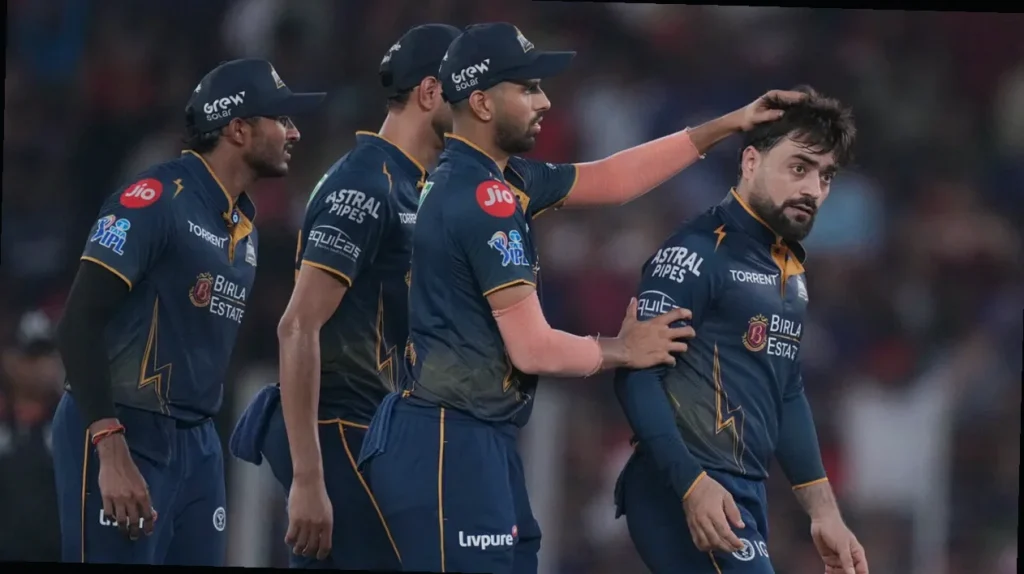
Gujarat Titans director of cricket Vikram Solanki admitted that finishing as runners-up in the IPL 2026 final was a tough pill to swallow, but he was not interested in dwelling on “what ifs” from their title run. Instead, he chose to focus on recognising Royal Challengers Bengaluru’s achievements, praising a side that had topped the league standings and then delivered the knock-out wins needed to lift the trophy.
“I’ll begin by congratulating RCB. They’ve had an outstanding campaign,” Solanki said. “They finished at the top of the table in the league stage and then went on to beat us twice, so we have to acknowledge that. When it comes to our journey, we’re genuinely proud of what we’ve managed as a group. Of course, we would have loved to go one step further, but there are plenty of teams that would gladly have swapped places with us.”
Solanki pointed out that GT’s path to the final was made more difficult by the earlier setback against RCB in Qualifier 1 at Dharamsala. That result meant the Titans had to keep the momentum moving through a packed schedule—if they reached the summit clash, they would need to travel and play three matches in five days. They ultimately landed in Ahmedabad late on Saturday night, with less than twenty hours before they had to step out for the final.
Even with that compressed turnaround, Solanki insisted the defeat should not be explained away by fatigue. “The number of games in a short period of time is challenging,” he said. “Yes, it’s at the end of a campaign, but I’m not going to lean on that. The simple truth is that RCB beat us today, and we have to be strong enough to hold our heads high and take pride in the campaign we put together. At the same time, we must stay gracious and congratulate RCB.”
He also pushed back on the idea that weather or scheduling variables should become the headline narrative. “I don’t want to take away from what RCB have done by saying, ‘Well, we played too many games and we were tired’. That’s not really what we’re about,” Solanki added. “Unfortunately, I can’t control the weather. If the weather forces late arrivals, then there’s nothing we can do. We had an opportunity to challenge them. In parts, we did, but RCB were the better side today—and I think it’s as straightforward as that.”
While questions about conditions clearly bothered him, Solanki’s answers turned quickly to the broader theme of GT’s tournament structure and how much weight was carried by their top order. The Titans were frequently discussed as a team that leaned heavily on Shubman Gill, B Sai Sudharsan and Jos Buttler, especially after Gill and Sai Sudharsan surpassed 700 runs each. The pair also produced three century partnerships, helping GT reach a combined figure of 11—described as the highest for a duo in T20s—before the final.
Solanki dismissed the repetitive line of questioning about reliance on the top three after the match. “The number of times I’ve had to answer that question… quite honestly, we just played a final,” he said. “This idea of over-reliance on the top two or top three—listen, we’ve played a final. You should accept that we’ve had a reasonable campaign, and the details are there for everyone to see: the runs scored and the rest.”
One factor Solanki acknowledged was that GT’s middle-order had to shoulder a lot of pressure, which in turn led to frequent adjustments around a core of Indian batters. Among the changes in the final was the promotion of young Nishant Sindhu. He was sent in ahead of Buttler after GT lost both openers within four overs, though Solanki stressed that this was not a pre-planned move. “That was a judgment call,” he said. “Ashish [Nehra, the head coach] made that call to send him in at No. 3 at that moment. We didn’t really discuss it in advance, but Ashish makes those calls now and again, and if the captain is around, it’s in conjunction with the captain.”
Solanki also felt the final never truly played out like a home game for GT, with RCB making the pitch and conditions work in their favour. Buttler’s remark on television—“This is our home ground but definitely not the home crowd”—captured the atmosphere, and Solanki admitted GT may have needed a small recalibration in how they approached the scoring phase. “We probably just made a slight miscalculation about what score was appropriate on that pitch,” he said. “I don’t think it was a 200-plus pitch of any sort. If we had got somewhere around the 180-mark, I think that would have been a challenging total for them to chase.”
As the conversation moved to the crowd’s reaction to Virat Kohli during the chase, Solanki offered a brief, wry smile at the question—he was clearly not in the mood to soften the moment for anyone else. “We’re all privileged to see good players play, and Virat is an exceptional player,” he said. “He played a great knock for his team. I’m probably not celebrating that knock right now. Virat played very well to almost anchor that chase and guide it the way he did.”
