
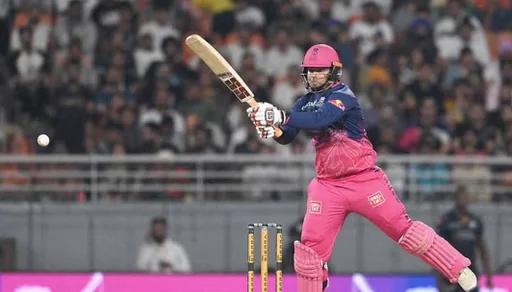
Vaibhav Sooryavanshi, a 15-year-old sensation, lit up the IPL 2026 campaign with 776 runs and quickly became the season’s most talked-about batting force. His impact was reflected in a haul of five awards, including the Orange Cap and the Most Valuable Player honours. The left-hander also rewrote several milestones, becoming the youngest batter to cross the 1,000-run threshold in the tournament and finishing with the most sixes in a single IPL edition.
Sooryavanshi’s stock has kept rising, especially after his performances for the Rajasthan Royals, prompting calls for his inclusion in India’s next T20I set-up. The debate is already moving toward the upcoming assignments versus Ireland and England, with supporters arguing that his IPL form should be tested against international opposition.
Quick facts
- Vaibhav Sooryavanshi scored 776 runs in IPL 2026.
- He won five awards, including the Orange Cap and the Most Valuable Player.
- He became the youngest player to reach 1,000 runs in the IPL.
- He hit the most sixes in a single IPL season.
- His Rajasthan Royals performances have sparked calls for India T20I selection for tours against Ireland and England.
- India A will see him in a tri-series starting June 9 against Sri Lanka A and Afghanistan A.
Former India batter Sanjay Manjrekar believes it could be a smart move for the BCCI to give Sooryavanshi a steep learning opportunity in the international arena. The idea, in his view, would be to see how the youngster handles a wide range of conditions rather than assuming his IPL brilliance will automatically translate everywhere.
Manjrekar framed the conversation around the existing contenders for India’s T20I batting roles. He suggested that Sooryavanshi could slot in after the current mainstays, naming Sanju Samson and Abhishek Sharma, but added that the manner of his introduction matters. He questioned whether it would be wise to throw the teenager straight into foreign conditions, such as pitches seen in places like New Zealand or South Africa.
“Vaibhav would be the next in line after the incumbents, Sanju Samson and Abhishek Sharma. But I’d like to see Vaibhav play in similar batting conditions to those in the IPL, if they pick him for India at all. Won’t be a great idea to put him straight into, you know, foreign, kind of, on a foreign pitch,” Manjrekar said on Sportstar’s ‘Insight Edge’ Podcast.
He also acknowledged the argument that Sooryavanshi might simply replicate what he has already done in the IPL. However, Manjrekar stressed that selection is never one-dimensional, especially when multiple contenders are in the frame for the same role. In his assessment, the decision would need to be handled in a way that allows the process to unfold naturally.
“He might go out there and repeat what he’s done in the IPL. But, yeah, it’s a tough one when you look at the contenders. Whether Gill is in front or Vaibhav Sooryavanshi, it’s a tough call. So, let it happen organically and see how it goes,” he added.
Next up: India A and the tri-series
Even with the fast-growing chatter around a possible call-up for the Ireland tour, no one can say for sure whether Sooryavanshi will be picked immediately. What is certain is that he is set to appear for India A in the upcoming tri-series against Sri Lanka A and Afghanistan A, which begins on June 9.
Manjrekar also pointed out what the IPL season itself revealed about the youngster’s readiness. Sooryavanshi ended the tournament with a strike rate above 200, specifically 237.31, and he was dismissed in the 90s on three separate occasions. In addition, he delivered key scores of 97 and 96 in the Eliminator and Qualifier 2 respectively against Sunrisers Hyderabad and the Rajasthan Royals.
For Manjrekar, the most important part of evaluating a young talent is observing how he grows over time and how he conducts his game as the pressure rises. He said that conversations at the ground level often begin with a simple question—how good is the player—and then move quickly into whether the performances are sustainable beyond the initial hype.
“When I go and meet people on the cricket ground, the first question they ask is, ‘How good is he?’ Obviously, he’s taken the T20 or the IPL by storm. And now, because we have the same people like Dhoni and some of the others, a lot of people think that he’s carried the IPL in the last, second half by his performances,” Manjrekar said.
He then drew an analogy from bowling conditions to explain why predicting a player’s future can be tricky. In his view, potential is visible, but the real test comes when circumstances change—such as whether a fast bowler can still succeed on different surfaces. By the same logic, Sooryavanshi’s batting talent is clear, but tracking how he performs as situations shift will be the key.
“For me, my problem with predicting the future of a certain player is that you see the potential. It’s like when you have a fast bowler on a green top. Ideally, bowling conditions come and take a five-wicket home. And then the hard man to please will always say, it remains to be seen how he bowls on a flat page or with the old ball. So, what we have to really take and what I will take from his performances is phenomenal for somebody who’s fairly young, and he’s got some hitting talent. He’s got some great ball set. He also has the range,” he added.
Red-ball talk: wait and watch
Manjrekar also cautioned against rushing the conversation toward Test cricket. He argued that discussions about how Sooryavanshi should be “handled” miss the point that development is individual and should be guided by the player’s own goals and the coaching set-up around him.
“A lot of people are saying how we should handle him? And how will he fare in red-ball cricket? I don’t think it’s our job to handle. It isn’t even the BCCI’s job. He is an individual. And I’m sure there are people around him who would like him to play with his coaches. It’s about what he sets out to do in life. If he wants to just be a T20 sensation and focus on T20 cricket, so be it. And that shouldn’t be held against him,” Manjrekar said.
He continued by highlighting that a player will still be judged primarily by what he does on the field. If the youngster commits to T20, then his reputation will naturally reflect T20 excellence, even though he can also contribute in 50-over cricket. Manjrekar believes there is value in Sooryavanshi’s ability to bat with an attacking approach in the early phase of an innings—something he compared to Rohit Sharma’s approach during the 2023 World Cup.
“But then you’ll be judged only as a T20 phenomenal player. He plays 50-over cricket. And I think there’s great value in certain conditions for him to bat in the first 10 overs and do what Rohit Sharma did in the 2023 World Cup. Even better than Rohit,” he added.
Finally, Manjrekar suggested that selection pathways should not become overly complicated by fame. He argued that if Sooryavanshi aims to play red-ball cricket, he should earn that place through the domestic system and the performances that come from competing regularly—pointing to the Bihar Ranji Trophy setup as an example of the “hard yards” route.
“It really should be about him deciding what he wants to be in life. Because if he wants to play red ball cricket, it’s a little unfair that he gets picked on for these performances when there could be certain deserving players who have done the hard yards in that Bihar Ranji Trophy team. Let’s not complicate things for him. Let him decide. If he wants to aspire to play in the Ranji Trophy cricket, he’s got to fight for his place in that side. And let the state selectors decide whether he’s going to be adding value or whether he’s going to be a good enough player. But it’s really about what he wants to do,” he concluded.
