
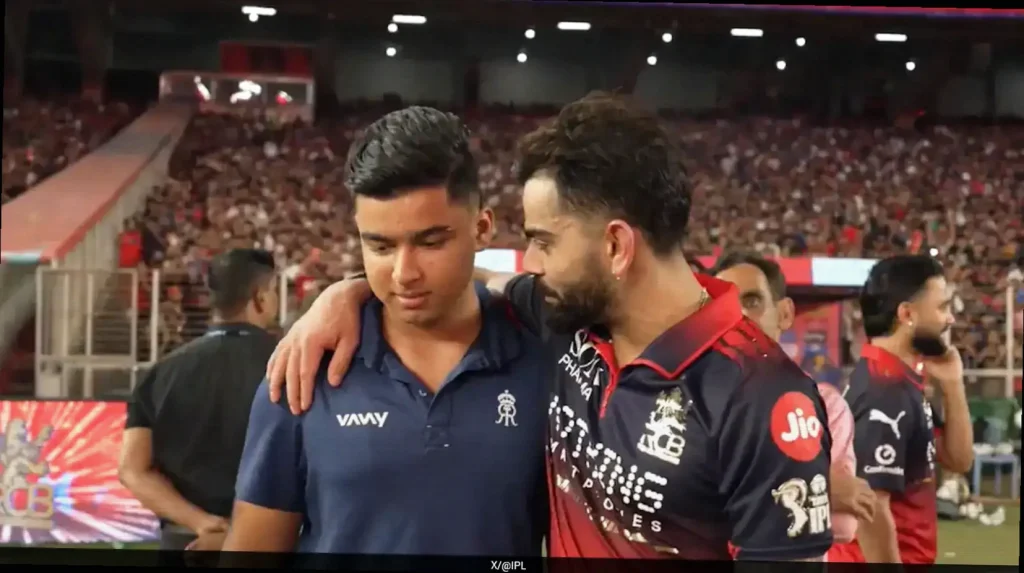
Virat Kohli stepped into his nineteenth IPL season with his usual aura of precision, yet the tournament’s centre of gravity shifted away from him as the summer unfolded. Opening for Royal Challengers Bengaluru, Kohli’s runs arrived with pace and his strike rate climbed, keeping the title defence narrative alive. Bengaluru had claimed their first IPL trophy in 18 years the previous season, and everything early suggested they were ready to go again.
Quick facts
- Virat Kohli entered his nineteenth IPL season and opened for Royal Challengers Bengaluru.
- Bengaluru had won its first IPL title in 18 years in the previous season.
- Vaibhav Sooryavanshi, a 15-year-old who had played only seven IPL matches before the 2026 campaign, became the tournament’s headline name.
- Sooryavanshi’s standout playoff knocks included 97 off 29 balls in the Eliminator and 96 off 47 balls in Qualifier 2.
- Sooryavanshi finished the season with a strike rate of 237.30.
- Kohli’s 2026 league numbers: 675 runs at a strike rate of 165.84.
- In the IPL final, RCB beat Gujarat Titans in Ahmedabad, with Kohli smashing his fastest-ever IPL fifty—off 25 balls.
- Kohli said his approach was shaped by pressure from “super young” players and required a mindset shift rather than a technical one.
As the competition moved into its middle stages, it became clear that Kohli wasn’t the only name pulling the headlines. Instead, it was the teenage opener wearing the Rajasthan Royals jersey—Vaibhav Sooryavanshi—who effectively flipped the script on the 2026 edition.
For nearly two decades, Kohli has been treated as the gravitational centre of Indian cricket: physically sharp, technically sound, and methodical in his execution. But across the two-month IPL calendar, the loudest spotlight belonged to someone far younger, and his style looked almost unreal for a player with so little prior exposure.
Sooryavanshi’s impact
What caught the cricket world’s attention most was Sooryavanshi’s ultra-aggressive brand of batting, sustained through the league phase. The aggression wasn’t a short burst either; it travelled with him into the playoffs, where he produced not one but two scores in the 90s that forced matchups to change on the fly.
Those innings didn’t just entertain—they redefined how T20 power-hitting could be framed. First came a stunning 97 off 29 deliveries in the Eliminator, agonisingly stopping just shy of becoming the league’s quickest century. Then, in Qualifier 2, he struck 96 off 47 balls, again taking on the bowling with authority, even though it ended in a losing cause.
By the end of the season, his strike rate read 237.30. The runs were only part of the story; he also weaponised the powerplay, leaving even the most experienced anchors across the tournament to rethink whether their old rhythms could survive the pace of modern assault.
Against that backdrop, Kohli’s own campaign still carried weight, even if it wasn’t the headline anchor story. His regular-season output was objectively strong—675 runs at a strike rate of 165.84—numbers that, in earlier phases of the IPL, would typically have provided a kind of tactical comfort.
But 2026 operated differently. The game had moved beyond simple accumulation, and the relentlessness of the so-called “super young” cohort meant that totals were being attacked and dismantled well before an innings reached its halfway point. In that environment, even great batting had to evolve to keep up with the new tempo.
Kohli’s final response
When the grand finale arrived, Kohli didn’t retreat into the classic anchoring mould. Instead, he exploded out of the blocks, seemingly taking inspiration from the boundary-heavy manual Sooryavanshi had been writing all season.
His decisive shift came in the form of his fastest-ever IPL fifty, reaching the milestone in just 25 balls. It wasn’t the sub-140 strike-rate blueprint Kohli had often relied on; it was a conscious demolition approach, signalling that the ceiling of the format had been raised permanently.
After RCB secured the title by beating Gujarat Titans in Ahmedabad, Kohli explained how the “super young” pressure had pushed him to alter his game. “You have these super young players pushing you all the time and really asking you to change your game and up the ante,” he said, framing it as an exciting challenge that offers clear targets for improvement.
He added that the opportunity wasn’t only about performance but about progress: “It’s an exciting situation because it gives you something to improve on, something to work towards. I take a lot of pride in getting better and trying to figure out areas where I can improve.” Kohli pointed to the modern requirement as well—“where you need to get those extra 20-30 runs.”
Crucially, he clarified that the evolution wasn’t built on a technical reset. There was no need to reinvent his swing, and there was no sudden addition of novelty strokes like scoops or switch-hits to his repertoire. The change, he insisted, was in intent.
“I had to change my mindset, not my game so much, to play the shots I already have more often and take the bowlers on. That was always my target,” Kohli concluded.
In an era where many legends cling to established methods as they age, Kohli’s willingness to let a teenage talent—someone like Vaibhav Sooryavanshi—push him into a new emotional and tactical tempo is exactly why he still stands apart. It wasn’t just a season of record-breaking; it looked like a passing of the torch that worked both ways.
Sooryavanshi, it appears, didn’t merely shatter numbers this year—he altered the way Kohli approached the game itself.
