
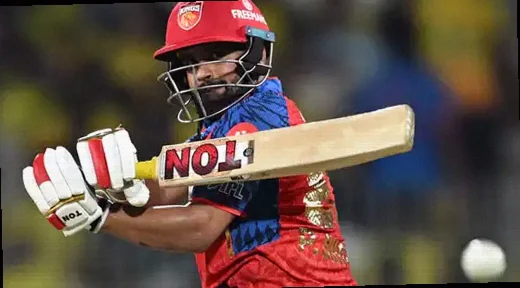
Punjab Kings opener Prabhsimran Singh believes the Impact Player rule can be a positive opportunity for younger IPL batters, arguing that the extra flexibility has widened chances and reshaped how teams approach the Powerplay. Speaking on the provision BCCI has signalled will likely stay for at least another season before a fresh review, the wicket-keeper batter also detailed how captain Shreyas Iyer’s clarity has helped him grow, while setting his sights on the next rung—India selection.
Key takeaways
- Prabhsimran backs the Impact Player rule, saying the BCCI has indicated it will remain for at least one more year before reassessment.
- He credits the rule with increasing opportunities after his early IPL years, when he felt he had fewer chances over the first stretch of seasons.
- The opener believes modern T20 totals demand an aggressive Powerplay mindset, with scores now routinely climbing beyond the 200-mark.
- He points to Shreyas Iyer’s leadership style—especially the way he speaks to players during lean patches—as a major source of confidence.
- Prabhsimran says his wicket-keeper role gives him a clear “view” of the match, helping with fielding angles and communication.
- With Abhishek Sharma already in India’s setup, Prabhsimran views healthy competition as motivation for his own climb.
Impact Player: more chances, faster cricket
In a season where many have voiced concerns about the Impact Player framework, Prabhsimran Singh has offered a contrary perspective—one rooted in opportunity. He noted that the BCCI has flagged the rule as something likely to stay for at least another year before any review is considered. For him, the provision is less about risk and more about creating windows for players to contribute.
“Speaking as a youngster, I see it as an opportunity,” Prabhsimran said. He acknowledged the argument that the extra selection option can encourage higher-risk batting, but maintained that the trade-off also gives teams a broader set of pathways to influence the match. “You can add one player to your team. You can bowl or bat—basically you can bring in anyone,” he explained. In his view, that flexibility can be especially valuable for players still establishing themselves.
He also tied the rule to his own journey. Since arriving in the IPL, he said it has taken him years to consistently get opportunities, particularly during the early phase of his career. “When I came here, it has been eight years now,” he said, adding that during the first few seasons he did not receive many chances and often found himself watching from the outside. He believes the Impact Player concept has changed that landscape and expanded openings for him to play.
Beyond selection, Prabhsimran believes it has also influenced how the game is played at the top. With T20 cricket moving at a quicker tempo, he argued that defending mid-to-high totals has become harder to rely on. “The game has become so fast now,” he said, recalling an earlier era where teams could successfully protect scores around 170 or 180. While he feels those totals are still possible to defend, he pointed to the changing percentages and the reality that matches frequently reach 200-plus. To chase or even pressure for those scores, he said, teams have to treat the Powerplay with aggression.
“Earlier we used to defend 180 or 170 and we used to do that,” he said, before adding his central point: “To do that, I think you have to approach the Powerplay with an attacking approach.” He also claimed that Punjab Kings are aligned in their intent, with the team, coach and captain all encouraging them to attack when the situation demands it. “There is clarity from the team, the coach and the captain to go for it as clearly as we can. If we have to hit, then we have to go for it. It is not that difficult to reach 250 plus,” he said.
Backing from Shreyas Iyer and leadership growth
Prabhsimran linked his current confidence to the direction he receives under captain Shreyas Iyer. He said that when Iyer was appointed and the player-meeting took place, he received direct clarity about how he should play. According to Prabhsimran, the message was simple: he should go out and bat in a way that reflects his own strengths, with the captain viewing him as a senior presence in the group.
He also described Iyer’s approach to communication, especially when form doesn’t arrive quickly. “I feel he’s the best captain [I have played under] because if you haven’t scored for a few matches, he’ll come and talk to you, tell you there’s no stress,” Prabhsimran said. He believes that consistent support helps players express themselves. “There’s so much backing that you can show what you’re capable of,” he added.
As one of Punjab Kings’ homegrown talents, Prabhsimran has spent his entire IPL career with the franchise, working his way up over time. Now, he says he is contributing in his own manner to the leadership group, and he feels that his background makes leadership a natural part of his routine. “If they have backed me, then it is my duty to get a chance to pay back,” he said.
He further explained his mindset around responsibility. “When it comes to leadership, as a domestic player, I am almost a captain. So I am used to it and I like it. I take it as a challenge. It is better for me to grow my game,” he said.
Wicket-keeper advantage and the next goal: India
Prabhsimran also highlighted how his wicket-keeper position enhances his understanding of proceedings. In his view, standing behind the stumps gives him the best overall picture of what is happening on the field. “As a wicketkeeper, I feel that the view of the match is the best,” he said. “Because we can see everything from the wicket.”
He pointed out that even if a captain is communicating from the boundary with heavy crowd noise around, the message may not always land clearly. That is where he believes his role becomes more prominent—helping with fielding angles and relaying information when needed. “Sometimes if the captain is on the boundary and there’s so much crowd, you can’t really understand what he’s saying,” he said. “That’s where my role comes in, to check the fielding angles, to tell the field or to talk to the bowler, if he is saying something wrong or if that is our plan. I think that is a good thing and I feel that all these things help your game grow a lot.”
From franchise cricket, Prabhsimran’s focus now turns toward international selection. He identified motivation through his Punjab teammate Abhishek Sharma, who is already part of India’s setup. He described their relationship as “healthy competition,” insisting that having a teammate ahead of him is both inspiring and challenging.
With many openers eyeing spots in the national team, Prabhsimran said the pathway demands relentless effort. “There’s so much competition, you have to do more,” he said. “Less is not enough. But if you look at it in terms of healthy competition, I think you will grow positively.”
He added that he hasn’t held direct talks with selectors, but his approach is to keep improving wherever opportunities arise. “I haven’t had any talks with selectors but wherever there’s an opportunity, I will try to do well,” he said. He believes performing for India A can bring him closer to the main India side. “Playing for India A, you feel you are close to playing for India. If I do well there, my chance will come.”
Finally, he spoke about what non-selection teaches him. “Every time I don’t get picked, I know what I am doing is not enough, I have to do more,” he concluded.
