
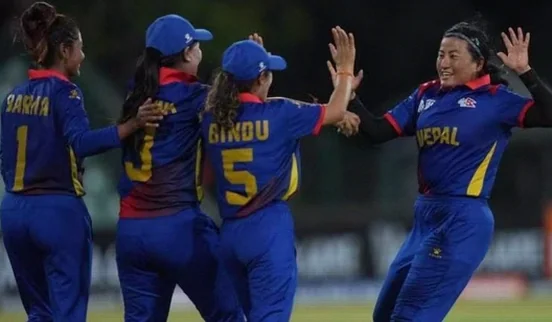
Women’s cricket has seen a rare and unwelcome milestone, with Bhutan batter Ritshi Choden becoming the sport’s first player to be ruled timed out. The incident occurred during a T20I between Nepal and Bhutan at the ACC Premier Cup in Mantin, Malaysia. While play was in motion, Choden’s time at the crease dragged beyond the required limit after a wicket fell, prompting an appeal and ultimately a decision from the officials.
The rules are straightforward: once a wicket is taken, the incoming batter must be ready within one and a half minutes. Because Choden took longer than the allowed window, Nepal lodged the complaint, and the umpires—Sun Meng Yao and Ankita Guha—brought the matter to its conclusion with the timed-out call.
In the chase, Bhutan were chasing 114, but their reply began badly when Ngawang Choden was dismissed on the first ball of the innings. That wicket triggered the timeline issue that followed, and Ritshi Choden then became the batter to suffer the unusual dismissal. Nepal ultimately completed a commanding win, restricting Bhutan to 63/8 in their 20 overs.
Despite the outcome, the episode has sparked serious debate. The Cricket Association of Nepal has issued an apology for the timed-out incident, stating that it went against the spirit of the game. Paras Khadka, a former Nepal international who now serves as secretary of the Cricket Association of Nepal, condemned the behaviour of the Nepal players involved, arguing that it did not represent the values the body aims to uphold.
In its statement, the association said: “The incident involving the timed-out dismissal of a Bhutanese batter during today’s match does not reflect the values and spirit of cricket that the Cricket Association of Nepal (CAN) strives to uphold.” The release added that while the dismissal was carried out in line with the Laws of Cricket, the governing principle should be that the spirit of the sport must remain central to conduct, even beyond the written rules.
CAN further emphasised its role as a developing cricketing nation, insisting that sportsmanship, mutual respect, and fair play are of the utmost importance. It acknowledged that the incident fell short of those standards and expressed regret for any disappointment it may have caused. The board also conveyed its apologies to Bhutan Cricket, the affected player, and all relevant parties, while stressing its commitment to maintaining the highest levels of integrity and the spirit of cricket both on and off the field.
The timed-out controversy has also drawn comparisons with another incident earlier in the year. In April, Nepalese cricket faced backlash when international player Karan KC, unhappy with umpiring calls following a domestic match, posted the following message on social media: “If any player beats an umpire mistakenly, how many matches would he be banned for? Just for query?” The post created significant uproar, and KC was subsequently handed a one-match ban.
