
The 2026 IPL season delivered a batting spectacle that bordered on the unbelievable. A total of 27,450 runs were scored across the tournament, the highest tally in IPL history, while teams posted a collective scoring rate of 9.88—also an all-time high. The big hits were even more striking: 1,426 sixes were struck, breaking the previous benchmark of 1,294, which had been set just a year earlier in 2025. It was also a campaign where the 200-run mark stopped feeling like a ceiling. Sixty-five innings crossed 200, chasing targets became almost routine, and teams successfully hunted down scores above 220 on nine occasions in 2026. Before this season, that feat had occurred only five times across the previous 18 editions combined. In total, 18 chases of 200 or more were completed in 2026—exactly twice the number from 2025. With those figures, the final should have been set up as yet another high-octane run-fest.
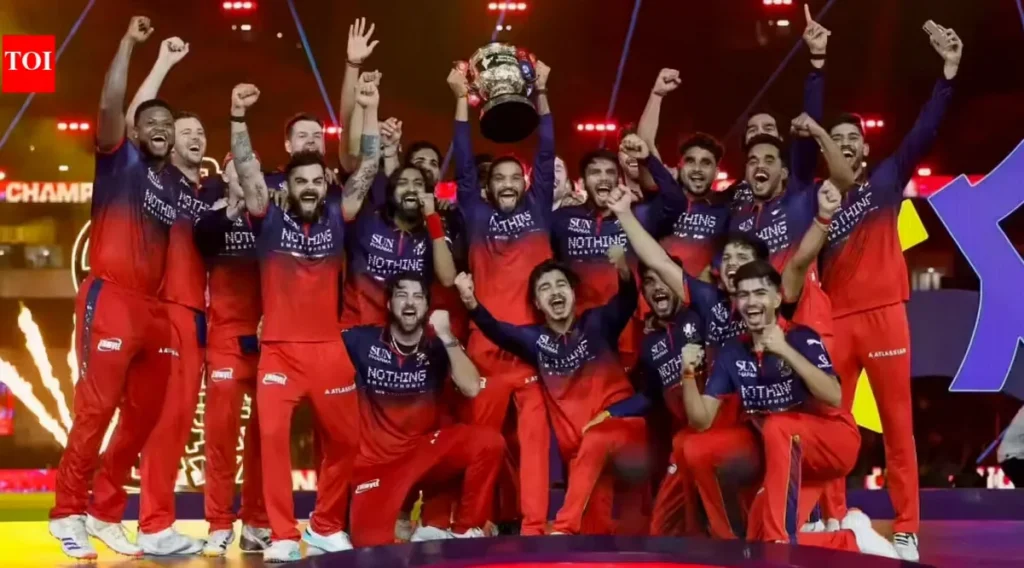
Instead, the story of the title match turned out to be the opposite of what the broader season trends suggested. Gujarat Titans laboured to 155 for 8, and Royal Challengers Bengaluru chased the total comfortably to defend the IPL crown. There was plenty of drama surrounding the occasion, but it wasn’t driven by a flood of runs. The result also wasn’t isolated. If you look back to 2024, the season had been dominated by Sunrisers Hyderabad’s batting overhaul, with records falling at a rapid pace and totals that once seemed out of reach becoming increasingly common. Yet when the final arrived, SRH were dismissed for 113—the lowest score ever recorded in an IPL final—and Kolkata Knight Riders completed the chase in just 10.3 overs.
Then there was the 2022 final in Ahmedabad. Rajasthan Royals could only reach 130 for 9, before Gujarat Titans swept past the target with seven wickets in hand. Those contrasting title matches raise a pointed question: do IPL finals generally end up low-scoring, and if so, do they fail to mirror the batting patterns that define the league stage?
At first glance, the answer appears straightforward. For years, the prevailing belief has been that the pressure of a championship decider naturally suppresses scoring. Nerves run higher, the stakes feel bigger, batters become more cautious, and pitches can behave differently after a long tournament. But when the picture is examined closely across the full history of the league, the conclusion becomes less comfortable for that simple narrative.
Data drawn from all 19 IPL finals held between 2008 and 2026 points to something more nuanced. Across those title matches, the average final actually produced more runs than the average match played in the same season. The “twist” is that the direction isn’t consistent: 10 finals finished above their season average, while nine landed below it. On average, finals scored 5.7 runs more than the season benchmark, and 5.1 runs more than the historical scoring norm at the venue where the final was played. Put simply, the popular assumption that finals are routinely defensive doesn’t hold up cleanly when you consider the entire set of IPL title matches.
Still, memory can be selective. The low-scoring finals are often the ones that linger. The 2024 final. The 2022 final. The 2026 final. Those matches shape the instinct that finals are always cagey, but the other side of the spectrum shows that IPL finals can also turn into run-fests. The 2016 final between Royal Challengers Bengaluru and Sunrisers Hyderabad delivered 408 runs in total, with RCB finishing nine runs short of a 209-run target. The 2014 final produced 399 runs as Punjab Kings posted 199 for 7 and Kolkata Knight Riders replied with 200 for 7. In 2012, the final generated 382 runs, featuring Chennai Super Kings at 190 for 3 and KKR at 192 for 5. Each of these games also sat among the highest-scoring matches of their respective seasons.
So the blanket idea that IPL finals are inherently low-scoring doesn’t stand up. What is true, though, is that finals can produce a wider spread of outcomes than fans tend to remember. Even so, there is a pattern worth watching when the modern era is considered. Since 2018, IPL finals have averaged around 20 runs fewer than the scoring pace of the season around them. The sample is small—only nine finals—but the direction has been clear enough to matter: five of those nine title matches finished below their season average, and the four biggest underperformers in IPL final history all belong to this period.
The 2024 final remains the largest outlier, finishing 139 runs below the season average. It is followed by 2022, 2017, and then 2026. That doesn’t prove finals are becoming consistently low-scoring, but it does suggest that in recent years, the scoring in title matches may be drifting away from the league-stage explosion that fans have come to associate with modern IPL cricket.
Several factors could help explain why. One is the quality of the bowling line-ups that reach the final stage—only the strongest and most well-balanced teams tend to survive the tournament’s grind. Preparation has also grown more sophisticated. Teams now arrive with extensive match-up information, opposition plans, and weeks of analysis designed to target specific weaknesses. Then comes the pressure of the occasion itself. In a league game, even a top-order wobble can be absorbed and corrected because there is another match just around the corner. In a final, one over—or one poor shot—can undo months of work. That heightened sense of fragility can make teams and batters slightly more guarded than they usually are.
Even a small shift toward caution early in an innings can be enough to drag scoring rates below what the season has been delivering. Taken together, those pressures offer a plausible reason why recent title matches appear to diverge from the batting surge that defines IPL league games. The notion that IPL finals have always been low-scoring looks largely like a myth when you judge the full stretch of 19 seasons: finals have produced roughly the same scoring levels as the competition itself, and in some cases marginally higher. Yet the recent sequence tells a different story—from Sunrisers Hyderabad’s collapse for 113 in 2024 to Gujarat Titans posting 155 in the 2026 final—suggesting that modern title deciders are increasingly moving away from the run-fests that have come to define the IPL’s batting identity.
