
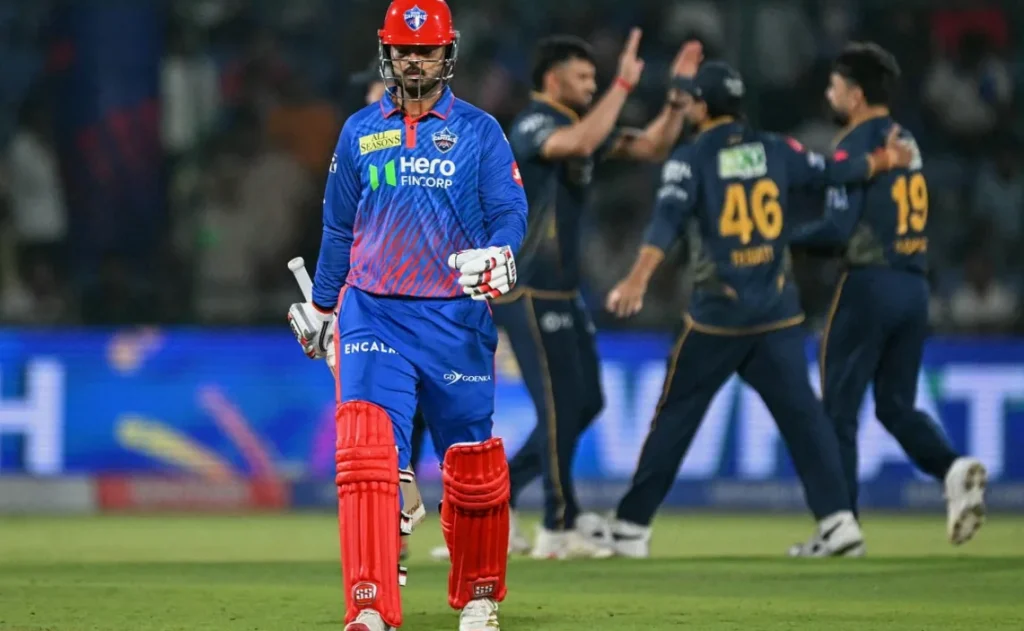
Gujarat Titans edged past Delhi Capitals by the narrowest of margins, winning by one run in an IPL 2026 clash on Wednesday, with Kuldeep Yadav sealing the result by being involved in a run-out on the final ball. Chasing a target, Delhi required two runs from the last two balls, but David Miller’s choice not to take a single to stay on strike proved costly—his side fell short despite having the ball in hand for the final over. Yet the match’s biggest talking point soon shifted away from the finish to a controversial decision earlier in the Delhi innings.
Controversial call in the DC innings
- In the 10th over of Delhi’s chase, Nitish Rana was struck on the pads by a delivery from Rashid Khan.
- Rana and the other batter completed one run, but the umpire signalled the batter out, turning the moment into a dispute.
- Delhi opted for a review, and the third umpire ultimately overturned the original decision.
- Even after the dismissal was reversed, the ball was treated as dead from the point of the umpire’s call, meaning the run that had been taken did not count.
- At 9.2 overs, Rana again got to the striker’s end with a single, but that run was also lost because the umpire had initially ruled him out before the DRS procedure later confirmed he should not have been dismissed.
The final outcome—DC losing by one run—only amplified the backlash, with fans arguing that the “dead ball” rule swung the contest at a crucial stage. One view making the rounds was that a match decided by a single run should not be influenced by a regulation that cancels runs taken in good faith when an on-field decision is corrected after review.
The debate stems from how the laws define the status of the ball after a batter is dismissed. Under MCC Law 20.1.1.3, a delivery is considered dead after a batter is dismissed, and the ball is deemed dead from the instant of the event that causes the dismissal.
There was also a related explanation highlighted by commentators: Law 20.6 reinforces that once the ball is declared dead, reversing the original decision cannot reopen play for that delivery. In practical terms, even if DRS shows the batter was not out—such as in Rana’s cases—the run(s) completed during the period when the umpire initially ruled a wicket can be nullified.
Social media reactions reflected frustration that the law can penalise a side even when the umpire’s call is later overturned, suggesting it can affect the fairness of tight games. For Delhi, the argument is straightforward: those cancelled singles became the kind of fine margins that decided the match against Gujarat.
