
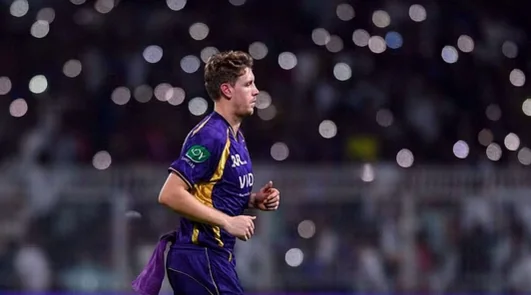
Cameron Green returned to bowling for Kolkata Knight Riders in the fourth game of the IPL season, and the comeback started with real intent. On only his second ball, he struck, dismissing Rishabh Pant early and giving KKR a timely jolt. For a moment, it looked like the Australian all-rounder could immediately tilt the contest with his second skill. But the spell quickly unraveled, and the shift was sharp when Green came back for the penultimate over.
With Lucknow Super Giants needing 30 runs from the last 12 balls, rookie Mukul Choudhary seized the opportunity and turned the pressure into momentum for LSG. Green was struck for two massive sixes and also conceded a four, leaking 16 runs in the over. That burst decisively swung the game back towards the chasing side, leaving KKR facing a demanding finish. Mukul’s fearless approach set up the final over perfectly, and LSG—finishing on 182/7—completed the chase in a last-ball finish, winning by three wickets.
Green’s return, which had begun with promise, ended up underlining the inconsistency in his bowling impact. The match also sharpened the question of how much KKR may lean on him primarily as a batter rather than a death-over option. This scrutiny has been building throughout the season, with Cricket Australia not granting him earlier permission to bowl due to workload management following a back injury. His limited availability with the ball had already raised concerns about KKR’s balance, particularly because the side also lacked several other frontline bowling options. On top of that, the pressure has grown further because Green carries a significant price tag of INR 25.2 crore, ensuring every phase of his contribution is closely watched.
At the toss, KKR captain Ajinkya Rahane suggested that the team could have to wait a bit longer for Cricket Australia’s clearance before Green is fully back in the bowling rotation. Rahane said, “When he (Green) is allowed to bowl, we will probably see him, the combination gets better, so Rovman Powell plays, when Cam Green bowls then we have that extra bowler with us.”
Green did eventually get his breakthrough moment with the ball in the ninth over, and it brought an audible lift from the home crowd. Again, it came quickly: on his second delivery, he bowled a short ball that Rishabh Pant did not handle well. Pant went for a pull shot, looked set in position, but the timing was completely off, and Kartik Tyagi took a straightforward catch to complete the dismissal.
While the bowling had its highlights early, Green’s batting also reflected a mixed outing. He finished unbeaten on 32, but his strike rate of 133.33 drew criticism in a format where tempo matters. His approach at the crease appeared hesitant at times, and it was a familiar theme after a stretch of low scores in the first three matches. Frustration showed in his body language during the innings, including a visible sigh of relief after he cleared Mohammad Shami for a six in the penultimate over—an indication of how hard it had been for him to find clean contact.
Despite the personal inconsistency, KKR still built a useful platform. With Rovman Powell, Green added an unbeaten 70-run stand for the fifth wicket, helping the team reach 181/4 in their 20 overs after being asked to bat first. Yet the late-over bowling damage in the chase ultimately defined the evening, leaving Green’s much-anticipated return to bowling as a story of early promise followed by a rapid turnaround.
