
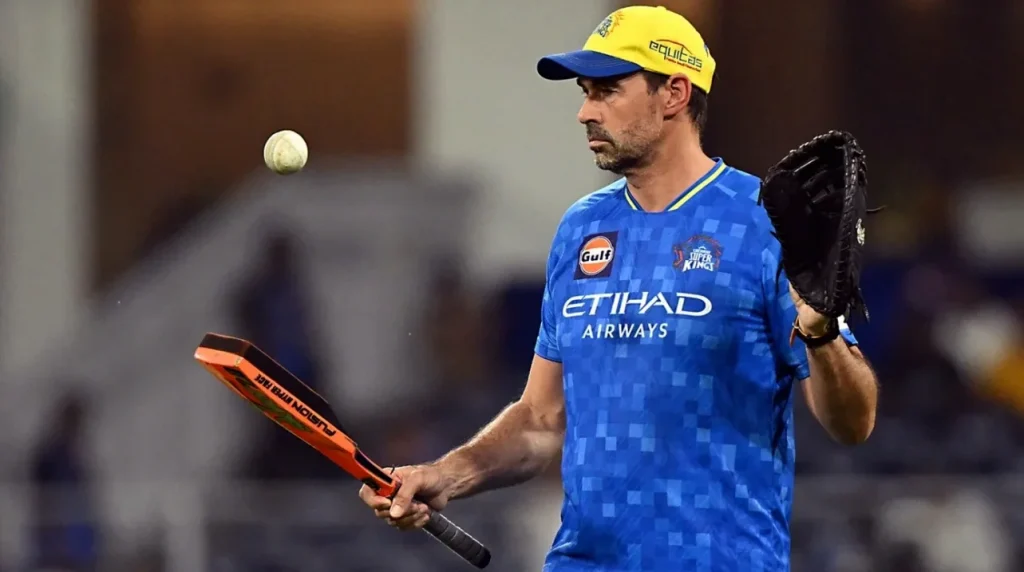
With Chennai Super Kings facing mounting scrutiny after missing the playoffs in back-to-back seasons for the first time in 2024 and 2025, their IPL 2026 start has only intensified the pressure. The franchise suffered three lopsided defeats to open the new campaign, drawing fresh criticism aimed at the coaching setup—particularly head coach Stephen Fleming. Ahead of CSK’s fourth league match of the season versus Delhi Capitals in Chennai, Fleming addressed the concerns head-on.
Key takeaways
- CSK’s back-to-back playoff misses in 2024 and 2025 were followed by three heavy defeats in IPL 2026, increasing pressure on the team management.
- Fleming responded to criticism directly at his pre-match press conference ahead of the clash with Delhi Capitals in Chennai.
- He said criticism is reasonable when results do not match expectations and stressed that coaching work continues throughout the year.
- CSK’s squad direction includes a shift toward younger options, highlighted by the mini-auction purchase of Kartik Sharma and Prashant Veer for INR 28.4 crore.
- Fleming argued that the coaching group is aligned with the demands of modern T20 cricket, even if recent outcomes have not reflected it.
Fleming’s response to the coaching criticism
Fleming began by framing results as the ultimate measure of performance. “Results dictate that. That’s fair. Criticism is fair when you don’t do well,” he said, adding that it is part of the job. He also pointed to the continuity of his work beyond IPL, noting that he coaches throughout the year and is involved in other tournaments such as SA20 and MLC, while also participating in player auctions across multiple leagues.
He stressed that the IPL does not start from scratch for the coaching group, saying the process is more connected than critics might assume. “So it’s not that I just turn off and then come to the IPL without an idea of where the game is going. In fact, it’s the other way,” Fleming added.
How CSK’s strategy changed after IPL 2025
Fleming and CSK captain Ruturaj Gaikwad had previously linked the team’s struggles to the IPL 2025 mega-auction, acknowledging that they misjudged aspects of their recruitment. After finishing at the bottom in IPL 2025, CSK pivoted toward younger talent, including Kartik Sharma and Prashant Veer. The duo were bought for INR 28.4 crore during the mini-auction in December.
Fleming also explained that this focus on youth is not confined to IPL alone. He said that in Major League Cricket in the United States, Texas Super Kings gave local batter Saiteja Mukkamalla an opportunity to play regularly last year. In the SA20, Fleming highlighted his role in Donnovan Ferreira’s development, noting that Ferreira later captained JSK after Faf du Plessis was sidelined due to injury.
Even though the outcomes have not always gone his way—especially in IPL 2025—Fleming believes his approach remains aligned with the way T20 cricket is evolving. He described spending significant time studying T20 trends across the world, framing that learning as beneficial not only for his other roles but also for the IPL.
“I probably never spent more time studying T20 cricket around players around the world, just to service the other teams as well, which feeds into the IPL,” Fleming said. “So yeah, we were off the pace last year, I’m the first to put my hand up and admit it. And we pivoted quite quickly now and we’re in a position where we’ve got some younger players. I feel very confident about this group of players.”
Settling a changed squad and building confidence
Fleming went on to address why the improvement might not look immediate. He said CSK, like other teams, need time to settle, but the challenge for them is amplified by the number of changes made to the squad. While some franchises retain core groups for longer, CSK are still in the process of finding rhythm together.
“We haven’t shown that this year as we settle,” he said. “One of the challenges is the number of players we’ve changed in the squad means there is a little bit of a settling process, whereas other teams have been together for a season.”
He added that the team is trying to speed up that transition. “We understand that, so we’re trying to accelerate that process,” Fleming said. In his view, the group needs confidence supported by evidence—especially performance “across the line.”
To illustrate progress despite imperfections, Fleming pointed to the previous match where Tim David was brought into the side. He acknowledged that CSK were not as precise with the ball late on, but said the team still managed 210 runs. “So, look, it’s a really good sign that we’re working very hard and we’re well aware,” he said, reiterating that the criticism is justified while urging the group to keep pushing.
He concluded that the path forward depends on greater effort and better execution. “We just have to work harder and find a way forward. But I do feel in touch with the game,” Fleming said.
Chepauk and the High-Performance Academy during the break
During the five-day interval before Saturday’s fixture, Fleming and his coaching staff divided their time between sessions with younger players at Chepauk and work at the High-Performance Academy on the outskirts of Chennai. Fleming believes young recruits can thrive in the IPL, but he suggested they require patience as they learn the demands of top-level T20 cricket.
“It’s probably a little bit more patience,” he said. “What I do love is the skill level. It’s incredible to see these guys expand their abilities and the lack of fear of consequence.”
However, Fleming stressed that cricket has consequences, particularly in batting, and that coaching must balance aggression with awareness. “So it’s trying to teach them a little bit of game awareness without flattening their desire to hit every ball for six,” he explained.
He said T20 has changed, but coaching principles still matter. “The game we’ve talked about, the game has changed. But there are still coaching elements around the game that need to be respected,” Fleming said, describing the central challenge as finding the right equilibrium between reckless play and sensible decision-making. “And you’re seeing examples of both in this competition,” he added.
