
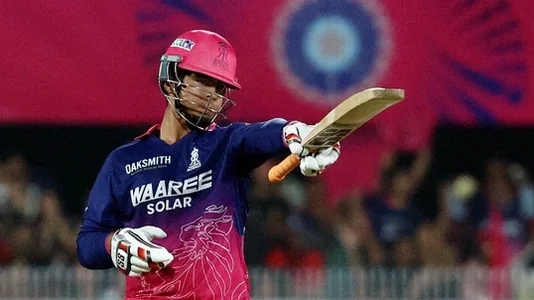
Vaibhav Sooryavanshi’s IPL 2026 momentum has taken another spectacular turn, as Rajasthan Royals successfully chased a 202-run target with 2 overs remaining, powered by a breathtaking 78 from just 25 balls. The 15-year-old batter attacked from the outset, striking at a rate of 300 and showing little hesitation against some of the sport’s most proven fast-bowling threats, including Josh Hazlewood and Bhuvneshwar Kumar. His aggressive intent shaped the chase immediately, leaving the defending champions with limited chances to claw back control.
Sooryavanshi struck seven sixes and eight fours in his quickfire knock, reaching his half-century in 15 deliveries. The innings not only guided RR to the finish line, but also reinforced how central he has become to their batting rhythm this season.
With that performance, he also moved ahead in the race for the Orange Cap. Sooryavanshi’s 78 boosted his season total to 200 runs from four matches, surpassing his opening partner Yashasvi Jaiswal in the standings.
Orange Cap moment and respectful gesture
- After the win, Sooryavanshi made his way toward Murali Karthik to collect the Orange Cap and join the post-match presentation as Player of the Match.
- Before stepping up, he briefly paused to bend down and touch BCCI vice-president Rajiv Shukla’s feet, seeking blessings.
- Only then did he proceed to receive the award, displaying a grounded temperament despite the spotlight.
Fearless batting against big names
- Sooryavanshi had already demonstrated his willingness to take on top-class pace by smashing Jasprit Bumrah for a six off the first ball he faced earlier in the tournament.
- On Friday, he repeated the same brand of aggression against Josh Hazlewood and Bhuvneshwar Kumar, hitting boundaries from his opening deliveries against both bowlers.
- Despite the size of the names involved, his mindset stayed consistent: focus on the ball rather than the reputation of the bowler.
Speaking after being named Player of the Match, Sooryavanshi explained that the awareness of who is bowling never disappears, but his execution remains straightforward. “Back of the mind, it is there (on who is bowling). I try to play the ball and not the bowler, and play my game,” he said.
Keeping it simple: practice over improvisation
In the post-match interview, the young opener emphasised that his approach is built on routine rather than risky variation. He said he prefers to stick to what he works on during practice, avoid unnecessary experimentation in the middle, and trust his natural strengths.
He added, “I just try to do what I do in practice and try not to do extra, and back my natural game.”
On getting out: “I regret that I could have played longer”
Sooryavanshi also addressed his visible frustration after departing, clarifying that it came from a sense of responsibility to the team. He explained that spending more time at the crease could have added another 10–20 runs, which could either help RR finish a chase earlier or push them toward a greater total when batting first.
He concluded with: “If I stay on the wicket, then another 10-20 runs can be made, if we are chasing the target, then we can finish it two overs earlier, or if we set the target, then 10-20 runs can be made more. So I regret that if I am out by playing a loose shot, then the team is going minus, so I just get a little upset that I could have played longer.”
