
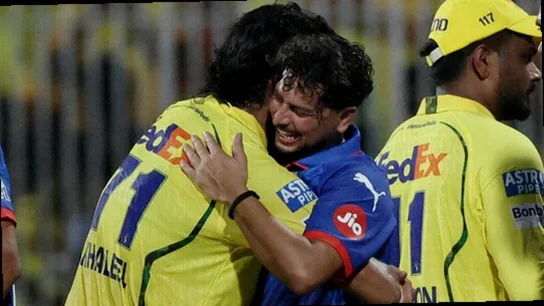
Delhi Capitals are running out of reasons to believe they can turn their fortunes around in this IPL season. On Saturday night at the MA Chidambaram Stadium, they produced another listless display against Chennai Super Kings, extending a run that already feels like it’s slipping further out of reach with every outing.
Earlier in the week, DC had been unable to score even two runs off two balls against Gujarat Titans. Many would have expected that setback to spark a sharper response, but the follow-up performance against CSK only confirmed that the issue runs deeper than one match.
Another costly collapse in the middle overs
CSK, who had been without a win up to that point, went from “not quite there” to “in control” with alarming ease. By the time the 10th over arrived, Delhi Capitals had already committed two major errors that swung the momentum decisively.
KL Rahul failed to execute a straightforward run-out chance. He couldn’t collect the ball cleanly and, with Ayush Mhatre—then on 9—being allowed to continue, the damage ended up being massive, with Mhatre finishing on 59.
In the same over, Pathum Nissanka then spilled a catch off Sanju Samson’s bat. Samson went on to play a devastating innings, reaching 115* after the let-off. At the moment of the dropped chance, Nissanka was on 52, underlining how quickly the game got away from Delhi.
Even so, CSK’s final total was 212/2, which has begun to sound like a routine target in a league where the margin for error is tiny—especially for teams that are finding form more consistently.
For teams like Rajasthan Royals, Punjab Kings, Royal Challengers Bengaluru and Sunrisers Hyderabad, totals like these can be handled more routinely. Delhi, however, have looked far less capable of meeting the standard, and their batting has repeatedly failed to convert pressure into dominance.
Rahul and Miller under scrutiny again
After their earlier misstep versus Gujarat Titans, there was at least a sense that Rahul and David Miller would respond with something more decisive. That hope didn’t last long. Miller was so off the mark that he even dropped a catch when Mukesh Kumar was bowling, and with the bat he offered little impact—simply not the contribution DC would need from a player of his stature.
Rahul, meanwhile, is arguably the most prominent Indian name in Delhi’s setup, yet he often looks detached from the intensity required in knockout moments. There appears to be no killer instinct to push the chase or to take control when the game demands leadership. More often than not, it seems he completes what he can, then waits for the match to end—before heading back to the hotel like a passenger rather than a commander.
Franchise issues: accountability and culture
While players come and go on the field, the broader concern is the franchise itself. DC held a press conference in New Delhi days before the 2026 IPL opener, with captain Axar Patel, head coach Hemang Badani and cricket director Venugopal Rao all present to speak with journalists.
The tone of the meeting was casual, and the focus appeared to drift away from uncomfortable questions. When Rao was asked what Delhi were not doing correctly—given they have not won the league even once—his response was evasive: “Let us win just one time, and that will put an end to all your complaints.”
Axar’s remarks were slightly better, but the intensity wasn’t evident in his body language. He seemed more interested in building rapport with the media, even offering selfie opportunities. He also said the team never discusses the fact that they have not won the IPL. The logic is hard to accept—because if those realities never get discussed, it becomes difficult to generate the kind of urgency that could help break the cycle for both the group and the fans.
In many ways, the criticism is aimed at a lack of accountability. The IPL is undeniably profitable, and Delhi’s structure appears geared toward collecting their share of the money rather than demanding excellence that matches the league’s competitiveness. Some supporters may take issue with that framing, but the underlying point remains: something fundamental appears to be wrong at the top.
Big names, big expectations, repeated failures
A franchise capable of attracting ultra-competitive players such as David Warner—and hiring coaches like Ricky Ponting—should not be delivering outcomes that look so fragile. If those environments and resources cannot translate into results, then the problem likely sits deeper with the decision-making and leadership culture.
DC’s two victories in their first pair of matches came only because their opponents were poor—against Lucknow Super Giants and Mumbai Indians. The moment opposition teams find their rhythm, Delhi appear ready to fold quickly. That pattern was visible last season as well, and there is little reason to believe it will be any different now.
For Delhi Capitals, the signs point in one direction: a hopeless franchise built on excuses, with accountability missing and standards that keep slipping away when the pressure rises.
