
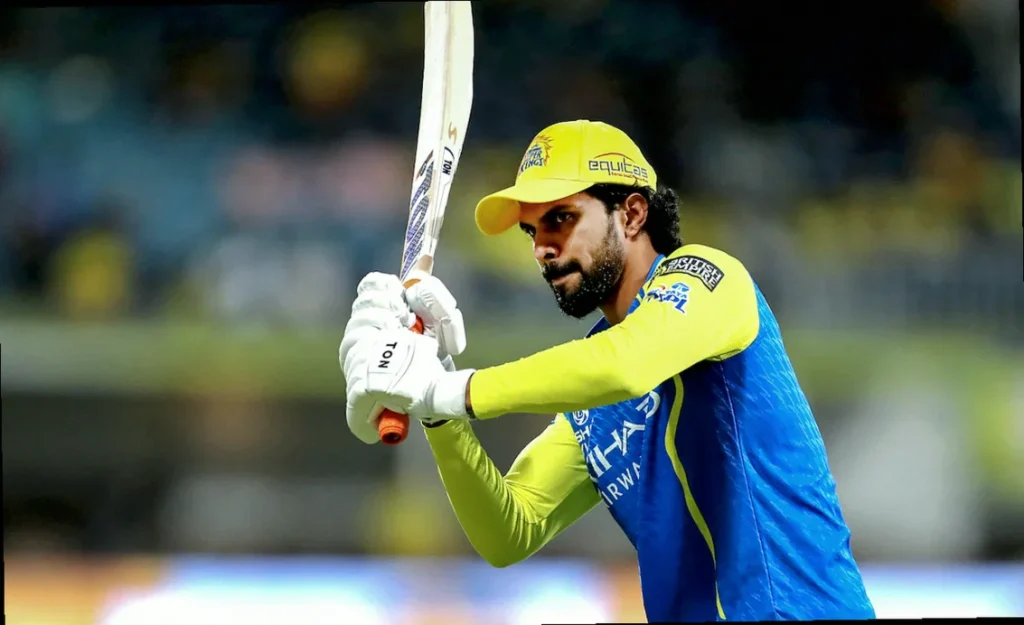
Former India opener Wasim Jaffer believes Chennai Super Kings captain Ruturaj Gaikwad needs to swing the bat with more intent and take on a higher-risk mindset if he wants to consistently lift the scoring tempo expected in T20 cricket. Jaffer’s comments come after a slow start to IPL 2026, where Gaikwad has managed just 56 runs across four innings, striking at 103.70. With those returns sparking fresh debate about how much firepower he can bring at the top of the CSK order, Jaffer argued that the opener role demands more than merely getting set.
Jaffer said Gaikwad’s style appears too cautious for the demands of the format. “He’s someone who wants to score big,” Jaffer remarked. “As an opener, I don’t think you need to focus on trying to get 80 or 100 right from the beginning. What you should aim for is a strong, attacking start—the sort of start openers want to provide. He’s not the kind of batter who goes at a strike rate above 200. If he’s being asked to push the scoring rate, then he has to take a lot more risk. He has the game, and he’s proven it with hundreds in the IPL, but it feels like he holds himself back.”
Former Australia opener Aaron Finch backed the criticism, describing Gaikwad as being stuck in a sort of batting “in-between” phase. In Finch’s view, Gaikwad is neither delivering the rapid early bursts that would put opponents under pressure, nor staying at the crease long enough to steer the innings through the middle overs with authority. Finch pointed to the balance CSK could create if Gaikwad’s role became more clearly defined—either by accelerating early or by building into a controlling spell once set.
“It’s fine to have a player like that in the side, like Shubman Gill, if he’s batting with someone who’s a bit of a ‘cowboy’ at the other end, striking at 200-plus,” Finch said. “If that player goes on to make 60s and 70s and sets up the middle order, or bats through with a middle-order plan where he can control the innings when required, then it works. But he’s doing neither. He’s not giving a flying start, and he’s not scoring big enough to make a serious difference in games.”
Finch also stressed that Gaikwad should place greater emphasis on the kind of innings that changes match situations rather than simply accumulating runs in volume. For Finch, the key is a mindset shift—moving away from a long-term preference for bulk scoring and toward quick, meaningful impact that alters the opposition’s plans.
“You have to be in the right mindset to play like that,” Finch said. “Because remember, for probably 25 years, his game and his focus have been so narrow on getting bulk runs—‘get runs, runs, runs.’ You have to change your mindset to impact: what is the biggest impact I can make on this game, and how can I affect it in the best possible way as quickly as I can?”
Jaffer wrapped up his assessment by urging Gaikwad to draw inspiration from how Virat Kohli, during his RCB days, adjusted his gears at different stages. Jaffer suggested that Gaikwad sometimes seems to chase the same tunnel-vision objective of scoring heavily, rather than varying his approach to suit the moment.
“I just feel he plays with that tunnel vision of scoring big,” Jaffer said. “We’ve seen (Virat) Kohli do it—change his game. He’s a different Kohli to what we saw at the start of his career. I’m sure Ruturaj can do it too, but he needs to put impact first, not think about the bulk of runs.”
