
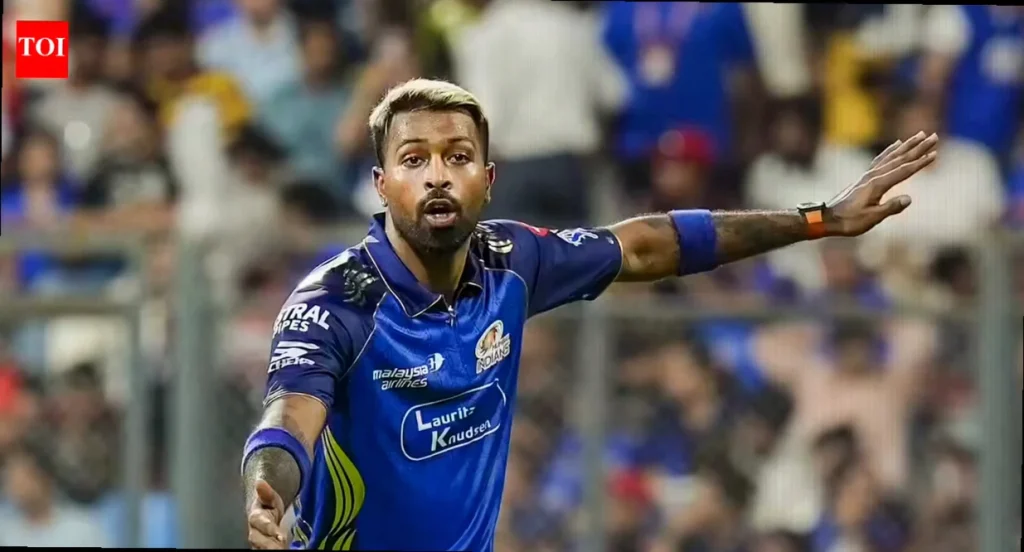
Ravichandran Ashwin has laid out a sharply critical tactical review of Mumbai Indians’ 18-run loss to Royal Challengers Bengaluru at the Wankhede Stadium in IPL 2026, while also scrutinising Hardik Pandya’s captaincy choices during pivotal stages of the chase. In his analysis, the spinner Mayank Markande being brought on early stood out as the central concern—especially with Rajat Patidar waiting in the middle. Ashwin argued that the timing effectively handed Bengaluru’s skipper a match-up that suited Patidar’s batting style, and that the decision had immediate consequences as Patidar swung the game in the middle overs.
Patidar’s impact was decisive: after taking guard, he went on to make 53 off only 20 balls, using his power game to disrupt Mumbai’s rhythm. Ashwin linked the momentum shift directly to Patidar’s dominance over spin, pointing out that once Patidar found his range, the chase began to tilt away from MI. He also revisited Patidar’s earlier record against Markande, drawing a parallel to an IPL 2024 encounter between SRH and RCB where Patidar had effectively announced himself as a “spin hitter.” That earlier success, Ashwin suggested, made the Markande selection in Bengaluru’s chase plan feel even more questionable.
On his YouTube channel, Ashwin said, “This isn’t just about today’s scorecard. Think back to the SRH vs RCB match in 2024, where Rajat made it clear he’s a spin hitter. He struck Mayank Markande all over the ground.” He then added that the overlap between the two games was hard to miss: “What’s common here is that in that game Rajat also smashed Markande for sixes, and in this game he did the same. The real point is that Rajat Patidar against spin is a monster hitter. When he came in, you brought Markande directly, and that’s very average captaincy. Markande went for 40 runs in two overs.”
Ashwin’s breakdown went further, suggesting Mumbai’s strategy allowed Patidar to settle quickly and then accelerate almost immediately. Once Patidar gained momentum, he changed gears fast—hitting a hat-trick of sixes early in his innings and later racing to a 17-ball fifty. The result was that RCB kept building even after losing key batters in the latter part of their chase, with their scoring flow remaining steady enough to set a demanding total.
The match itself delivered plenty of entertainment in a high-scoring contest. Bengaluru posted 240/4, powered by a dominant opening platform of 120 runs between Phil Salt and Virat Kohli. Salt contributed 78 off 36 deliveries, while Kohli struck 50 off 38. After that, Patidar’s late acceleration—53 off 20 balls—added extra pressure, and Tim David’s finishing burst ensured the innings ended on a commanding note.
In response, Mumbai Indians fought back through the batting of Rohit Sharma and Ryan Rickelton. However, Rohit retired hurt during the chase, and the momentum was shared between Suryakumar Yadav and Hardik Pandya as they tried to keep the required rate under control. Despite Sherfane Rutherford finishing with an unbeaten 71 off 31 balls in the death overs, MI were unable to get over the line, ending on 222/5—falling short by 18 runs.
Ashwin ultimately argued that the decisive turning point came during the phase when Patidar targeted Markande, describing it as a moment where MI’s mismatch in that specific battle gave RCB the advantage in the middle overs, shaping the outcome from there. With Mumbai still searching for answers in key decision-making moments, the Patidar-Markande spell is likely to be remembered as the swing in a thriller that ended with Bengaluru holding their nerve.
