
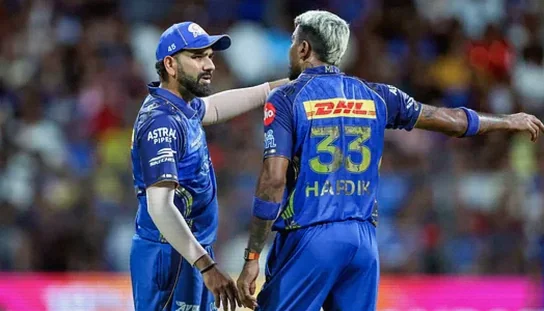
In the last three editions of the IPL, outcomes have often swung early: in four of every five matches, the result has been shaped during the powerplay. This season has only intensified that trend, with the run-rate in the opening overs crossing 10 for the first time—currently sitting at 10.47. That mark is close to a full run higher than last year’s 9.59. Against that backdrop, Mumbai Indians have struggled to keep the new ball under control, leaving them chasing games rather than setting the tone.
On Sunday at the Wankhede Stadium, a pitch that played true for batters helped Royal Challengers Bengaluru dominate from the start. The defending champions made their intentions clear as Phil Salt, Rajat Patidar and Tim David all struck at better than 200, guiding RCB to 240 for 4. From there, the chase demanded explosive efficiency—something Mumbai were unable to consistently sustain.
In successful chases, a quick start is often decisive, and Mumbai began brightly, posting more than 10 runs per over to reach 62 without loss at the end of the powerplay. Still, it was insufficient, particularly after Rohit Sharma was forced to retire hurt after facing only 13 deliveries. With the required rate rising to 13, Mumbai remained behind the pace. Even then, the early numbers told a clear story: RCB had already reached 71 without loss in the powerplay, meaning Mumbai’s total was nine runs short of the same stage.
The warning signs were even sharper the previous Tuesday in Guwahati against Rajasthan Royals. In that match, the Royals hurtled to 89 for 2 within the first six overs, while Mumbai collapsed to 65 for 5, turning the powerplay into a decisive phase.
Concern also grows in the bowling powerplay
Across four innings this season, Mumbai’s bowlers have managed just five wickets during the powerplay. Their economy in that phase has been 11.67, which has left them seventh among the 10 teams. The damage has also been frequent—Mumbai have conceded a boundary every 3.2 balls, the second-worst such record in the opening overs.
A closer look at their usage shows a mix of plans rather than a consistent one. Across four matches, Mumbai have tried seven different bowling options in the powerplay. Jasprit Bumrah has been the most frequently deployed bowler, delivering six overs at an economy rate of 8.3—the best figure in the Mumbai setup. Yet even that has not translated into enough wickets or sustained control for the team, showing that the problem is not simply Bumrah’s effectiveness.
The bigger issue has been the lack of support around him. Trent Boult, despite being a recognised new-ball specialist, is yet to take a wicket this season and has conceded 56 runs in his four-over spells. Shardul Thakur—currently the only Mumbai bowler with two powerplay wickets—has still leaked runs at nearly 15 per over. Deepak Chahar has offered comparatively better numbers, with an economy of 9.67 and a wicket in two matches.
What can Mumbai change next?
With Mumbai positioned in the lower half of the table, captain Hardik Pandya and the franchise management face the need for quick adjustments to keep their campaign alive before the margin narrows further.
On the batting side, one potential tweak is to promote Naman Dhir to No. 3, aiming to strengthen the team’s powerplay intent—especially if early wickets fall. Dhir brings a strike rate of 159 against the new ball in T20 cricket since 2025.
With the ball, Mumbai’s priority may be to squeeze more value out of the Boult–Bumrah combination by using them together early rather than holding either back for later phases in the powerplay. When the new-ball partnership is delayed, their combined impact can be diluted against set batters and aggressive scoring plans.
Faf du Plessis, speaking in a similar vein, stressed that Mumbai must look beyond Bumrah alone and reassess how their powerplay overs are structured. He pointed out that in high-scoring contests—especially those involving totals of 250 or more—teams need answers to what the rest of the attack is giving away once Bumrah’s typically economical spell ends. Du Plessis added that Mumbai should maximise Bumrah’s influence at key moments, but also recognise that strong batting line-ups keep raising the bar. He suggested the franchise should review their overall plan for the powerplay, whether that means tactical changes or altering personnel.
