
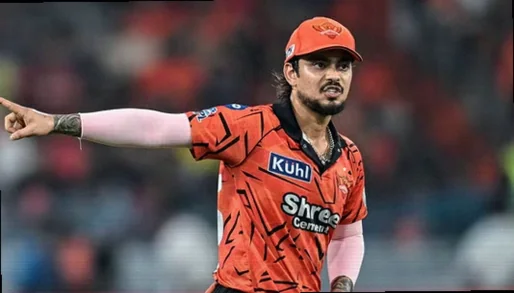
Ishan Kishan looks increasingly likely to be used less as a wicketkeeper for SRH this IPL season, and the shift has appeared to pay off in their clash against the Rajasthan Royals. Operating primarily as an outfielder has given him a wider view of the game and more time to stay engaged with bowling plans as the innings unfolds.
While some captains have flourished by combining wicketkeeping with leadership—directing proceedings from behind the stumps—Kishan has chosen a more distinct path. He has openly suggested that when he was wearing the gloves, communication with his bowlers could become inconsistent, especially when keeping duties demanded constant focus.
Why Kishan is leading from the outfield
- Ishan Kishan is leading SRH with a greater focus on outfield involvement rather than wicketkeeping this IPL season.
- He says miscommunication can occur when wicketkeeping limits the time available to relay plans to bowlers.
- Passing wicketkeeping responsibilities to Salil Arora has helped Kishan speak more freely and connect better with the field.
- In SRH’s match vs Rajasthan Royals, his role as an outfielder helped him discuss tactics and adjust fields on the go.
- He hopes the same approach continues through the rest of the season.
During the post-match presentation, Kishan explained the practical hurdles of captaining while also keeping wicket. In his view, the rhythm of bowling changes quickly, and there can be moments where the captain simply does not have the time to communicate the intended plans clearly to the bowling group.
“As a captain, I felt there was some miscommunication going on,” Kishan said. “Sometimes your keeping time is not there—you’re not able to communicate with your bowlers what the plans are.”
He also pointed to the value of being stationed in the outfield, where he can maintain a steady line of discussion with bowlers. With that freedom, he felt he could talk through what the bowlers were likely to deliver, set or tweak field placements as needed, and keep the overall strategy coherent through key phases of the innings.
SRH are captained by Kishan during the absence of Pat Cummins, and he added that the arrangement has helped him stay consistently in touch with his unit. He suggested that the conversations around bowling and field-setting are easier when he is not tied to wicketkeeping responsibilities, and he expects the team to benefit from maintaining the same pattern.
“It’s better to be there, discuss with them what they’re going to bowl so that we can… set the field accordingly. And that was the plan, and I think it worked pretty well for us,” Kishan said. When asked whether that would be the way forward, he replied, “Hopefully, yes.”
Innings impact: Kishan’s 91 after early stumbles
With SRH’s opening pair struggling—Abhishek Sharma (0) and Travis Head (18) failed to get going against Rajasthan Royals—Kishan stepped up to take charge. He played the anchor role and powered SRH to a strong platform with a well-constructed 91.
His knock came as an innings-control response to the early setbacks, setting up a total SRH could defend or use as leverage in the run chase. While the source did not provide the full breakdown of the innings, it was clear that Kishan’s responsibility-taking was central to how SRH steadied themselves after the initial dismissals.
When asked whether SRH fell short with the bat, Kishan leaned on the team’s broader batting form and firepower. He argued that SRH have regularly been posting totals of 200-plus in recent matches, and he framed their approach as one aimed at taking the game deep rather than forcing everything early.
In particular, he discussed how they plan around Abhishek Sharma’s style. Kishan said Abhishek can sometimes get out in the process, but the upside is game-changing—if he finds momentum, he can rapidly lift the scoreboard. Because of that, SRH’s instruction is essentially to let the opener play his natural game while the rest of the batting unit continues to build the innings.
“I think looking at the batting unit and the form these guys are carrying because we have been scoring 200 plus runs in each and every game at least,” Kishan said. “So yeah, but still I think the way Abhishek plays… sometimes he can get out, but our job is to take the game deep and play those cricketing shots, but leave him freely because he’s someone, if he gets going, he just changes game and gets you a total of 260 or 270. So we don’t ask anything else from him. But still, yeah, he got out. I think he’ll be motivated in the next game and he’ll do…”
