
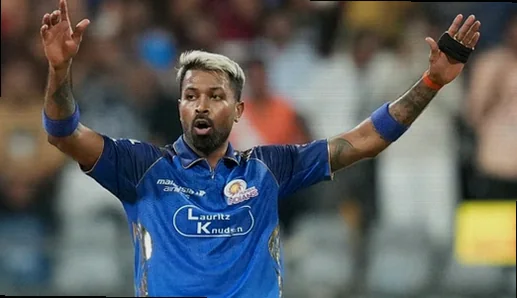
Captaining in the Indian Premier League is a high-wire act where every call—bowling changes, field placements, and even who gets backed during tight overs—can shape the outcome in a matter of deliveries. For Mumbai Indians, that scrutiny has intensified around Hardik Pandya after a run of struggles that has put the franchise in an uncomfortable position this season.
Mumbai’s slide continues after another heavy loss
Despite the attention Hardik earned for his impact during India’s T20 World Cup-winning campaign, his stint as Mumbai captain has drawn sharp criticism on the field. The five-time champions began the IPL with promise, but have since struggled to find consistency and currently sit eighth on the points table after four matches.
That pressure grew further following Mumbai’s latest defeat, a crushing loss to Royal Challengers Bengaluru. Chasing a target of 241 at the Wankhede Stadium, Mumbai were unable to sustain their momentum and fell heavily, adding fresh fuel to the debate over Hardik’s captaincy choices.
Sadagoppan Ramesh questions Hardik’s tactics
Former India batter Sadagoppan Ramesh offered a blunt breakdown of why he believes Mumbai’s problems this season are rooted in Hardik’s on-field strategy. In his view, the captain’s decisions have not only cost overs but also affected how the team’s best resources were used during crucial phases.
- Ramesh argued that Hardik’s captaincy level has not matched the quality of his own ability, saying he is “upper echelon” as a player but has been “mediocre” as captain.
- He highlighted what he called a major mistake: using two overs of Jasprit Bumrah in the powerplay. Ramesh pointed out that Bumrah’s second spell came in the sixth over, while the bowler returned only in the 17th over—leaving the team without its most potent option for roughly 60 balls.
- He said the numbers support the criticism, noting that Bumrah was Mumbai’s most economical bowler on the day, conceding at 8.75 while remaining wicketless.
- Ramesh added that RCB batters accelerated sharply after the seventh over, scoring around 95 runs between that point and the 15th—an interval that coincided with Bumrah’s absence from the attack.
Calls out spin usage and late-innings uncertainty
Beyond the fast-bowling schedule, Ramesh also took aim at how spin was deployed during the innings. He suggested that the plan to bowl spinners from both ends in key overs backfired at Wankhede, a venue where batters can take advantage when the match-up is not right.
- Ramesh criticised Hardik for bowling spinners at both ends during the seventh and eighth overs, calling it a “cardinal sin” at the Wankhede Stadium.
- He questioned the decision to give Markande an over against Rajat Patidar, arguing that Patidar is already a strong player who becomes especially dangerous when the ball turns.
- He noted that both spinners—Mitchell Santner and Mayank Markande—had a difficult night, with Rajat Patidar punishing them for 53 runs off just 20 balls.
Ramesh also widened the lens from tactics to leadership, describing Hardik’s decision-making as visibly unsettled while guiding a squad that includes experienced names such as Rohit Sharma and Suryakumar Yadav.
- He said Hardik appeared “confused” in the way he captained, citing instances where decisions were questioned or reversed.
- Ramesh referenced a sequence involving Tim David, where Hardik bowled a high full toss, took a review, and then attempted to change course after it—only for the matter to already be resolved.
- He added that even Suryakumar Yadav looked surprised by the review decision.
- Ramesh also claimed it was clear that Rohit Sharma disagreed with several of Hardik’s choices.
What happens next for Mumbai: fix the captaincy, or pay the price
Even if Mumbai had managed to win the match, Ramesh felt the captaincy issues would still have stood out. In his assessment, the errors were significant enough that Mumbai’s path to contention depends on correcting them quickly.
Ramesh argued that the team can still aim for the top four and fight for the title, but only if these strategic and leadership problems are addressed. With a squad full of big names at Hardik’s disposal, the focus now remains on how he responds to this pressure.
Next on the fixture list is a clash against Punjab Kings, a side led by Shreyas Iyer—an opportunity for Mumbai to demonstrate that their captaincy can regain control when the stakes are high.
